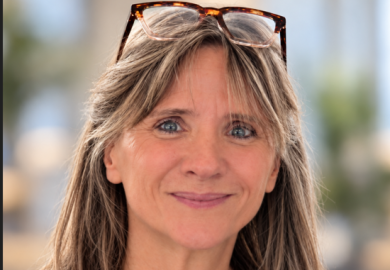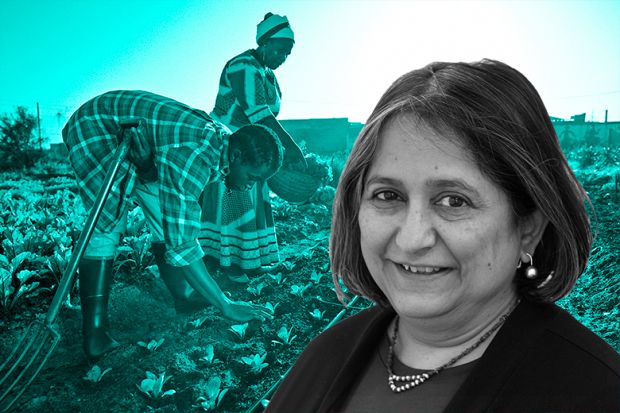
When Anuradha Joshi first walked through the doors of the Institute of Development Studies (IDS) as a fellow in 2000, her surroundings were already somewhat familiar. “Coming from India, I had always heard about IDS. It has always been at the forefront of critical thinking in development, challenging assumptions about politics and power,” she recalled.
More than 25 years later, Joshi has stepped into the director’s role during a time when the very idea of global development is under intense pressure. “It’s a really challenging time in the world to be taking on this role,” she told Times Higher Education, pointing to the Trump administration’s drastic cuts in foreign aid and the UK moving to reduce its aid budget from 2027.
“It’s creating a very difficult environment for institutions like us, and yet at the same time the work that we do is even more relevant because the growing magnitude of challenges is making it more important than ever,” she said.
Founded by British economist Dudley Seers in 1966, during a time of Cold War tensions and widespread optimism about foreign aid, IDS is the UK’s first national institute of development studies. It is based at the University of Sussex but is financially and constitutionally independent.
Joshi, who has been at IDS for nearly three decades and holds a PhD in public policy from the Massachusetts Institute of Technology, said development studies as a wider discipline used to be framed mainly around the question of how wealthy countries could help poorer nations in the form of aid. “At the institute, that hasn’t been the case,” she added.
But as IDS prepares to celebrate its 60th year, the field is confronting far more complex challenges such as climate change, global health inequality and also the social and ethical implications of artificial intelligence. But the most pressing issue is securing funding in a world where, as Joshi puts it, the “whole idea of development studies is under question”.
In the face of such challenges, the new director said she was focused on IDS repositioning itself to adapt to a changing environment.
“My main goal in the short term is to make IDS as agile and strong as possible to address all these challenges and use the opportunities that technologies like artificial intelligence present. I want to reorient traditional views about aid and development. We want to move that agenda forward,” she stressed.
“I want to see IDS become a really important node in the research, knowledge, and teaching partnerships of a network of institutions working towards sustainability, global justice and reducing inequality. In the long run that’s the aim.”
IDS has a close relationship with Sussex, collaborating extensively with departments at the university, and its students are enrolled in Sussex degrees. But it receives no core funding and does not take part in the Research Excellence Framework, which means it has to raise its own research funding. “It’s not an easy situation to be in, given the current funding environment,” Joshi said.
The institute is funded by a range of organisations, including the European Union, various UN agencies and UK Research and Innovation. Its main benefactor is the UK Foreign, Commonwealth and Development Office. It currently boasts 146 students from 45 countries, 134 professional staff and 109 research staff.
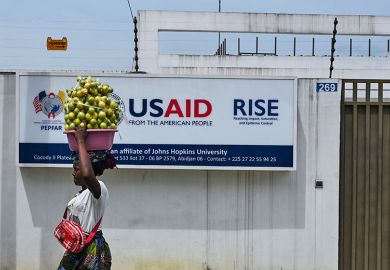
The sudden withdrawal of USAID has had an immediate impact on humanitarian work around the world, particularly on programmes dedicated to women and girls, sanitation and water, and related to global health. “Because we’re an independent charity we have been affected by these cuts as well,” Joshi added.
Although IDS does not rely on USAID funding, many of its longstanding partners in more than 50 countries did depend on the agency. “We have been trying to help them. But anything we do doesn’t cover the USAID funding gap,” Joshi said, adding that she is focused on diversifying funding sources. The new director has her eyes on exploring new types of partnerships, including within the private sector.
The institute is also looking to support scholars amid geopolitical pressure. Last year, it set up a health justice sanctuary on its premises for health equity scholars who are “facing existential threats in the United States”. It allows US scholars to temporarily locate to the UK to continue their work.
Despite the challenges, Joshi is optimistic about the future of development studies. During her 26 years at IDS, she says the institute has changed significantly, becoming much more diverse and increasingly shaped by perspectives from the Global South. “The future might look uncertain, but the need for good research to tackle some of the biggest challenges is not going away. We need to develop the next cadre of leaders, who will take on leadership roles across the globe,” she said.
Register to continue
Why register?
- Registration is free and only takes a moment
- Once registered, you can read 3 articles a month
- Sign up for our newsletter
Subscribe
Or subscribe for unlimited access to:
- Unlimited access to news, views, insights & reviews
- Digital editions
- Digital access to THE’s university and college rankings analysis
Already registered or a current subscriber?