Brussels has been pushing to make UK universities cheaper for students from the European Union, but persuading them to return, especially those from less privileged backgrounds, could prove a much bigger challenge despite the enduring international reputation of UK institutions.
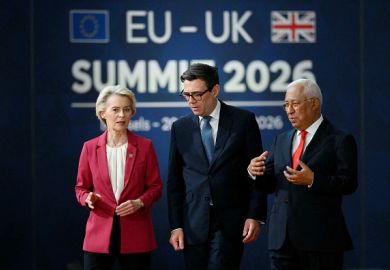
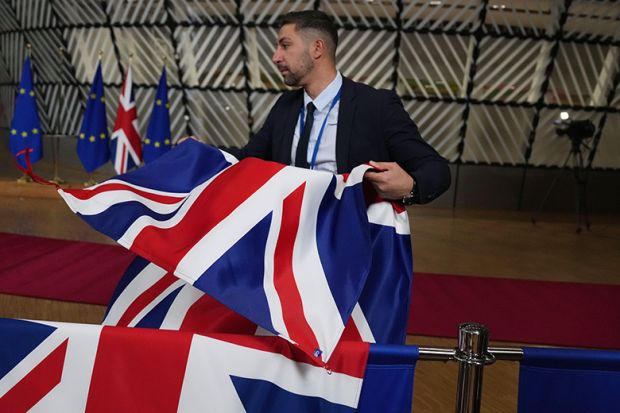
During the long-awaited UK-EU summit on 20 November, both sides agreed to negotiate a separate deal on tuition fees within six months. The issue has threatened to derail other agreements on trade and youth mobility.
British universities have repeatedly raised concerns about the financial implications of lower fees for EU students, who have had to pay much higher international rates following Brexit.
Mihnea Cuibus, a senior researcher at the University of Oxford’s Migration Observatory, said higher tuition fees were a major factor behind the decline in EU student recruitment, but European students lost more than just home fee status after Brexit.
“Free movement came with two other important things. One of them was access to student loans in the UK, which was very important for students from lower-income backgrounds, and access to a broader system of free movement to the UK, which meant they didn’t have to get visas and could remain in the UK after graduation,” he said.
EU student numbers have fallen by around 60 per cent since Brexit, Cuibus said, with larger declines among students from central and eastern Europe. Numbers from countries including Romania and Bulgaria fell by about 70 to 80 per cent, compared with 30 to 40 per cent in France and Germany.
“If we did see an agreement that meant we went back to home fees for EU students, but they stayed out of the student loan system, and they kept having to go through the normal student visa process, there would probably be somewhat of an increase,” he said.
But it’s “unlikely that we’ll go anywhere near those pre-Brexit levels without the loans and the freer visa system”, he added. It is unclear whether loans and visa rules are part of the current negotiations.
A survey carried out by Study.eu of about 1,000 prospective students from the EU found that 54 per cent would still not consider Britain even if tuition fees were reduced to around £10,000 a year.
The tuition fee debate is tied to the planned UK-EU youth experience scheme, agreed at the Brussels summit, which will allow up to 100,000 UK and 100,000 EU citizens aged between 18 and 31 to live, work and study in each other’s territories for up to three years.
But Anand Menon, professor of European politics and foreign affairs at King’s College London and former director of the UK in a Changing Europe thinktank, has questioned whose interests the EU’s push for lower fees was serving.
“I’ve lost count of the number of senior national and EU officials who’ve moaned at me about UK university fees and how much it would cost them to send their kids to study in the UK,” he said in a post on X which has sparked a wider discussion on the platform.
“This is elites worrying about their progeny. Your average EU voter would, I think, [baulk] at the idea of even the domestic fee, especially if their home universities were free. It’s the privileged (many of who, let’s face it, could afford the foreign fee) saving themselves some cash. All dressed up, of course, in the language of ‘the children are our future’.”
But Anton Muscatelli, president of the Royal Society of Edinburgh and former principal of the University of Glasgow, said demand for British universities among EU students went beyond just wealthy families.
He said his conversations with parents in Italy and elsewhere suggested that many felt their children had lost opportunities available to older generations after Brexit. “They had the experience of older siblings who had had the opportunity to either come to the UK through Erasmus+ or for full courses of study,” he said, adding that they felt “hard done by”.
Muscatelli added that Menon’s argument could be true, but said wealthier parents were “not the only ones who are aspiring for [lower fees]”.
The reputation of British universities still made them very appealing to students across the continent and securing cheaper fees would prove politically popular across Europe but rebuilding student numbers after Brexit would take time, he said.
Johanna Waters, professor of human geography at UCL, said the prominence of tuition fees in negotiations suggested there was “a perception, at least, that European students still value highly access to the UK and its higher education institutions”, despite the growing availability of cheaper English-taught degrees elsewhere in Europe.
Register to continue
Why register?
- Registration is free and only takes a moment
- Once registered, you can read 3 articles a month
- Sign up for our newsletter
Subscribe
Or subscribe for unlimited access to:
- Unlimited access to news, views, insights & reviews
- Digital editions
- Digital access to THE’s university and college rankings analysis
Already registered or a current subscriber?