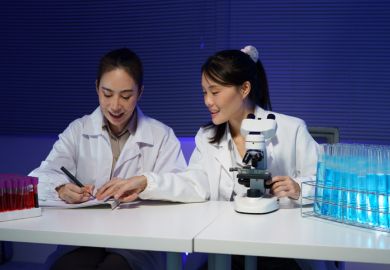
India’s elite engineering institutes are setting their sights on medical education, arguing that technological understanding is essential for the next generation of doctors.
The Indian Institute of Technology Madras has announced plans to establish a School of Medical Sciences and offer undergraduate and postgraduate medical degrees.
Veezhinathan Kamakoti, the director of IIT Madras, said that interdisciplinary education is required to solve healthcare challenges, citing the example of Covid-19, when Indian hospitals depended on medical devices and technologies imported from abroad.
Other IITs – which are synonymous with engineering education in India – are predicted to follow suit. Indeed, some are already involved in medicine-related work.
The Indian Institute of Technology Kharagpur built a School of Medical Sciences and Technology in 2001. This year, it applied to the National Medical Commission to start teaching postgraduate medical courses. If approved, it would be the first IIT to offer postgraduate medicine.
Rituparna Patgiri, assistant professor of sociology at the Indian Institute of Technology Guwahati, said that IITs’ move into medical education is no “surprise”.
“IITs have this history of interdisciplinary learning,” she explained. “Even humanities and social sciences are taught within IITs, and many IITs have these other programmes.”
IIT Guwahati offers a master of business administration (MBA) programme. It also boasts a School of Health Sciences and Technology, where biomedical engineers are trained for roles in the health sector.
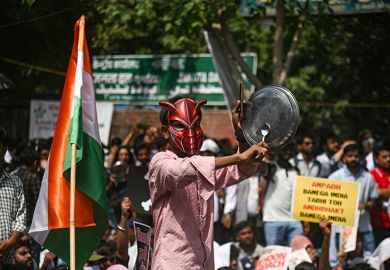
Patgiri said that the timing of the IIT Madras announcement is significant, one month after the Cockroach Janta Party protests in India that were sparked by a medical exam controversy and ended in the resignation of India’s education minister.
India’s nationwide entrance exam for medical colleges was sat by more than 2 million students in May; but the exam was scrapped after it emerged that the questions had been leaked. Millions had to retake the test, which set off the protests.
“Perhaps an IIT entering that [medical college] space sends out a good confidence signal for many who feel that the [IIT] brand is associated with quality and other kinds of good things,” suggested Patgiri, adding that uptake among Indian students would be considerable.
“The IIT brand has a value. There are very few medical colleges, especially government ones. Private ones are very unaffordable, so there is a huge market,” she said.
Patgiri remarked that it will “very interesting to observe how other traditional medical institutions hold up” in the face of competition, especially if “other IITs get into the game”. This was likely to happen, she said, because “once one IIT does something, then other IITs pick up on it” – although it will take at least five years for IIT Madras to roll out medical courses because it must first meet many regulatory requirements and build the appropriate infrastructure.
Athipettah Jayakrishnan, former professor in the department of biotechnology at IIT Madras, said the entry of IITs into medical education could satisfy a need for “medical research” that is lacking in India.
He added that today’s medical practitioners require “a lot of knowledge in the technological domain”, particularly in fields such as urology, neurology and orthopaedics.
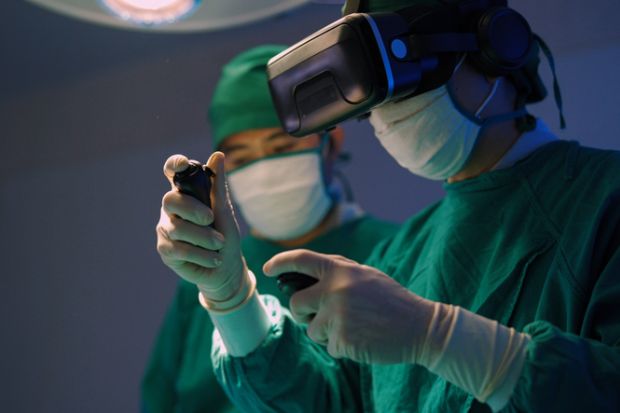
“At least some doctors who graduate from IIT medical schools will have exposure to the kind of technology that has become so relevant in medicine today. For example, robotics has become extremely important. The use of AI is becoming more and more common in medicine.”
In an institution devoted solely to medicine, Jayakrishnan said, students do not have “direct exposure to these kinds of technologies”.
However, not everyone welcomed IITs’ push into medical technology and innovation.
Sunil Chandy is a cardiologist who has served as chief executive at one of India’s largest private teaching hospitals, Christian Medical College, Vellore. While recognising that IIT graduates “have done exceedingly well in terms of engineering and mathematics”, Chandy described entering into medical education as a “very utopian goal” because fusing technical and medical education is like “mixing two languages or mixing the waters of the Atlantic and the Pacific. There is a clear line that just doesn’t mix.”
Medical colleges are a “completely different domain” from engineering colleges, he added. Starting one requires approval from the National Medical Commission, as well as the appropriate resourcing, manpower and specialised infrastructure. In addition, a new medical college in India must be associated with a teaching hospital that has been operating for at least three years before applying to offer undergraduate courses. “It’s a world of its own,” Chandy argued.
He also worried that the incursion of deep-tech research could detract from hospitals’ primary mission. “A patient goes to a hospital because he needs care. He doesn’t go there because his tissue is going to be used in some Nobel prizewinning research…Hospitals are meant to be caregiving spaces. No patient will be interested if you say that it is for AI innovation…They don’t want to be guinea pigs.”
Register to continue
Why register?
- Registration is free and only takes a moment
- Once registered, you can read 3 articles a month
- Sign up for our newsletter
Subscribe
Or subscribe for unlimited access to:
- Unlimited access to news, views, insights & reviews
- Digital editions
- Digital access to THE’s university and college rankings analysis
Already registered or a current subscriber?