Over-reliance on technology puts chemistry students at risk of missing out on developing the “practical skill sets” that underpin the discipline, an expert has warned.
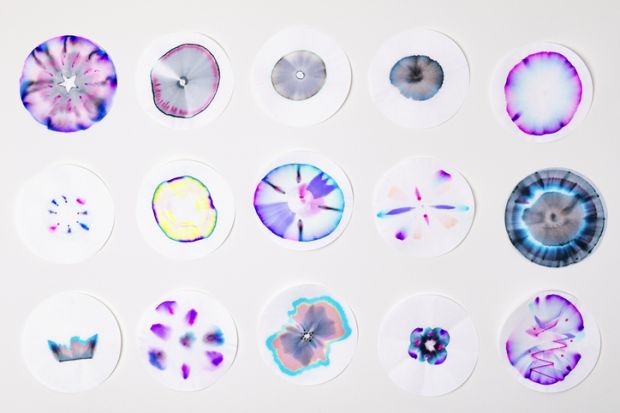
Tony Edge, president of the Chromatography Society, said students studying the field – which involves the separation of a mixture into its components – are too often taught to simply load a vial into a machine and press start, observing the process through a screen rather than engaging with its mechanics.
“If we’re not careful, we’re going to get rid of some very good science that underpins a lot of UK manufacturing,” Edge told Times Higher Education.
But other academics have disputed his claims, with University of Edinburgh lecturer in physical chemistry education, Ben Arenas, stressing that “the UK is still world class in its university chemistry provision”.
Edge, who has worked as a scientist at companies including AstraZeneca, is most concerned about the practice of chromatography – but believes the problem could be more widespread.
“As part of my role [in industry], I would have students coming in, when I was [working] at manufacturers,” he said. “I noticed, probably about the mid-2000s, the students coming in didn’t seem to have any practical skills.”
“A lot of the skill sets were diminishing,” he said, as well as the understanding of chromatography as a “primary research tool”. “I was gobsmacked,” Edge added.
Arenas wasn’t convinced of a collapse in hands-on learning, although he said maintaining the balance was key.
“I don’t think we necessarily face a crisis in practical chemistry skills teaching in the UK because of technology but it is important to consider the balance between the modern, technologically advanced, industry-relevant skills and traditional and foundational methodology and understanding,” he told THE.
“It is up to us as educators to make sure students understand what happens behind the buttons and appreciate the chemistry and physics behind the numbers they get.”
Arenas cited a number of “good examples” of physical and analytical chemistry teaching across the country, with his own institution, Edinburgh, giving students the chance to run gas chromatography experiments by hand.
The true threat, he said, was the same one facing so many disciplines: “Probably the greater danger to practical skills teaching in UK universities is the potential loss of the expertise of teaching-focused academic staff, as well as technical staff, whose efforts are predominantly in laboratory teaching.
“Budget cuts and threats of job losses have become increasingly more widespread – the social, scientific, educational and economic risk is that the direction of travel could become less ‘does the UK do chemistry well?’ and more ‘does the UK do chemistry?’”
Last year the Royal Society of Chemistry warned of developing “cold spots” in the subject.
The University of Hull and Bangor University have recently cut chemistry programmes, while proposed redundancies at the University of Sheffield’s world-leading department have proven controversial.
Hessam Mehr, lecturer in AI and chemistry at King’s College London who researches automation within laboratories, argued that educators should in fact lean into modern approaches – although he stressed that he was no “chromatography expert”.
“I think staying stagnant is not an option anymore,” he said. “I don’t agree with the sentiment; if anything we need it to move faster.
“It’s not pleasant to admit that a lot of what you’ve learned in terms of manual skills have been made redundant but we can’t be in denial. It’s good to know the underlying principles but AI provides this gold mine of infinite knowledge – [science] is about asking the right questions.”
Mehr believed that it was best to equip students to be “well rounded and agile”, reflecting: “I’ve had the pleasure of working with lots of students who are very receptive to automation. The experiments that they do don’t look anything like what I did for my PhD...I was a bit cautious that it wouldn’t appeal to students in chemistry, the overlap with computer science and automation, but I’ve been pleasantly surprised by how receptive students are.”
Ultimately, Mehr thought this was what made the UK an attractive place to study the sciences.
“I think there’s just the right trade-off between being dynamic and embracing things before it’s too late, and staying true to the scientific principles”.
Register to continue
Why register?
- Registration is free and only takes a moment
- Once registered, you can read 3 articles a month
- Sign up for our newsletter
Subscribe
Or subscribe for unlimited access to:
- Unlimited access to news, views, insights & reviews
- Digital editions
- Digital access to THE’s university and college rankings analysis
Already registered or a current subscriber?