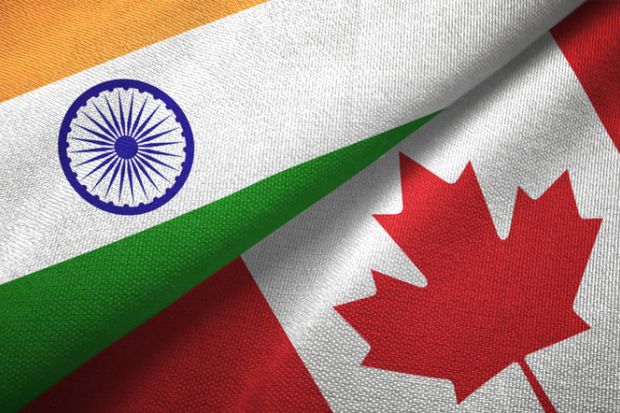
Mark Carney’s effort to rebuild relations with India reflects how Canada’s international student strategy is being “recalibrated” to focus on more targeted recruitment, according to experts.
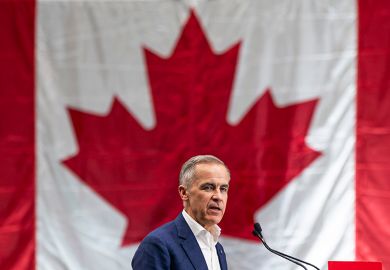
The prime minister met with counterpart Narendra Modi in New Delhi last week, attempting to forge new diplomatic ties after the tensions of the Trudeau administration. It comes after the largest ever delegation of Canadian university presidents visited India in January.
The two leaders agreed a new Canada-India Talent and Innovation Strategy to deepen education collaboration between the countries. It involves 13 new partnerships between Canadian and Indian universities, and new University of Toronto and McGill University centres of excellence in India.
Relations hit a low ebb in 2024 when Canadian authorities accused Indian diplomats of being involved in the killing of Indian dissidents on Canadian soil.
Recruitment plummeted as a result, with applications from India falling from about 19,175 in 2023 to just 3,920 in 2025.
While repairing ties with India makes strategic sense, Marshia Akbar, research lead on labour migration at Toronto Metropolitan University, said Canada is currently “recalibrating its international student strategy”.
After years of rapid growth in overseas student numbers, the federal government has indicated it wants to balance recruitment with broader considerations around infrastructure capacity, housing availability and labour market outcomes.
“The relationship may gradually shift from a model driven primarily by large student numbers toward one that places greater emphasis on research partnerships, institutional collaboration, and more targeted recruitment aligned with Canada’s economic and labour market priorities.
“In other words, Canada is likely to continue engaging closely with India but in a more structured and strategic way rather than focusing primarily on rapid expansion in international student enrolments.”
As part of the agreement, the University of Toronto is to provide 300 funded Indian student researcher positions as well as up to C$25 million (£13.4 million) for more than 220 scholarships for Indian students.
Despite Carney’s overtures, Lilach Marom, assistant professor of education at Simon Fraser University, said there remains a “significant disconnect between diplomatic declarations and substantive policy change”.
She said Indian students in Canada are in a precarious position, with their pathways disrupted by successive policy shifts, and many already forced to return home.
“The caps on international student intake and the restrictions tied to specific programmes and institution types continue to constrain university capacity, meaning that systemic instability will persist regardless of bilateral goodwill gestures.
“That said, there is no question that significant demand remains in India. Should policies shift in a more stable and transparent direction, students will likely respond, but whether and when that shift materialises remains to be seen.”
Martin Maltais, professor of financing and education policies at the University of Quebec at Rimouski, said India is increasingly important as a scientific partner, and Ottawa is reconsidering its international student model.
“The goal is probably not to return to the pace of growth seen in recent years. The challenge now is to build a more balanced and sustainable system.
“In this context, repairing ties with India makes sense. India should remain an important partner, both for recruiting talent and for scientific collaboration. But within a more regulated and strategic framework.”
As Canada distances itself from the US, Maltais said restoring ties to the world’s largest democracy which has a very large pool of talent in areas such as artificial intelligence was a strategic move.
“For Canada, the issue therefore also relates to scientific and digital sovereignty. The goal is to preserve the country’s capacity to train, attract and retain talent in key sectors, while also diversifying its international partnerships.”
Register to continue
Why register?
- Registration is free and only takes a moment
- Once registered, you can read 3 articles a month
- Sign up for our newsletter
Subscribe
Or subscribe for unlimited access to:
- Unlimited access to news, views, insights & reviews
- Digital editions
- Digital access to THE’s university and college rankings analysis
Already registered or a current subscriber?