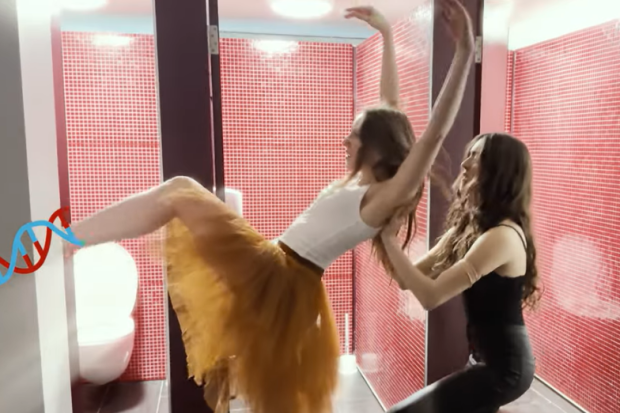
A University of Cambridge chemistry student who enlisted lab colleagues to star in a pop video explaining her research on cancer diagnoses is among the winners of this year’s Dance Your PhD contest.
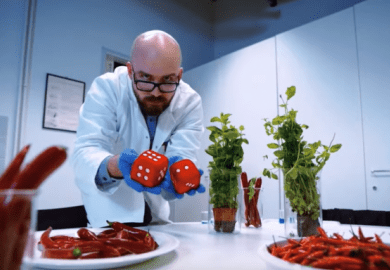
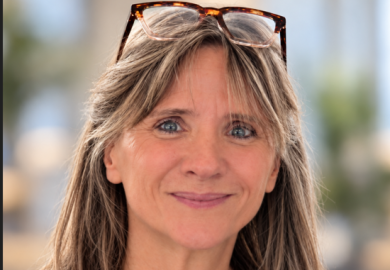
Chemical engineering researcher Dina Haddad, who has been based at Cambridge since 2021, was one of five category winners of the international competition run by Science for her dance video explaining her work on “cell-free DNA using magnetic nanoparticles for urine biopsy”.
Filmed in laboratories in and around Addenbrookes Hospital, Cancer Research UK’s Cambridge Institute and college courtyards, Haddad’s dance video has been viewed more than 1,000 times on YouTube.
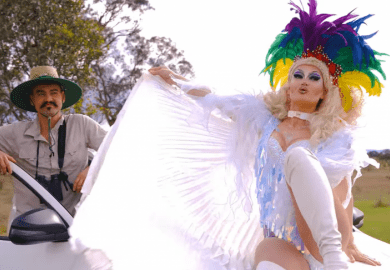
It features a self-penned track titled Magnetic Flow, in which Haddad sings and raps about her research.
Haddad’s choreography drew on eclectic forms of dance, from ballet and hip-hop to pole dancing. Her triumph makes her the first UK winner of the award since 2017.
The overall champion was Sofia Papa from the BioRobotics Institute at the Sant’Anna School of Advanced Studies in Pisa, Italy, who used a team of dancers in different monochromatic outfits to represent positive and negative charges. This explained how some crystalline materials, when subjected to stress, generate electricity, which is known as the “piezoelectric effect”.
Papa’s dance was praised by judge Alexa Meade as “hypnotic and entrancing”, earning her the competition’s top prize of $2,750 (£2,050). Each category winner takes home $750 (£559).
Now in its 17th year, the Dance Your PhD competition rewards outstanding dance videos in the categories of physics, biology, chemistry and social sciences, and for the first time, use of artificial intelligence.
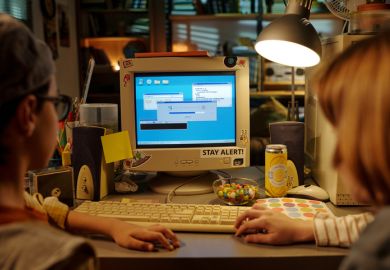
The winner of this inaugural category was Maastricht University’s Kate Kondrateva who used ChatGPT to formulate a shot-by-shot script for a three-part dance on AI, MRIs, brain health and diagnostics that she developed from reading research papers.
She then fed prompts into Google’s AI video generator Veo to develop visual effects, including bright lights and intense colours, which she overlaid on her own dancing.
Register to continue
Why register?
- Registration is free and only takes a moment
- Once registered, you can read 3 articles a month
- Sign up for our newsletter
Subscribe
Or subscribe for unlimited access to:
- Unlimited access to news, views, insights & reviews
- Digital editions
- Digital access to THE’s university and college rankings analysis
Already registered or a current subscriber?