A rare decision to revoke the doctorate of one of France’s most famous science communicators after an investigation found evidence of plagiarism has fuelled calls for greater transparency in how universities investigate research misconduct and communicate their findings.
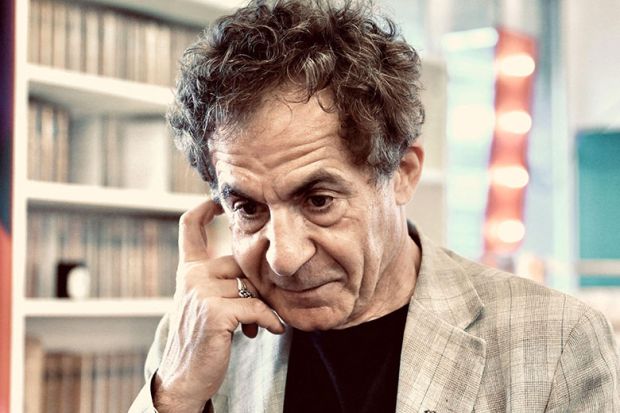
Etienne Klein, the author of numerous science books who hosted a popular radio show, had his doctorate revoked by Université Paris Cité after an investigation found extensive plagiarism in his 1999 doctoral dissertation in philosophy of science, according to local media reports.
Klein, the director of research at the French Alternative Energies and Atomic Energy Commission (CEA), has also been banned from enrolling in doctoral programmes.
The case emerged after journalists at investigative outlet Arrêt sur images began manually reviewing Klein’s doctoral thesis and found evidence of plagiarism in 20 per cent of it, with text copied from authors like Albert Camus. The university then launched its own investigation.
According to the outlet, the university’s inquiry discovered instances of plagiarism in about two-thirds of the pages after a 20-month review process that concluded in November 2025. The university has not made the report public.
Université Paris Cité told Times Higher Education it has “issued individual decisions against the person concerned, of which he has been notified. We do not intend to comment further on this individual case.”
It is not the first time Klein has faced allegations over plagiarism. In 2016, French outlet L’Express reported instances of plagiarism in Klein’s science books, articles and programmes.
In a four-page response posted on his X account, Klein said he had borrowed passages representing “shared knowledge before being the property of their authors” and accused critics of focusing too much on “missing quotation marks” instead of the challenge of scientific misinformation.
“I obtained my doctorate in philosophy in 1999 with the jury’s congratulations, even though the manuscript contained a few sentences written by some of its members, none took offence,” he said.
Radio France, the network where Klein’s show La conversation scientifique aired, announced last week that it would not renew the programme this September “in light of recent developments”.
The case has sparked wider questions about how French institutions deal with research misconduct as some academics have said it is striking that the plagiarism was uncovered by journalists rather than the university itself.
Arnaud Saint-Martin, a lawmaker and member of the French Parliamentary Office for Scientific and Technological Assessment (OPECST), of which Klein is also a member, described the case as a “turning point”.
“It seemed clearly unacceptable to me that Mr Klein should be a member of the scientific council when revelations about his plagiarism were becoming more frequent,” he told Times Higher Education.
“There is no doubt that he has benefited from a certain amount of leniency on the part of the academic authorities and those at the highest levels of political power, despite the widely publicised and well-documented nature of his academic misconduct.”
Saint-Martin has written to the OPECST calling for Klein’s removal. The office has not formally responded.
Michel Dubois, director of the French Office for Research Integrity (OFIS), said revoking a doctorate remained very rare in France, adding that there was a rise in independent “science detectives” and research integrity experts, which he welcomed.
“This reflects the emergence of a stronger culture of correction of science, and I think that is something we should welcome. The key question is not who identifies a potential problem, but how institutions respond once credible concerns are raised,” he said.
Dubois stressed that institutions must communicate more clearly on how allegations are handled and the outcome of investigations once they have concluded.
“Greater transparency, while fully respecting legal requirements, confidentiality and the rights of those involved, can strengthen both accountability and public trust in science,” he said.
The lack of transparency can have real consequences for those who raise concerns about academic integrity.
Raphaël Lévy, a physicist at Université Sorbonne Paris Nord and principal investigator of an European Research Council grant on the correction of the scientific literature, said institutions often failed to act without external pressure. “What is maybe somewhat particular to France is the silence until the very end,” he said, referring to how universities communicate during investigations.
Lévy, a prominent figure in debates over research integrity, has previously reported research misconduct at his institution and written publicly about the challenges facing those who do so.
He said the Klein outcome was nonetheless encouraging. “It is quite reassuring that the university took the decision in a case where the person accused is still very high status in French society,” he said.
But he warned that protecting those who report misconduct internally remained urgent. “The issue of how we protect people who want to report cases of misconduct is still very much on the table.”
Stéphanie Ruphy, professor of philosophy of science at École Normale Supérieure – Université PSL, said the case exposed a failure of institutional gatekeeping at the most basic level, pointing to how the plagiarised authors included three members of Klein’s own thesis jury.
“The academic vigilance and rigour of a thesis jury are fundamental to ensuring the credibility of a scientific field,” she said. “Professional, or even personal, relationships must not lead to a relaxation of these standards.”
Ruphy also questioned the gap between Klein’s public profile and his standing within academia, adding that he is neither active nor recognised as a peer within the philosophy of science community. “It is better to lack academic credentials altogether than to promote credentials that are misaligned with one’s actual standing within a research community,” she said, adding that responsibility lay not only with Klein but with the media that amplified his authority.
Register to continue
Why register?
- Registration is free and only takes a moment
- Once registered, you can read 3 articles a month
- Sign up for our newsletter
Subscribe
Or subscribe for unlimited access to:
- Unlimited access to news, views, insights & reviews
- Digital editions
- Digital access to THE’s university and college rankings analysis
Already registered or a current subscriber?