“Until the last moment, just before he died, Nick was marking his students’ dissertations on his phone. He was so ill and yet his brain was completely all there. His commitment to his students was unbelievable.”
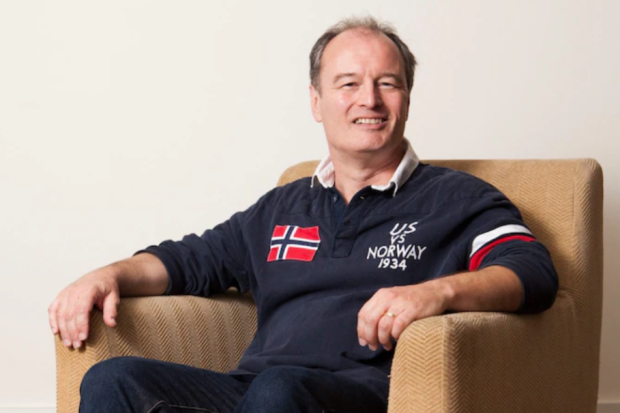
Nick Hitchon, the shy farmer’s son from the Yorkshire Dales who became a nuclear fusion scientist at the University of Wisconsin-Madison, did not live to see the final instalment of British television’s landmark Up series, which will be screened on ITV from 15 September.
Hitchon died of throat cancer in 2023, four years after appearing on 63 Up, in which he spoke movingly about his life, most of which has been tracked by the seminal documentary series, which began as a one-off World in Action documentary in 1964, featuring interviews with 10 young boys and four girls about their lives, hopes and fears.
First interviewed at the age of six, Hitchon stuck with the show through adolescence, his studies at the University of Oxford and then his relocation to US academia in the early 1980s.
Thanks to Claire Lewis, producer of the series since 28 Up in 1984, Hitchon will feature posthumously in 70 Up. Although he was gravely ill when interviewed by series director Michael Apted in 2021, he did not disclose how badly his health had deteriorated until he sent an “almost a coded email” to Lewis, she told Times Higher Education.
“Nick was so ultra-professional and pretended he wasn’t as ill as he was: he was very much [intending to be] here for the next series. But reading between the lines of his emails, I realised how extraordinarily ill he was,” said Lewis, who persuaded ITV to fly her and a camera crew to record his final interview, even though the final series had yet to be commissioned following Apted’s death in 2021.
“Nick died three days after our interview...when we were on the plane back from Chicago,” said Lewis, whom Hitchon credited as one of two driving forces behind the show, alongside Apted, who worked on it as a researcher in 1964 but directed from 1970.
For the show’s many fans, Hitchon was one of its most sympathetic characters. As a child he said prophetically that he would “like to find out all about the moon and all that” and, when asked if he had a girlfriend, memorably refused to answer “those kind of questions”.
Academically gifted, his rise from a small Yorkshire village to a professorship at an elite US university also defied the show’s somewhat gloomy view that class was the main predictor of an individual’s future in the UK. In later life, he spoke honestly about his painful divorce, the disappointments of his research career and his cancer diagnosis.
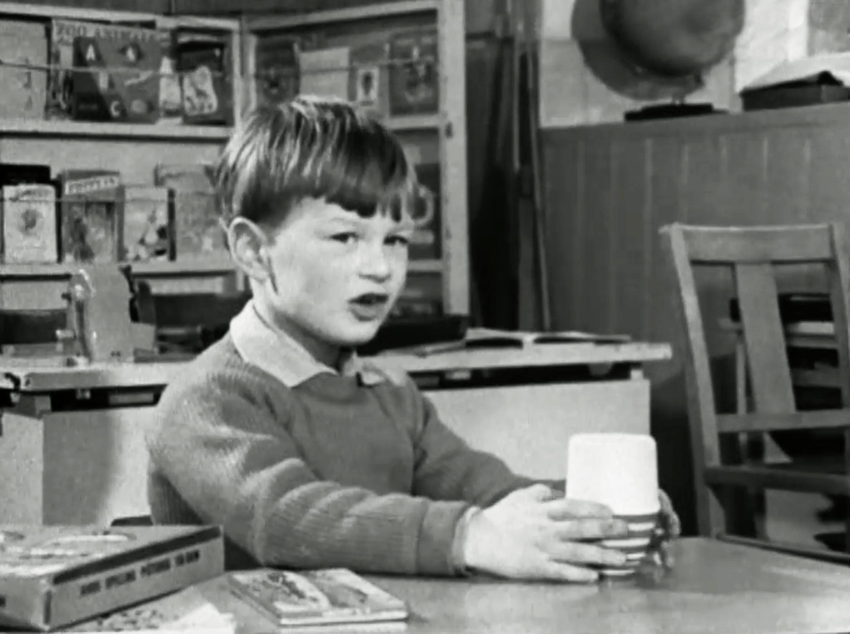
For Lewis, Hitchon’s honesty about all aspects of his life was always remarkable, particularly because he was “always really stressed when he was doing the interviews”, she said.
“He was terrific and was always extremely eloquent and very helpful. I loved him very much…he was the most extraordinary human being,” she said, adding that he was “genuinely intelligent, kind, honest, truthfully honest in that way that Yorkshire people are”.
Lewis, who was a teacher and journalist before joining Granada TV as a producer, said Hitchon’s passion for using science to improve the world was always evident.
“As a 13-year-old, he’d read a book which said we’ve got to be careful about pollution. He wanted to put his first-class brain into clean energy...before anybody else was doing it. That’s the reason he went to Wisconsin to do nuclear fusion: because he realised that that might be the answer to clean energy, which is of course what we all need,” she said.
With Apted becoming a successful Hollywood director, with Bond and Narnia movies to his name, nearly all of the work in producing the Up series has fallen to Lewis for the past 42 years, with the 1984 edition proving particularly difficult, she recalled.
“Everyone had been told 21 Up was the last series, so I had to find all the people, make a relationship with all of them and persuade some of them to do it from day one. It took me four months to find Neil, who was missing,” she said, referencing the now-famous scene where one participant was found living alone in a caravan near a Scottish loch.
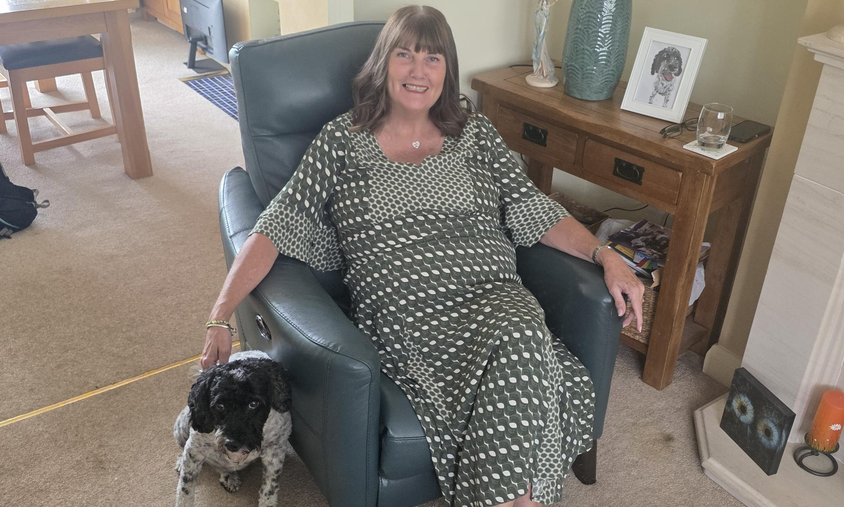
Lewis, who has taught documentary-making at several UK universities, is also hugely attached to another Up participant with strong higher education links. Sue (later Susan) Davis was one of three girls from working-class families in London’s East End who were interviewed together (the other two were Jackie Bassett and Lynn Johnson, who died in 2013). Davis rose to become a senior administrator at Queen Mary University of London, before retiring a few years ago.
“Jackie and Sue are now like sisters to me. Honestly, I know them so well and they’re so fun,” said Lewis, reflecting how “all three of them, coming out of school in this in the mid-70s, basically could choose whatever they wanted to do.”
“There was full employment, loads of apprenticeships. [England] was a really wonderful place to grow up in the mid-70s. School education was really good, and the beginnings of comprehensive schools were wonderful. Teaching was excellent. It really was. So they all left school, all of them, and got jobs immediately, no question,” said Lewis, who worries that young people from Davis’ background do not have the same opportunities to progress today.
“Sue didn’t know what she wanted to do immediately. She was working in a bank and was obviously very good at what she did. She is very intelligent and ended up at Queen Mary as a secretary. She turned out to be exceptionally good at what she did...very responsible, very grown-up, very caring, and did really well.”
“I remember Michael asked her, ‘What about the responsibility?’ She said: ‘I love the responsibility. I love it.’”
With Up often mentioned as the most important TV show of all time, it is almost impossible to overstate its impact. Every viewer has their own connection to the show or a particular character on it, and it has been regularly screened as a teaching aid in schools and universities since it was first shown in the 1960s.
For instance, the programme is “fantastically popular in Australia”, said Lewis. “It is shown on public service television but 42 Up ran for six months at independent cinemas across Australia in 1998.”
Describing the fan base for the Up series as “monumental”, she calculates there is a “die-hard fan base of six or seven million viewers” who are the same age as the 1964 cohort, with millions from other generations also becoming committed viewers.
For some, Apted’s intrusive and blunt interviewing style became increasingly problematic but Lewis believes their “complementary skills” made the series successful.
“Because he was living in LA as a Hollywood film director, he...didn’t have that relationship that I had established with them, which was kind of family friend,” she said. “But you can’t do a good interview if you know people too well.”
For many, questions about the Up interviews have been crucial for informing discussion on research ethics, qualitative research, care of research participants and how to keep a strong bond of trust between interviewer and interviewee while also asking challenging questions.
“[Apted] was a wonderful interviewer but you’ve got to realise he was the 15th character in this film,” said Lewis. “Up says as much about Michael as it does about our participants: the way he asked the questions, his views about women, where he came from, his public school background,” reflected Lewis.
One long-time admirer of Up was Asif Kapadia, the pioneering documentary-maker behind Senna and Amy, who has taken over directorial duties from Apted. “I’d thought Senna was one of the most sensational documentaries I’ve ever seen, and I knew we needed a director who could cope with archive. And of course, what we had was this incredible library of archive, going back all those years. I knew he was the right person,” said Lewis.
The final episodes, however, would not have been possible without the care for interviewees that many academics will recognise but was not discussed widely when Lewis started in 1984.
“It’s called duty of care. I did this 40 years ago because I’m a parent and was a primary school teacher,” said Lewis flatly.
“Honestly, it’s all about looking after people. If you want something to last a long time, you have to be truthful, honest and you have to look after people. And that’s what I did.”
Register to continue
Why register?
- Registration is free and only takes a moment
- Once registered, you can read 3 articles a month
- Sign up for our newsletter
Subscribe
Or subscribe for unlimited access to:
- Unlimited access to news, views, insights & reviews
- Digital editions
- Digital access to THE’s university and college rankings analysis
Already registered or a current subscriber?