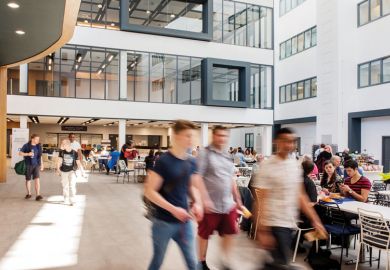
As an international review of the UK’s REF begins even before the assessment panels have done their work, has the exercise’s reliance on rereading published papers finally had its day? Might it be time for metrics? Or something else entirely? Jack Grove looks around the world for options
Researchers in developing countries could be frozen out by high article charges unless wider publishing reform is undertaken, say four Brazilian researchers
Much of the language now used by universities feels like a kind of literary lockjaw that is too dull even to poke fun at. Joe Moran considers the causes and disastrous consequences
Academics’ reading lists are increasingly directed by algorithms. But are the recommendation services of platforms such as Google Scholar, ResearchGate and Mendeley distorting science? And might AI ultimately lead it to a disastrous echo chamber? David Matthews reports
The pandemic has accelerated numerous experiments in assessment for the digital age, moving beyond simple knowledge recall. But is the traditional exam really obsolete? As the dust settles on another marking season, seven academics give their widely differing views
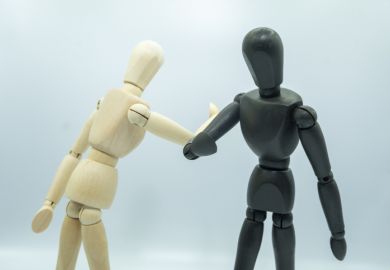
It is 2041. Knee-jerk politics is conspicuous by its absence and students are willing to actually hear each other. But is this odd spectacle a premonition or just a dream, wonders Jonathan Zimmerman
Artificial intelligence will soon be able to research and write essays as well as humans can. So will genuine education be swept away by a tidal wave of cheating – or is AI just another technical aid that teaching and assessment will evolve to take account of? John Ross reports
Academics need to think far more carefully about how they define and police the boundaries between legitimate and illegitimate knowledge, argues Michael D. Gordin