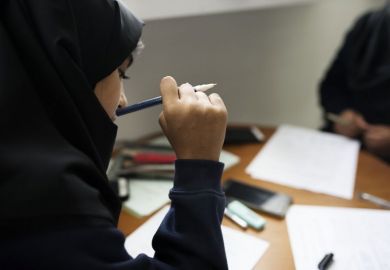
To spare doctoral candidates protracted and unproductive efforts, Tim Marler and Dean Young suggest a pragmatic route to successful completion, while, below, Julian Kirchherr advocates a quick-and-dirty path to a viable thesis
What are vice-chancellors’ insights into the trends, threats and priorities affecting the future of the university? Nearly 200 leaders of world-ranked universities give their views on where the sector will be in the year 2030. John Ross reports
Senior leaders must lead the charge in changing higher education’s structural disadvantages for black and minority ethnic staff and students, say Kalwant Bhopal and Sally Hunt
The Migration Advisory Committee review showed little interest in understanding international students or how the UK labour market works, says Stanley Ipkiss
The political craving for simple measures of learning gain is neither pedagogically informed nor sufficiently nuanced. Four academics argue that only by changing focus will the concept become useful
As a senior lecturer in special needs education, David Bara says having first-hand experience of this world makes his lecturing and research invaluable to the field
There are reasons to be optimistic that we can start to know something about whether life exists elsewhere. But, says Charles Cockell, a more remarkable finding might be that we are exceptional
Zoë Waxman praises a study that debunks the comforting post-war myth of the resisting majority in countries such as France, Belgium and the Netherlands
Sexual harassment of female lecturers by their students is one of the less discussed aspects of the interplay between gender and power in academia. Kate Cantrell tells her story
Matthew Reisz meets Andrea Pető, recent recipient of the Madame de Staël prize, a scholar at Hungary’s Central European University whose feminist probing into the dark corners of Hungary’s past is provoking strong reactions in the ‘illiberal democracy’