The Sense of Style: The Thinking Person’s Guide to Writing in the 21st Century, by Steven Pinker Rachel Bowlby on a modern style guide that aims to teach good writing in a non-prescriptivist way 16 October
British Culture and the First World War: Experience, Representation and Memory, by Toby Thacker Angela Smith on stories of the lives of 11 creatives interwoven to give an overview of the Great War from a range of perspectives 16 October
John Skelton: The Career of an Early Tudor Poet, by John Scattergood David Salter on a comprehensive analysis of the diverse work of a ‘poet of contradictions’ 9 October
Making Make-Believe Real: Politics as Theater in Shakespeare’s Time, by Garry Wills A look at theatre in the Elizabethan court indulges in some fantasies of its own, says Willy Maley 9 October
The Newton Papers: The Strange and True Odyssey of Isaac Newton’s Manuscripts, by Sarah Dry Robyn Arianrhod on the complex and contradictory life of the greatest physicist of all time 9 October
Lord Strange's Men and Their Plays, by Lawrence Manley and Sally-Beth MacLean Peter J. Smith applauds a study of an innovative company of actors and their influence on Elizabethan theatre 25 September
Milton and the People, by Paul Hammond Willy Maley praises a beautifully written account of the poet’s disaffection with the masses 18 September
Literary Criticism in the 21st Century: Theory Renaissance, by Vincent B. Leitch Rachel Bowlby on a comprehensive history of literary theory and the various forms of criticism 11 September
The Culinary Imagination: From Myth to Modernity, by Sandra M. Gilbert Shahidha Bari savours a celebration of our relationship with food across genres and cultures 11 September
Philology: The Forgotten Origins of the Modern Humanities, by James Turner Geoffrey Galt Harpham on a timely reminder of the common root of modern human sciences 4 September
Mysteries and Conspiracies: Detective Stories, Spy Novels and the Making of Modern Sciences, by Luc Boltanski Sharon Wheeler on an ambitious investigation of crime fiction and its relation to modern society 4 September
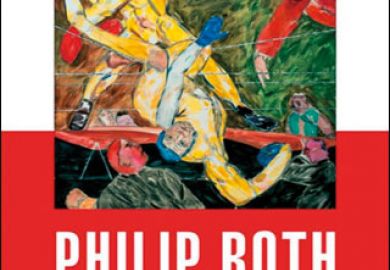
Philip Roth: Fiction and Power, by Patrick Hayes Nigel Rodenhurst is dispirited by one-sided scholarship and an unwillingness to challenge a literary reputation 28 August
Working the Aisles: A Life in Consumption, by Robert Appelbaum Leslie Gofton finds this fusion of memoir and essay blending academic learning, popular culture and politics fails to fully satisfy 21 August
Shakespeare’s Possible Worlds, by Simon Palfrey Peter J. Smith is left bewildered by an ambitious attempt to identify the units that make up Shakespeare’s plays 7 August
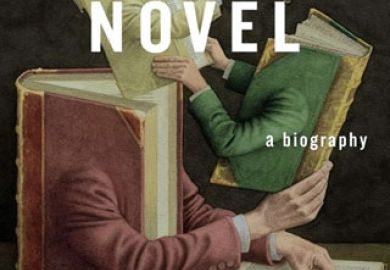
The Novel: A Biography, by Michael Schmidt Robert Eaglestone applauds a lively exploration of intertextuality in a work fit for a post-Wikipedia age 31 July
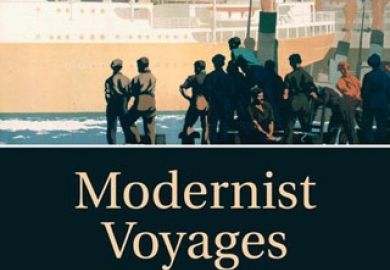
Modernist Voyages: Colonial Women Writers in London, 1890-1945, by Anna Snaith Sandeep Parmar on a brave, welcome crossing of anti-colonialist and feminist narratives 24 July
Philosophy and Literature in Times of Crisis: Challenging our Infatuation with Numbers, by Michael Mack Rachel Bowlby expects some numerical discussion but finds only hefty claims 10 July
Lacan: In Spite of Everything, by Élisabeth Roudinesco Shahidha Bari on a deliberately ‘marginal’ life of the grouchy great man of psychoanalysis 10 July
Books for Children, Books for Adults: Age and the Novel from Defoe to James, by Teresa Michals Which came first, the children’s novel or the adult novel? Shelley King finds out 10 July
Far Afield: French Anthropology Between Science and Literature, by Vincent Debaene Jeremy MacClancy on the evolving relations between two complementary disciplines in France in the first half of the 20th century 10 July
Showcasing the Great Experiment: Cultural Diplomacy and Western Visitors to the Soviet Union 1921-1941, by Michael David-Fox Newly-opened archives reveal celebrity guests’ true thoughts on Stalinism, says Yvonne Howell 26 June
Tambora: The Eruption That Changed the World, by Gillen D’Arcy Wood Alison Stokes on a 19th-century volcanic eruption that caused a global climate disaster 26 June
Hard-Core Romance: Fifty Shades of Grey, Best-Sellers, and Society, by Eva Illouz Laura Frost on the needs met by an erotic best-seller 19 June
Guilty Knowledge, Guilty Pleasures: The Dirty Art of Poetry, by William Logan Duncan Wu on a collection of essays and reviews from a discerning critic 12 June
A State of Play: British Politics on Screen, Stage and Page, from Anthony Trollope to The Thick of It, by Steven Fielding Vernon Bogdanor has a few points of order on an analysis of political fiction’s wider effects 12 June
The Life of William Wordsworth: A Critical Biography, by John Worthen Jane Darcy wonders if exhaustive analysis has left too little room for study of Romantic poet’s creative power 15 May
Culture and the Death of God, by Terry Eagleton The Mephistopheles of the anglophone intelligentsia ponders a God-shaped hole, leaving Fred Inglis exhilarated and maddened 15 May
Posthumous Love: Eros and the Afterlife in Renaissance England, by Ramie Targoff Peter J. Smith on the Elizabethan poets’ rejection of the Petrarchan faith in posthumous passion 8 May
Wilfred Owen, by Guy Cuthbertson Gary Day on a new biography that breathes some life into the war poet 1 May
Notebooks, English Virtuosi, and Early Modern Science, by Richard Yeo William Poole on how a culture of literary commonplacing gradually gave way to one of scientific record-keeping 24 April
Reading Dante: From Here to Eternity, by Prue Shaw Elena Lombardi lauds a persuasive invitation to everyone yet to be beguiled by the Divine Comedy 24 April
Making England Western: Occidentalism, Race and Imperial Culture, by Saree Makdisi Claire Chambers on how the national imaginings of the English changed during the Romantic period separating out notions of class and race 17 April
The Starry Sky Within: Astronomy and the Reach of the Mind in Victorian Literature, by Anna Henchman Advice from an astronomer would have benefited this exploration of connections between two subjects, says Virginia Trimble 10 April
1611: Authority, Gender and the Word in Early Modern England, by Helen Wilcox Helen Smith takes a tour of a landmark year in literary and religious Jacobean culture 3 April
Walden Warming: Climate Change Comes to Thoreau’s Woods, by Richard B. Primack Jules Pretty salutes an account revealing an unnerving alteration in a place and its ecosystems 3 April
Žižek’s Jokes (Did You Hear the One about Hegel and Negation?), by Slavoj Žižek Robert Eaglestone bridles at provocative, yet tired, ‘quips’ from the Elvis of philosophers 27 March
First Light: A History of Creation Myths from Gilgamesh to the God Particle, by G. R. Evans Perceptive questions abound in this Western-oriented discussion, says Ursula King 20 March
Bleak Houses: Disappointment and Failure in Architecture, by Timothy Brittain-Catlin Richard Williams on architectural criticism and how its narrowness affects our built landscape 20 March
A Will to Believe: Shakespeare and Religion, by David Scott Kastan Peter J. Smith on the question of the Bard’s faith 6 March
The Dream of the Great American Novel, by Lawrence Buell Peter Messent redefines the concept with close readings and illuminating insights 27 February
Paper Knowledge: Toward a Media History of Documents, by Lisa Gitelman Colin Higgins on a history of printed materials that have uses but no readers 27 February
The Burden of Female Talent: The Poet Li Qingzhao and her History in China, by Ronald C. Egan Eva Shan Chou lauds an original, erudite portrait of a writer whose courage matched her creativity 20 February
Literature in the First Media Age: Britain between the Wars, by David Trotter Gary Day on an exploration of new technologies’ effects on artists’ representation of the world 20 February
Wizards, Aliens and Starships: Physics and Math in Fantasy and Science Fiction, by Charles L. Adler Her Star Trek dream dashed, Noel-Ann Bradshaw is still delighted by the science of impossible tales 13 February
Postcolonial Manchester: Diaspora Space and the Devolution of Literary Culture, by Lynne Pearce, Corinne Fowler and Robert Crawshaw Claire Chambers on how the colonial legacy is reflected in Mancunian writers’ work 6 February
Celibacies: American Modernism and Sexual Life, by Benjamin Kahan Laura Frost on a portrayal of abstinence not as an absence of sex, but as an organisation of pleasure 30 January
Writing Faith and Telling Tales: Literature, Politics, and Religion in the Work of Thomas More, by Thomas Betteridge Peter Gwyn finds an attempt to put More’s writings into historical context less than clear 23 January
What Is a Classic? Postcolonial Rewriting and Invention of the Canon, by Ankhi Mukherjee Authors emulating Western literature have created their own voice, says Robert Appelbaum 23 January
Rousseau’s Hand: The Crafting of a Writer, by Angelica Goodden The simple life may be a carefully contrived one, says Biancamaria Fontana 23 January
The Antinomies of Realism, by Fredric Jameson The latest work from a leading literary critic expounds a wealth of ideas, says Robert Eaglestone 23 January
George Orwell: English Rebel, by Robert Colls Sheila Rowbotham on a great writer whose contrary aspects are impossible to sum up 16 January
The Book of Common Prayer: A Biography, by Alan Jacobs Willy Maley on one of the most important works in the English language 16 January
Freewomen and Supermen: Edwardian Radicals and Literary Modernism, by Anne Fernihough Sandeep Parmar is tantalised by the notion of the political in Modernism 16 January
The Drama of Reform: Theology and Theatricality, 1461-1553, by Tamara Atkin With the stage set for passionate religious argument, Helen Smith takes her seat 9 January
The Artistry of Exile: Romantic and Victorian Writers in Italy, by Jane Stabler Jane Darcy on wanderers’ thoughts turning to home 9 January
Traveling in Place: A History of Armchair Travel, by Bernd Stiegler Robert Mayhew on the vision, dignity and achievement of two centuries of armchair travellers 12 December
Ezra Pound’s Fascist Propaganda, 1935-45, by Matthew Feldman Richard Bosworth on an exploration of Pound’s activism before and during the Second World War 12 December
What W. H. Auden Can Do For You, by Alexander McCall Smith Chris Jones on a passionate, personal account of poetry’s power 5 December
The First Bohemians: Life and Art in London’s Golden Age, by Vic Gatrell Clare Brant revels in a compelling evocation of non-conformists in the capital’s cultural ‘heart’ 5 December