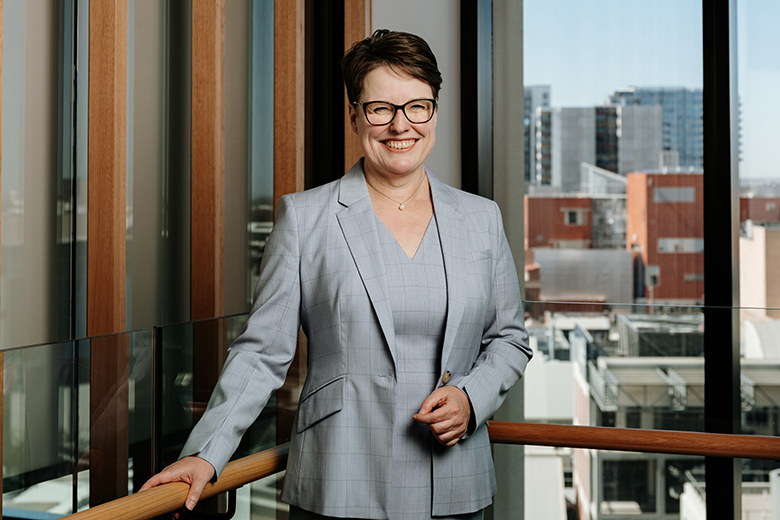
South Australia’s university merger represents a “vote of confidence” in higher education at a time when the sector is more accustomed to scepticism, according to the British political economist enlisted to lead the new entity.
Adelaide University boss Nicola Phillips said the state government’s firm support for the merger reflected a “belief in universities” that was all too rare in government circles. “It’s…remarkable to be taking on the job of vice-chancellor when you’ve got that wind in your sails,” the former University of Melbourne provost and King’s College London deputy principal told Times Higher Education. “It’s refreshing, frankly, to be working in [an] environment where…there is belief in what we do [and] what we can do in the future. It’s a vote of confidence in the potential of education to bring about real social progress. That’s the potential that we have to realise.”
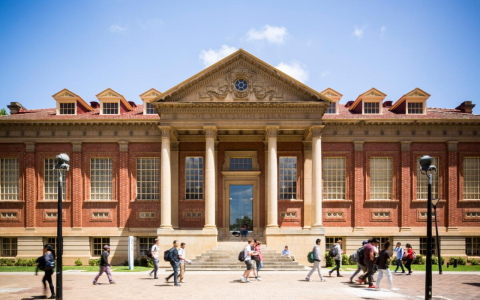
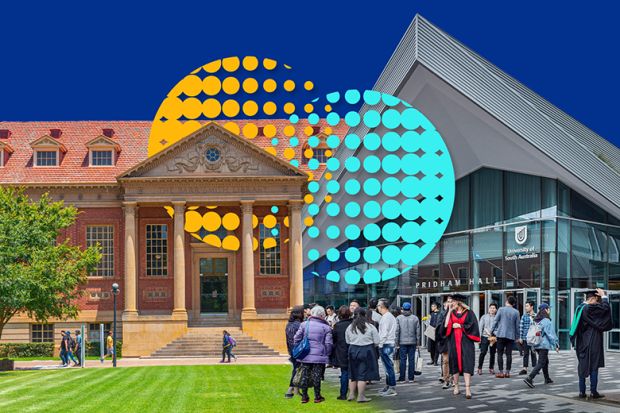
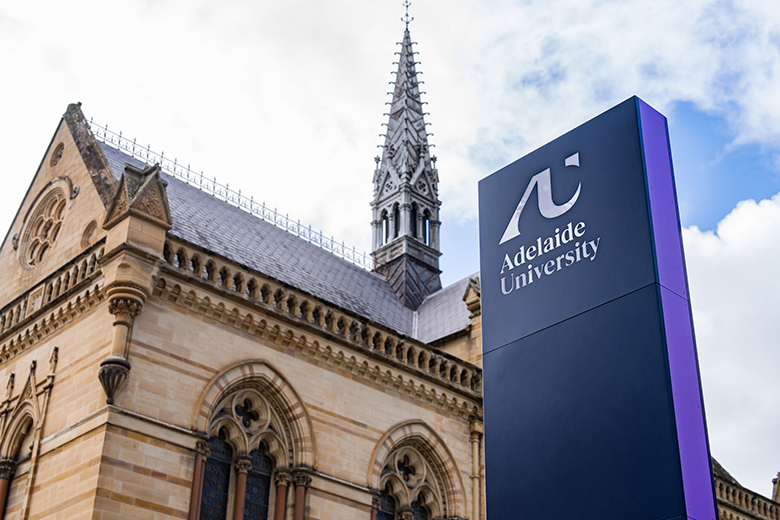
The institution began operations this year as an amalgamation of the University of Adelaide, a 152-year-old member of the elite Group of Eight (Go8) network, with the far younger – and slightly larger – University of South Australia. Both universities’ former vice-chancellors, Peter Høj and David Lloyd respectively, stood down at the end of last year following the completion of the merger process, which included a redesign of all the legacy institutions’ course offerings.
For Phillips, the question was always “how you blend heritage and newness. It’s not like a corporate merger. [These are] two very different institutions, and…you can’t just slam them together and expect something to grow in the cracks between the paving stones.” Hence the comprehensive overhaul of the merged university’s offer: “It’s about as close as you get to building a university from the ground up. It’s been really important all along that this was seen as a new institution. We’re building a new culture for the new university – thinking afresh and giving new expression to what a university is here for, and who a university is here for, and how a university conducts itself as a public institution. It allows us to think differently.”
Phillips believes the scale created by the merger, one of the largest ever attempted in Western higher education, gives it the “heft” – in terms of geographic reach and academic breadth, as well as resources – to meet its supporters’ aspirations for educational participation, research output and economic contribution.
She said 85 per cent of South Australia’s population was within reach of Adelaide University’s seven campuses and 13 shared study hubs, which stretch from Mount Gambier in the south east to Roxby Downs in the central north. The university’s offerings in 301 detailed fields of education make it the country’s most comprehensive university “by a margin of about 14 per cent”.
It also recruits students from a wide range of backgrounds, with 21 per cent coming from socio-economically disadvantaged households and 38 per cent belonging to a recognised equity group. “Of course we want to expand that,” Phillips said.
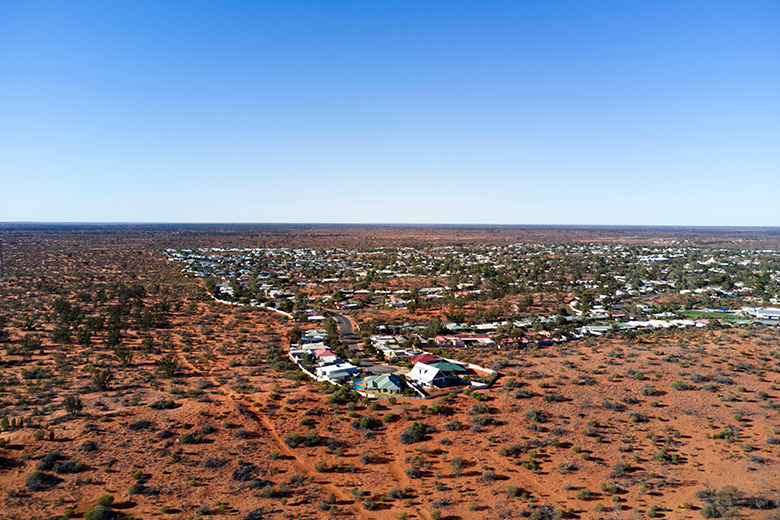
Adelaide’s 11,000 staff and 60,000 students make it the state’s second biggest employer after the government and the country’s second biggest enroller of domestic students after Monash University, Phillips said. It is a larger community than South Australia’s three biggest regional towns combined. As such, it is difficult to meet anybody in South Australia who does not have some direct connection to the university as a student, staff member, industry partner or a relative of one of the above. While this helped engender a sense of ownership in the institution, it also meant that problems – such as the teething issues that beset enrolments ahead of semester one in January – became “dinner table conversation” across the state.
“It wasn’t the start to the year that we would have wanted,” Phillips conceded. “We’ve been working really hard on fixing it. I am very much hoping…that the experience of students will be a very different world in the run-up to academic year 2027.”
Staff will be hoping for improvements, too. The National Tertiary Education Union said the “impossible timelines” imposed by the merger’s architects had been “distressing” and “traumatising” for staff. “They were almost guaranteeing that year one would be a disaster,” said divisional secretary Andrew Miller. But Phillips is adamant that staff buy-in remains a key priority, noting that while a university’s social licence is often characterised as legitimacy “outside the university”, she “never really bought that argument...A really important part of this social licence question starts at home. It starts with having our own houses in order.”
The whole question of social licence takes on “greater dimensions [in] the South Australian context when it is difficult to find somebody here who is not connected in some way or other with the university”, she added. And she acknowledged that the merger was not short on controversy, with some “true believers” countered by some implacable opponents. “There’d still be a lot of disagreement…about whether it should have happened at all,” she conceded. “But whether people thought that it should have happened, it has happened, and they recognise that it’s really important that it works.” And her “overwhelming impression” is of “goodwill to this institution. Even the most vocal sceptics...have been generous enough to say, ‘we want to be part of making it work – let’s get on with it’. You can’t ask for more than that.”
One of the selling points of the merger was that the new institution would have the scale to compete with the rich east coast universities in attracting overseas students. That has not happened so far, however, and administrators are projecting a A$90 million (£47 million) shortfall in earnings from international commencements. Phillips blames both the “structural shift” in global student mobility and the federal government’s deliberate policy shifts to discourage foreign enrolments, combined with some “residual uncertainty” among overseas students about the institution’s “newness” and its operational difficulties early in the year.
“The new university was created to amplify the attractiveness of South Australia to talent from around the world,” Phillips said. But that “narrative” was “put forward in a very different time, long before the policy settings shifted so dramatically around international students”, she added. “I share the position that we take as a sector on the importance of international students, not just for financial reasons – and this is a state where government has been very explicitly clear about how we want international students to be coming here.”

The Commonwealth government has taken its stance on international students because of public concerns about the pressure they impose on local infrastructure, but Adelaide is “starting life with about 26 per cent international students. There’s still headroom to grow, long before you…get into the argument about social licence that we as a sector, rightly or wrongly, are facing at the moment. We don’t have any difficulties with housing, [so] connecting international students with [the] housing pressures in other states is a false argument.”
Still, while the financial shortfall is a “challenge”, Phillips insisted that it “certainly isn’t a crisis”. That said, the university will “have to have a…carefully considered plan for how we’re going to stabilise the situation...We can’t just sort of freeze everything now and then blink in three years’ time and start investing. We’ve got to be investing now, so it’s [important to have] really careful cost management to make sure we’re able to invest in the things that really matter, including our people.”
As part of managing the financial issues, Phillips will be “refreshing” the university’s strategy, which was “written [about] four years ago” and “wasn’t really a business model for a functioning university. It was the business case for the merger. It’s time now to go back and test all of those propositions. The sector has shifted around us. Certainly the external policy environment has shifted around us.”
But she has already ruled out making compulsory retrenchments once the merger’s employment guarantee expires in mid-2027.
“Those options...[are] not even in the air for discussion,” she insisted. “We’re trying to build a university, not destroy it. We’re not going to be engaging in a radical restructuring of a university that we’ve only just built.”
Register to continue
Why register?
- Registration is free and only takes a moment
- Once registered, you can read 3 articles a month
- Sign up for our newsletter
Subscribe
Or subscribe for unlimited access to:
- Unlimited access to news, views, insights & reviews
- Digital editions
- Digital access to THE’s university and college rankings analysis
Already registered or a current subscriber?