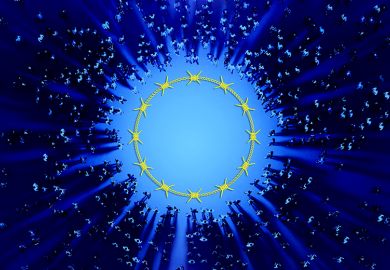
When Maria Leptin, the president of the European Research Council (ERC), announced further “painful measures” to restrict applications for grants last month, it was frequently observed that the continent’s flagship grant funder had become a victim of its own success.
For Bart De Strooper, for instance, the ERC is “the best thing that Europe has ever done for research” owing to its near-exclusive focus on the excellence of proposals in making awarding grants – rather than taking any more political factors into account.
“Even other grants in the Horizon Europe programme don’t have this mentality – you need to be part of a certain network of institution or focus on a chosen area to get funded,” reflected the Belgian neuroscientist, who is the founding director of the UK’s Dementia Research Institute at UCL.
He was referring to the more consortium-based funding for “global challenges and European industrial competitiveness” offered in Horizon Europe’s Pillar Two. The ERC is part of Pillar One, which is focused on “excellent science”, on topics proposed by applicants rather than the European Commission. But, according to De Strooper, even the doctoral and postdoctoral fellowships distributed under the Marie Skłodowska-Curie Actions moniker, also part of Pillar One, “have some politics at play, as they like to spread them around Europe”.
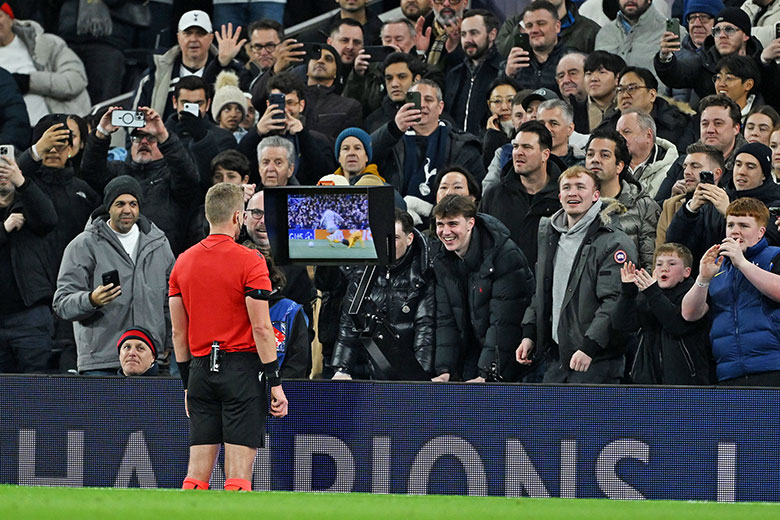
De Strooper’s description of the ERC as “the Champions League for research” – in reference to the elite, pan-continental football tournament – is a very common one. Even a single ERC grant can make a career given their prestige and their portability between institutions, putting recipients in strong bargaining positions. And in some European countries, an ERC grant is the only show in town for those who aspire to obtain the large grants necessary to conduct a lot of cutting-edge science.
By offering such lifelines, the ERC has disrupted staid faculty hierarchies across the continent that previously forced outstanding young scientists to uproot their families and move to the US or to stronger research nations within Europe, De Strooper explained; those unwilling to do so faced a long waiting game.
Before the ERC was launched in 2007 researchers who stayed put “had to wait until their professor retired or died before they could take over – now they can win an ERC starting grant and take it anywhere, which transforms careers”, he said, noting that successful grantees may move or use grants as leverage to secure additional institutional funding or a more stable research post with their existing institution.
But, inevitably, all these benefits are in high demand. In an open letter published on 16 April, Leptin revealed that, recently, the number of applications has been rising dramatically, with panels that previously had between 50 and 150 proposals to discuss during their weeklong meetings now facing more than 250 – “and we expect this upward trend to persist. We have increased the number of panel members, but there is an upper limit to the size of a panel, determined by practical constraints and how panels function as groups.”
However, her proposed solution of lengthening the period during which unsuccessful applicants are banned from reapplying was mostly withdrawn within a fortnight after more than 1,000 scientists signed a letter arguing the plan “penalises high-quality proposals, discourages early-career researchers and disproportionately affects researchers from less well-resourced institutions and countries”.
Hence, resubmission restrictions for 2027 will only now be applied to Synergy Grants, which are awarded to small groups of principal investigators collaborating on a single problem. But Leptin did not rule out future changes to resubmission rules as it is “vital that we address the increasing number of applications, while maintaining an assessment process of the very highest quality”. Further announcements will come “in due course”, Leptin wrote in her own open letter to researchers at the end of April.

The pressure on ERC funding would certainly be lifted if the commission’s proposal to nearly double its budget from €16 to €31 billion for the 2028-34 spending period is approved by the European Parliament and EU national governments. As Leptin said in a speech last November, this would allow it to “fund all of the excellent proposals that we currently receive”, as well as allow the ERC to offer inflationary increases in grant levels and continue to fund the recently announced ERC Plus “super-grants”.
These will offer up to €7 million over four to seven years – as opposed to the maximum of €2.5 million over five years currently offered by the ERC’s flagship advanced grants for senior scientists. Here, perhaps, the more relevant football comparison is England’s Women’s Super League given its recent success in attracting top talent from the US: the ERC Plus grants are part of the commission’s “Choose Europe for Science” scheme to lure high-performing US scientists disillusioned by the Trump administration’s grant cancellations and efforts to slash research spending.
But some are sceptical that even ERC Plus levels of funding will be enough to reverse a tide that typically washes top researchers the other way across the Atlantic.
“I’ve heard from other people that there were more applications [to the ERC this year] by US scientists, but I very much doubt that the number is [significant],” said Cristina Muñoz Pinedo, who leads the Cell Death Regulation group at Bellvitge Biomedical Research Institute (IDIBELL) in Barcelona.
“I am currently doing a sabbatical in New York and, believe me, it is still much easier to do science here. The funding is dramatically better here regardless of the recent events, and the infrastructure is at a different level.”
Moreover, there are doubts that such large grants constitute the best use of the ERC’s highly sought-after funding. The number of Plus Grants awarded every year is capped at 30, but amid overall ERC success rates of about 15 per cent, many suggest that even this level of expenditure can’t be justified on current budgets. Henrik Toft Simonsen, a plant biology professor at Jean Monnet University in Saint-Etienne, pointed out that even that low number of awards would account for €210 million a year, which could fund 100 ERC Starting or Consolidator grants.
This would boost the careers of younger researchers within Europe and potentially bring success rates for these schemes closer to 20 per cent. It would also have more scientific impact, he believes.
“Why support just 30 smart brains instead of 100 smart brains?” he asked. After all, “a grant of €2 million is still attractive to anyone in academia.”
In that regard, he also thinks it is worth discussing whether applications from people at the end of their careers should be discouraged: “I have personally reviewed applications from applicants that are 75 and above…and who wanted to move [to another institution] in connection with retirement, or at least so it seemed. These are good scientists, but maybe the ERC should consider whether they want to fund research that will stop in five years or [research that will] continue for decades. This is a very political decision but relevant.”
More generally, rather than limiting applications, Simonsen believes that a better “easy fix” to the overburdening of ERC panels would be to limit the number of reviewers scrutinising grant proposals. Noting that the problem of too many applications “did not start this year or last year but has been going on for many years – but no ERC [president] has wanted to fix it”, he said: “I checked my own ERC starting grant from 2008 and there were eight and nine reviewers. This year, I hear there are 10 reviewers on these grants, which is stupid,” he said, suggesting “four should be enough for any grant – maybe five. Anything above five is waste of the reviewers’ time. That will limit the number of applications each reviewer will have to do.”
The ERC could streamline the application process in other ways, added Simonsen. “We should limit round-one submissions to three or four pages. And no CV – just select on the idea and not the person. That would make it a lot easier for a reviewer to think, ‘Wow this is a cool idea; I want to learn more’, or ‘No, this is OK but apply somewhere else’.”
De Strooper agreed, but he would go further: “The first stage should be a letter of intent – just one page, with your wild idea and how you would do it. We’re currently asking for 10 pages but also another 50 pages of admin around ethics, protocols and how the institution will support you. It’s impossible to review 50 grant applications in a week if they are so long,” he said.
But those letters of intent might also begin to pile high if, as suspected, many researchers are now using sophisticated artificial intelligence (AI) tools to help them develop and submit a greater volume and quality of proposals.
Banning AI use is neither practicable nor desirable given how embedded it already is in scientific life, said De Strooper: “Every investigator is using two or three AI models to analyse data and develop hypotheses, so we are going to see more high-quality proposals.” Nor is it surprising that Europe’s largely non-native English speakers lean on generative AI to finesse their applications, he added.
“AI is here to stay,” agreed Oded Rechavi, a professor in the Faculty of Life Sciences at Tel Aviv University, who has co-founded the AI-powered q.e.d science platform with other Israeli scientists to help researchers to hone their papers and grant proposals. But “when scientists have tools to review their own proposals, they will produce fewer but better proposals,” he said.
In turn, AI screening could also be incorporated into the ERC’s peer review process, weeding out weaker proposals, Rechavi argued: “Large parts of the reviewer’s work are technical and tedious: humans must be left to deal with the creative parts that AI is (for now) bad at.”
Beyond the ERC’s oversubscription problem, there are other fundamental issues that the body will need to confront as it nears its 20th anniversary next year. Among the most pressing is whether the scheme should remain solely excellence-led or should start to take some account of the EU’s competitiveness priorities and distributive considerations.
At one point last year, there was widespread concern that the whole of the Horizon Europe scheme would be rolled into a broader fund to boost Europe’s industrial competitiveness. And while that was averted and scientific excellence has been affirmed as the overarching objective of Horizon Europe, concerns remain about the ERC’s independence, particularly given its requirement, in the commission’s proposal for the next Horizon Europe funding period, to respect the “corporate policies” of the commission and have regard to “European scientific needs”.
There are also concerns that the commission’s proposal to cut the ERC president’s term from the current 4+4 years to 2+2 will limit the incumbent’s ability to assert the ERC’s independence and put off outstanding candidates. Sector lobbyists were therefore relieved when MEPs recently pushed back on that proposal and explicitly included communication with policymakers as part of the president’s role.
A perennial question about the ERC, too, is whether a distributive element should be introduced to its funding to ensure that it is spread more evenly around the continent. Indeed, the ERC itself has called for more action to narrow the “performance gap” between countries in the north-west of the continent compared with those further south and east. An ERC report published in March noted that Greece, Portugal and the 13 member states that have joined the EU since 2004 form roughly a quarter of the European Union’s population but researchers based in these countries secure only about one-20th of the ERC grants awarded between 2007 and 2023. And with some nations experiencing ERC success rates as low as 1 per cent, calls for a more equitable model have been advanced by nation-states, too.
“The ERC scientific council’s commitment to excellence is absolute,” said Jan Palmowski, secretary general of the Guild of European Research-Intensive Universities, on the steering committee of eminent scientists whose number now includes French Nobel prizewinner Emmanuel Charpentier, the gene-editing pioneer. “However, the scientific council is clearly concerned to see how, within that…commitment…all parts of Europe – especially lower-performing countries – can be supported to do better in the ERC.”
He also noted that the gap between the 15 “widening” countries and the older members had already “narrowed significantly in recent years”, and he pointed to the example of Czechia, whose “bottom-up mentoring schemes have been so successful that in the 2024 Consolidator grant call [for mid-career researchers], the country had the highest success rates of all”. He also noted the recent success of Estonia’s University of Tartu, Lithuania’s Vilnius University and Slovenia’s University of Ljubljana in recent ERC calls.
Perhaps such institutions could also benefit from the excellence-driven “ERC for institutions” model first proposed by former Italian prime minister Mario Draghi in his 2024 report on European competitiveness aimed at providing “the required resources for academic institutions” as a whole (Draghi also proposed doubling the ERC budget to pay for this).
The German Rectors’ Conference and German Research Foundation built on this idea in March, proposing a “Nexus” funding instrument to fund networks of at least three universities or research institutions, “ideally from three different countries”, to investigate a specific topic. Some 20 projects would be funded initially in a pilot scheme to the tune of €20 million a year over seven years.
“The German proposal echoes national excellence initiatives in Germany and Austria, but also has echoes of the Dutch sectoral plans, instituted in 2023, to bring a stronger structural frame to excellence-based, bottom-up collaboration,” explained Palmowski.
“The biggest challenge would be the funding because this proposal is based on an assumption that the substantial resource would be additional to the money currently foreseen for the ERC, and it is difficult to see where that money would come from. Moreover, if you seek to bring excellence together on a European scale, it is not clear that national examples serve us best for the scale we require,” he added.
De Strooper is also unconvinced by the German idea: “If you have €20 million divided three ways, it’s €7 million a year [per institution] – are you going to make a transformational breakthrough with that? Maybe if you set up another Crick Institute for biology and one for nanotech: that might work, but then you’d need €150 million for each, and the ERC doesn’t fund stand-alone centres like this.”
But Palmowski conceded that the emphasis on collaborative research is likely to intensify as more and more countries associate to Horizon Europe from far beyond the continent, with Canada and New Zealand joining Horizon Europe the latest examples, and Australia and India also likely to enter. Neither Canada nor New Zealand has joined Pillar One (their participation is limited to Pillar Two), but that could change in the next funding round – potentially seeing applications to the standard ERC schemes increasing further, too.

For IDIBELL’s Muñoz Pinedo, the researcher doing a sabbatical in New York, it is vitally important to improve ERC success rates with extra funding, particularly for her field (a €500 million per year uplift was suggested in the open letter protesting against the ERC’s resubmission restrictions).
Life scientists, she said, are disproportionately unlikely to apply for ERC grants, and the value of those allocated is “disproportionately low if we compare it to the number of life scientists in Europe”. In particular, the advanced grants, which are awarded to senior scientists, “are seen as impossible [to obtain] by life scientists, who therefore don’t bother to apply (it’s a lot of work) and then we get less awards as a field because the number of awards depends on the number of applications”.
Funding more mid-range proposals may not provide the political traction that EU member states desire as they begin to consider the commission’s request for a hefty budget uplift – a process that in previous Multiannual Financial Framework negotiations has typically seen the science budget hacked back to inflation-plus deals at best.
But while reforms that promise politicians more immediate economic returns might help to limit that hacking, it remains vital that its founding principles are maintained, said UCL’s De Strooper.
“There is no other scheme in Europe that only supports excellence,” he said. “If you define beforehand what you want to get [from research], you will never find really new things,” he said.
“There’s no problem in having other schemes that want to work further on what is known or want to support research infrastructure. But the basis for real innovation is a constant flow of cutting-edge research beyond the borders of what is known. If you play politics [and] destroy this precious source of new knowledge, this would be a disaster for the European research landscape.”
Register to continue
Why register?
- Registration is free and only takes a moment
- Once registered, you can read 3 articles a month
- Sign up for our newsletter
Subscribe
Or subscribe for unlimited access to:
- Unlimited access to news, views, insights & reviews
- Digital editions
- Digital access to THE’s university and college rankings analysis
Already registered or a current subscriber?