When one of my former students recently sought my advice on US doctoral programmes in African studies, I had to tell him that although the field is vibrant and interdisciplinary, it is often marginalised at American universities.
Across US academia, there is a plethora of generally robust programmes in Asian, Latin American and Middle East studies – and rightly so. But it remains the case that African countries, peoples and cultures are deemed less worthy of study – and of institutional support for that study.
It might be restating the obvious to say that it is ethically and intellectually wrong to deny African studies the resources and respect it deserves but, unfortunately, it needs restating. That denial furthers the harmful indifference and condescension towards Africa that is evident in American politics, media and popular culture. Complex legacies of racism and imperialism in Africa, and especially those of US allies such as the UK, France and Belgium, have contributed to distorted American perceptions of the continent. Hence, when Africa receives attention, it is often in reductive, prejudicial and pejorative ways that reproduce dehumanising stereotypes and bigotries.
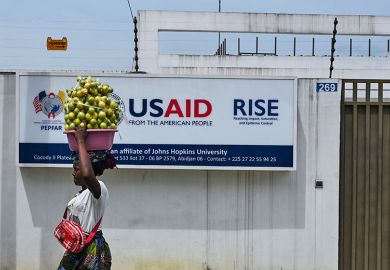
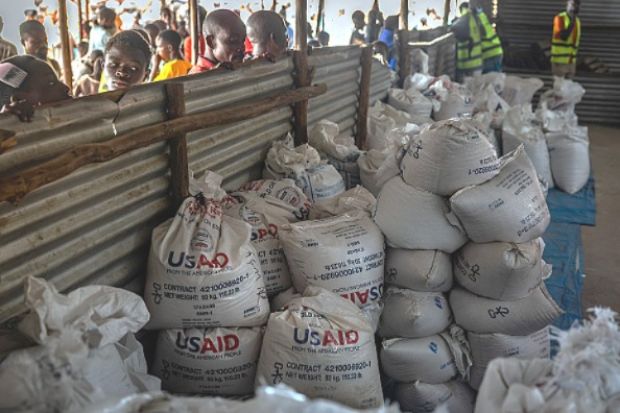
Universities have an important role to play in correcting this – and that role is particularly important at a time when the US, Canada and many European countries have drastically cut back development aid to Africa. As well as shutting down vital healthcare and other development projects in Africa, the decline in productive relationships with African individuals, institutions and governments will lead to a further decline in knowledge of the continent.
Universities tend to perceive themselves as exemplifying liberal democratic values that stand in contrast to these discriminatory colonial legacies. In reality, they often reproduce the prejudices of the societies in which they function – even if unconsciously. Yet major universities in former colonial powers – such as the UK’s universities of Oxford and Cambridge, as well as Soas, University of London – have established interdisciplinary graduate programmes in African studies. Their peers in the US mostly have not. Stanford University was an exception – but it recently closed its pioneering master’s in African studies.
US universities can and must provide a counterweight to a federal government whose aid policies and public statements have been deeply hostile to Africa. For instance, they can do more to integrate African perspectives and voices into teaching and research, and they can build reciprocal relationships with African universities, researchers and students to expand knowledge and understanding of Africa.
But they also need to make a greater commitment to African studies itself: to research and teaching that explores the continent in all its complexity, diversity and dynamism – with attention to both its history and its contemporary reality and future possibilities in all domains, from politics and culture to economics and public health.
Yes, many US universities are facing economic challenges. But there is growing interest in Africa among American students as African culture becomes more accessible via the internet and the African diaspora in the US grows. African studies programmes need not be loss-making.
Moreover, even if the federal government does not recognise it, African studies is strategically vital for the nation. Africa may not be within the US’ supposed sphere of influence, as Latin America is, and it may not contain any of the US’ main geopolitical rivals, as Asia does, but African countries will inevitably take more central roles in global politics, economics and culture as their populations, economies and human resources grow.
Other countries and their universities will recognise this. They will engage with Africa to advance their own interests, as China is already doing on a massive scale. Americans will pay the price for a lack of knowledge of and equitable engagement with Africa – especially in areas of mutual priority, such as conflict reduction, public health, food security, nature conservation and sustainable, equitable development.
It was never ethically or intellectually defensible for American higher education to marginalise Africa. But, today, the case for African studies is not only driven by an ethical imperative to treat Africa and Africans with the same level of respect and resources that universities dedicate to other global regions. It is also about national self-interest.
In short, academia must show leadership how the US relates to Africa and Africans – at a time when the American government is doing the very opposite.
Noam Schimmel is lecturer in development practice and international and area studies at the University of California, Berkeley.
Register to continue
Why register?
- Registration is free and only takes a moment
- Once registered, you can read 3 articles a month
- Sign up for our newsletter
Subscribe
Or subscribe for unlimited access to:
- Unlimited access to news, views, insights & reviews
- Digital editions
- Digital access to THE’s university and college rankings analysis
Already registered or a current subscriber?