
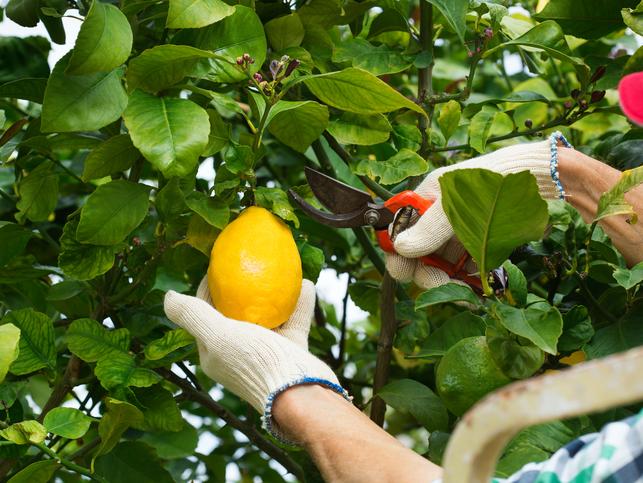
‘Prune the tree to let the fruit stand out’


Created in partnership with

Created in partnership with
You may also like
Turning your thesis into a book means moving out of the academic bubble to a shelf in a crowded marketplace. Your expertise is now a product.
The academic publishing field may be small, but it’s far broader than the readership of the average thesis. They’re generally read by examination committee members and subject matter experts, before they end up in institutional repositories.
- Anatomy of an academic book proposal
- What is developmental editing, and why does your scholarly manuscript need it?
- Spotlight guide: take your academic writing skills to the next level
In the humanities and social sciences, think of the thesis as a proto-book – one that, while meeting academic requirements, argues around an insight, an original point of view. This core – the thesis of the thesis – is the focus of the book. It can take the form of a new concept, a model or the reformulation of a myth: something that will be useful to many students and colleagues.
Pruning the tree and harvesting the fruit
For a thesis to become a book, we need to prune the branches of the tree so that the fruit stands out. This will mean omitting and summarising much of the infrastructure of the thesis, while developing and highlighting the original contribution.
What should be reduced:
- The total number of pages of the thesis. Aim for a maximum of 25,000 words
- Part of the literature review. Keep your reference list to under 200 entries
- The conceptual apparatus. Only keep the concepts that you explored in depth in the thesis – a good rule of thumb would be five or fewer
- Background sections and erudite digressions.
And what should be enhanced:
- Writing style and narrative mode
- The central argument – the author’s own contribution
- The explanation of how the results were reached, without excessive methodological jargon
- The structure, so that it is didactic and presented with elegance.
Finishing a thesis can leave you feeling exhausted with the topic and the minutiae of the text, after going over it so many times. However, starting your book immediately afterwards can help refresh the topic in your mind, reducing that mental resistance to it. Think about it like this: you’re allowing many more people to benefit from those years of effort.
Before starting to write, you need to write a book proposal, just as you would write a thesis proposal before starting the research. This proposal should include:
- Title of the work
- Topic and scope of the book
- Style and structure
- Target audience
- Approximate word or character count of the final work
- Estimated completion date.
Researching the target audience is particularly important. The broader the audience, the more effort must be put into persuading them of your argument. Sometimes it can be difficult to gauge how much knowledge your reader is coming to a book with and how much to explain important concepts. Keep specific readers in mind to combat this. It will also help you keep technical jargon to a minimum.
It can be helpful to think about who we would like to read us: academics from other disciplines, students, journalists, professionals.
The writing process
Once you begin writing, think very carefully about the title of the work and all titles and subtitles. Make them attractive and clear, so that they reflect the internal structure of the book at the reader’s first glance. A table of contents is a good sales argument. Titles that combine a metaphorical main title with a concrete, referential subtitle are particularly appealing – one of my books is titled The Violence of the Narrative: Journalistic Discourse and Police Cases. Your title should extend the scope of the thesis beyond the specific cases analysed.
When pruning, avoid thinking small, removing individual words from sentences. If more than one hundred pages must be cut, let entire chapters or sections go – it’s more efficient. You could even divide the thesis into two books, or into a book and an article or stand-alone chapter. For example, a solid state-of-the-art review could become part of a textbook.
Once the thesis has been trimmed, hone your style and arguments. The goal is clarity, without sacrificing depth. Ensure that selected parts are well stitched together and that the seams do not show – that is, readers should not notice gaps or jumps in the argument. This can be achieved by adding a brief introduction at the beginning of each chapter, explaining where it comes from and where it is going.
When you’ve finished, always go back and rewrite the introduction.
Use generative artificial intelligence as an assistant for these steps, without diminishing your control of the content. This could include:
Thesis core: Help formulate different versions of the central argument, the book’s summary and the proposal for publishers.
Structure: Propose alternative tables of contents and clearer chapter organisation.
Pruning: Identify sections that can be removed, summarised or transferred to articles or independent chapters.
Writing: Rewrite sections by simulating readers; suggest more narrative-style paragraphs.
Titles: Generate titles and subtitles; assist in drafting the introduction.
I recommend working with an AI application loaded only with the text you are working on (for example, Notebook.ML), and customising your account profile. When writing the prompt, specify the type of book, objective and audience for which you are requesting its assistance. Also, ask it to respect the style of your text.
Ultimately, producing a book from a thesis is a new and stimulating challenge, adding the skills of a writer to those of a researcher.
Damián Fernández Pedemonte is professor of communications at Universidad Austral.
If you would like advice and insight from academics and university staff delivered direct to your inbox each week, sign up for the Campus newsletter.
