
Help students make the leap from classroom to clinic


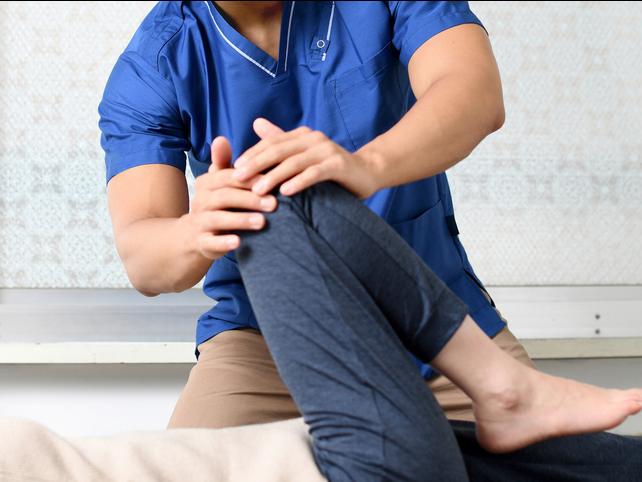
Created in partnership with

Created in partnership with
You may also like
Workplace‑based learning helps students acquire knowledge and skills through authentic workplace experiences, allowing them to apply competencies in real clinical contexts. One form of this is clinical placement, which makes up a substantial proportion of the physiotherapy curriculum. It provides students with opportunities to translate the theoretical knowledge and practical skills they’ve learned into real patient management.
But despite strong university‑based preparation, many students encounter a noticeable gap in their skills when transitioning from the classroom to the clinic. It can affect their performance and confidence for professional practice.
The blind spots of classroom-based practical training
In traditional practical classes, students typically work in pairs, alternating between the roles of student physiotherapist and student‑acted patient. Because peers know one another well and share an understanding of the expected learning outcomes, student‑acted patients tend to be highly cooperative and respond predictably during subjective examinations, such as patient interviews and objective assessments, including physical examinations and interventions. This comfortable, low‑stress learning environment supports skill acquisition. However, it does not reflect the realities of complex clinical practice, where patients’ conditions fluctuate and their responses are often unpredictable.
- Unifying theoretical and clinical education in a medical curriculum
- How to build competency-based assessment into a clinical supervision course
- Support medical students to form their identity as doctors
As a result, students may feel competent in the classroom, yet unprepared for the uncertainty, time pressure and fluctuating patient conditions that are normal in clinical practice.
What happens in clinical placements?
When students enter clinical placements, they often experience stress and difficulty when managing and communicating with real patients in unfamiliar and complex environments. These challenges intensify when patients’ conditions change rapidly or respond differently from what students anticipate or expect.
With limited clinical and workplace experience, students may feel pressured to make swift and on-the-spot decisions. They narrow their focus to complete predetermined tasks, rather than actively listening to patients and what they’re feeling. Task‑driven behaviour undermines patient‑centred practice and leads to missed clinical cues, essential for effective patient management.
Clinical reasoning, adaptability and situational awareness cannot be fully developed through tutorials or peer role‑play alone. This disconnect between academic preparation and clinical expectations can hinder students’ confidence and performance, reinforcing the need for more authentic preparatory learning experiences.
How small groups, simulations and creative pedagogy can help
Simulation has become increasingly common in physiotherapy education, particularly through scenario‑based, whole‑task practice. But crucially, it has to be combined with small-group learning. Small groups create a psychologically safe environment in which students feel comfortable experimenting, making mistakes and learning through practice, which is essential for boosting their competency and confidence in handling uncertainty and responding to their patients’ cues.
Small‑group formats also ensure that each student has sufficient hands-on opportunities to manage patients and make decisions. It also mirrors real clinical teamwork, allowing students to hone their communication skills, delegate to each other and develop collaborative decision‑making in a realistic context. These are all key components of graduate competency, essential for career readiness.
To implementing small‑group simulation at scale, we need to deploy creative and adaptable pedagogical strategies. Large physiotherapy programmes often face constraints in staffing, space and timetabling. Adopting flexible scheduling models, diverse teaching pedagogical approaches beyond technical skills training and creative design in teaching activity planning is crucial to maximise learning impacts.
The SPACE programme
To better support students’ transition from classroom to clinic, our team developed the Standardised Programme for Advancing Clinical Education, which we call SPACE. This programme brings simulated ward and outpatient environments into university classrooms. Through interactions with simulated patients, either in the form of high‑fidelity dummies or trained actors portraying realistic clinical presentations, students experience patient management under time pressure, better mirroring real clinical settings. They have to make on‑the‑spot decisions in response to dynamic patient cues, replicating the challenges encountered during clinical placements.
Educators traditionally rely on directive feedback, correcting students’ mistakes immediately. While effective for prompt behavioural correction, this approach does not address what’s causing the errors. Students may perform a specific task correctly without developing a deeper and transferable understanding that can be applied across contexts. What works for us is comparing single‑loop learning, like focusing on correcting actions, with double‑loop learning – such as focusing on exploring the underlying values, assumptions and interpersonal dynamics – during reflective debriefing.
In SPACE, we intentionally incorporate a variety of feedback styles to familiarise students with the diversity of feedback they may encounter during work-based learning. This prepares them to navigate hierarchical dynamics and strengthens their capacity for reflective, adaptive practice: key attributes for confident, career‑ready healthcare professionals.
Outcomes and impact
Since its launch in 2025, more than 270 students have participated in SPACE. They’ve reported significant increases in self‑perceived competence when managing simulated patients across musculoskeletal, neurological and cardiopulmonary conditions. The proportion of students achieving Grade A during clinical placements, as assessed by clinical educators, increased by 8 per cent compared with non‑SPACE cohorts. These promising results suggest that the programme enhances students’ confidence, clinical performance and readiness for workplace‑based learning.
Bridging the gap between university‑based teaching and workplace‑based learning remains a critical challenge in physiotherapy education. The SPACE programme demonstrates that with thoughtful design, flexible implementation and creative pedagogy, simulation can meaningfully enhance students’ competence, confidence and career readiness.
Advice for educators
When designing teaching activities, consider students’ attention spans and their capacity to maintain sustained focus and concentration. Enhancing the realism of simulation scenarios, including patient responses and environmental details, can significantly increase student engagement and optimise learning outcomes, ultimately contributing to uplifting graduate competency and readiness in clinical practice.
Shirley Ngai is associate head and associate professor and David Yu, Raymond Tsang and Nerita Chan are all professors of practice, all at the department of rehabilitation sciences at The Hong Kong Polytechnic University.
If you would like advice and insight from academics and university staff delivered direct to your inbox each week, sign up for the Campus newsletter.
