
Extend reality to make learning more meaningful


Created in partnership with

Created in partnership with
You may also like
Today’s students constantly engage with highly stimulating digital content – video games, social media, virtual worlds, to name a few. These ecosystems do more than capture attention; they shape how learners explore, interact and construct knowledge. The challenge now is to create experiences that resonate with students’ changing needs while maintaining pedagogical rigour.
Thoughtfully designed, immersive experiences using extended reality (XR) enable students to apply and develop competencies within real and/or virtual environments in an experiential, active and adaptive way. This approach integrates principles of experiential learning with elements drawn from the entertainment industry – such as narrative design, interactivity and multisensory engagement – and embeds them within a pedagogical framework.
Rather than positioning technology at the centre, immersive learning prioritises the design of authentic experiences aligned with clearly defined learning outcomes.
Key technologies for immersive experiences
A 360° video creates a sphere of footage that captures real and simulated surroundings. This helps students engage in contextual exploration and observation, enhancing situational awareness and reflective analysis.
Virtual reality (VR) uses headsets to immerse students in digital environments where they can interact with objects using virtual avatars. VR is particularly effective for safe practice, complex simulations, professional skills training and competency-based development.
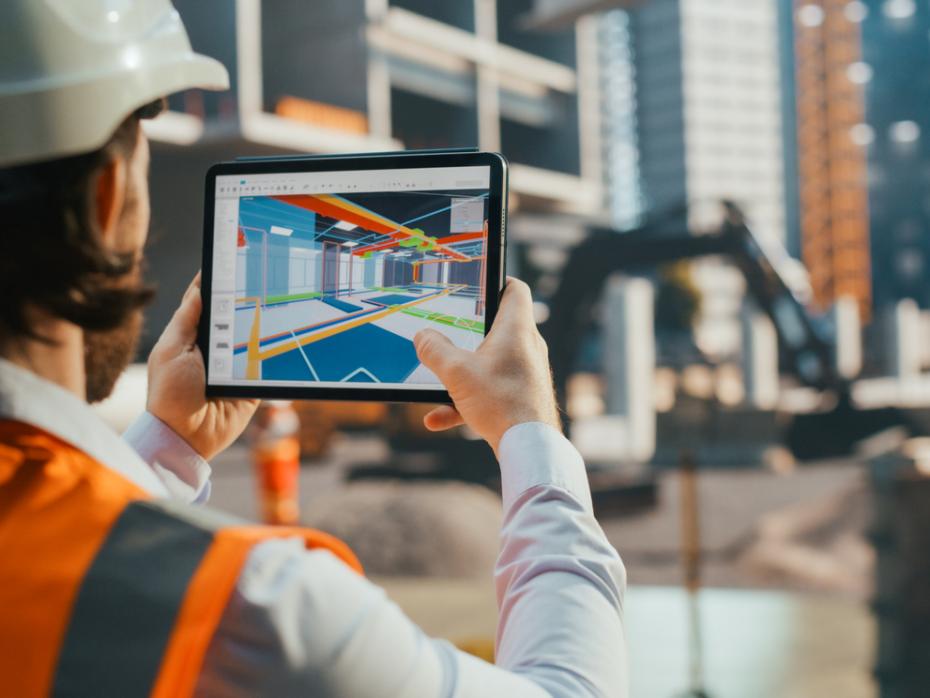
Augmented reality (AR) overlays digital elements on to the physical environment through mobile devices or wearable technology. AR supports real-time visualisation of additional information, manipulation of three-dimensional models and interactive analysis of objects or processes.
Principles for designing immersive learning resources
Designing effective experiences requires more than simply incorporating XR technologies; it demands intentional pedagogical decisions that connect context, interaction and learning outcomes. The following principles provide a framework for developing meaningful and impactful immersive activities.
Design an authentic experience
Use of VR, AR or 360° video, should be grounded in realistic professional or disciplinary contexts that reflect how knowledge is applied in real life. This involves designing scenarios that mirror authentic challenges, environments and decision-making conditions.
Example: In a medical training simulation, students can interact with a virtual patient presenting symptoms that evolve based on their diagnostic decisions.
Recommendation: Collaborate with industry experts or use real case data to ensure contextual accuracy and relevance.
Map out a journey
Learning experiences must be structured to allow students to progress through clearly defined stages, each aligned with specific learning objectives. Sequencing should guide learners from initial exploration to more complex tasks while fostering autonomy.
Example: A business simulation might begin with market analysis, followed by strategy selection, and conclude with performance evaluation.
Recommendation: Use instructional design models (eg, backward design) to align each interaction with competency development.
- Spotlight guide: Soft skills for hard times
- Spotlight guide: Reframe assessment as part of learning
- Get started with virtual reality for learning and teaching
Create a story
Narrative elements such as storylines and characters enhance engagement by connecting students emotionally to the learning experience. A well-designed narrative also helps learners understand the purpose behind their actions.
Example: In an engineering simulation, students might take the role of project managers tasked with solving infrastructure challenges under time and budget constraints.
Recommendation: Develop a clear narrative arc (introduction, conflict, resolution) to sustain engagement throughout the experience.
Give students responsibilities
Interactions should go beyond passive observation and require learners to make decisions, solve problems and manipulate elements within the environment. Each interaction must directly contribute to achieving learning outcomes.
Example: In an environmental science simulation, students could test different sustainability strategies and observe their long-term ecological impact.
Recommendation: Design branching scenarios where different decisions lead to different consequences, reinforcing experiential learning.
Prevent cognitive overwhelm
Cognitive load theory suggests that people have limited working memory, so too much information, distractions or complexity can hinder learning. Immersive environments can easily overwhelm learners if not carefully designed, so minimise extraneous stimuli and prioritise elements that directly support learning.
Recommendations:
- Avoid overloading a virtual environment with unnecessary visual effects or background noise that distract from the task.
- Apply principles from cognitive load theory to balance immersion with clarity and focus.
Increase the difficulty gradually
Tasks should increase in difficulty as students build knowledge and confidence. This scaffolding approach supports deeper understanding and skill acquisition over time.
Example: In a technical training simulation, learners might first identify components, then assemble systems and finally troubleshoot failures.
Recommendation: Incorporate adaptive elements that adjust complexity based on learner performance.
Ensure the activity is accessible to all students
An immersive experience must be technically functional, intuitive to navigate and accessible to diverse learners. Poor usability can hinder learning regardless of content quality.
Recommendations:
- Ensure that controls are easy to understand and that instructions are clear
- Test the activity with student volunteers before rolling it out to the entire class
- Include accessibility features such as subtitles, alternative navigation methods and adjustable settings.
These principles ensure immersive experiences move beyond novelty and contribute substantively to learning outcomes.
Technological evolution continues to reshape educational possibilities, particularly through the rapid integration of artificial intelligence into digital learning environments and XR systems. However, the transformative potential of immersive learning lies not in technological novelty, but in its deliberate integration into competency-based instructional design.
Immersive learning design demands a rethink in how students learn, construct meaning and participate in shaping their educational journeys.
Daniel Cantú and Claudia Hernández are pedagogical architects at Tecnológico de Monterrey in Mexico.
If you would like advice and insight from academics and university staff delivered direct to your inbox each week, sign up for the Campus newsletter.
