Mixed Emotions: Beyond Fear and Hatred in International Conflict, by Andrew A. G. Ross Gregory Kent explores the affective consequences of war 30 January
The Children’s War: Britain, 1914-1918, by Rosie Kennedy A. W. Purdue on how children shared in the nation’s experience of the First World War 30 January
Goodbye to All That? The Story of Europe since 1945, by Dan Stone Post-war history from East and West perspectives creates vivid impressions for Roger Morgan 30 January
Writing Faith and Telling Tales: Literature, Politics, and Religion in the Work of Thomas More, by Thomas Betteridge Peter Gwyn finds an attempt to put More’s writings into historical context less than clear 23 January
What Is a Classic? Postcolonial Rewriting and Invention of the Canon, by Ankhi Mukherjee Authors emulating Western literature have created their own voice, says Robert Appelbaum 23 January
Rousseau’s Hand: The Crafting of a Writer, by Angelica Goodden The simple life may be a carefully contrived one, says Biancamaria Fontana 23 January
Acts of Union and Disunion: What has Held the UK Together and What is Dividing it?, by Linda Colley Violence, accident and luck have all made this young federal union, says Donald MacRaild 23 January
Branding the Nation: The Global Business of National Identity, by Melissa Aronczyk The ‘nation brand’ phenomenon is unsustainable, says Rula Al-Abdulrazak 23 January
Walter Benjamin: A Critical Life, by Howard Eiland and Michael W. Jennings Beset by turmoil, an inimitable critic wrote as if from the future. Joanna Hodge on a material force 23 January
Jonathan Eaton, Roger Morgan, Craig Newbery-Jones, R. C. Richardson and Sharon Wheeler... A weekly look over the shoulders of our scholar-reviewers 23 January
The Antinomies of Realism, by Fredric Jameson The latest work from a leading literary critic expounds a wealth of ideas, says Robert Eaglestone 23 January
Going Beyond Google Again: Strategies for Using and Teaching the Invisible Web, by Jane Devine and Francine Egger-Sider Search differently, says Sarah Ison 23 January
Honora Bartlett, Richard Joyner, George McKay, Jane O’Grady and Sharon Wheeler... A weekly look over the shoulders of our scholar-reviewers 16 January
The Alzheimer Conundrum: Entanglements of Dementia and Aging, by Margaret Lock When is a disease not a disease? asks Rose Anne Kenny 16 January
George Orwell: English Rebel, by Robert Colls Sheila Rowbotham on a great writer whose contrary aspects are impossible to sum up 16 January
The Book of Common Prayer: A Biography, by Alan Jacobs Willy Maley on one of the most important works in the English language 16 January
Myth, Memory, Trauma: Rethinking the Stalinist Past in the Soviet Union, 1953-70, by Polly Jones Lara Cook on coping with the man of steel’s legacy 16 January
Ecovillages: Lessons for Sustainable Community, by Karen T. Litfin Reconnecting to the land grounds us, says Steffen Böhm 16 January
Life Beyond Earth: The Search for Habitable Worlds in the Universe, by Athena Coustenis and Thérèse Encrenaz The astrobiology is up to date but the subbing needs work, says Lewis Dartnell 16 January
Was Hitler a Darwinian? Disputed Questions in the History of Evolutionary Theory, by Robert J. Richards Nazi ideology may not have adopted evolutionary theory wholesale, but it certainly used its ideas, says Yvonne Sherratt 16 January
Sonic Wonderland: A Scientific Odyssey of Sound, by Trevor Cox David Toop is charmed by an exploration of the pains and pleasures of the noises around us 16 January
Freewomen and Supermen: Edwardian Radicals and Literary Modernism, by Anne Fernihough Sandeep Parmar is tantalised by the notion of the political in Modernism 16 January
Coming Up Short: Working-class Adulthood in an Age of Uncertainty, by Jennifer M. Silva Angelia Wilson hopes for a turn against therapy and towards political engagement in the US 9 January
Moral Tribes: Emotion, Reason and the Gap Between Us and Them, by Joshua Greene Is utilitarianism the best way to resolve disputes in the global village? Natalie Gold investigates 9 January
Ciaran Driver, Andreas Hess, Karen McAulay, A. W. Purdue and Sharon Wheeler... A weekly look over the shoulders of our scholar-reviewers 9 January
Archduke Franz Ferdinand Lives! A World Without World War I, by Richard Ned Lebow Richard J. Evans considers the comfort of the counterfactual 9 January
The Drama of Reform: Theology and Theatricality, 1461-1553, by Tamara Atkin With the stage set for passionate religious argument, Helen Smith takes her seat 9 January
Fragments: Transcribing the Holocaust, by Frances Rapport with Anka Bergman, Terry Farago and Edith Salter Robert Eaglestone on an attempt to capture barbarism in poetry, not prose 9 January
The Artistry of Exile: Romantic and Victorian Writers in Italy, by Jane Stabler Jane Darcy on wanderers’ thoughts turning to home 9 January
Wicked Intelligence: Visual Art and the Science of Experiment in Restoration London, by Matthew Hunter William Poole enjoys the insights but prefers his prose less florid 9 January
Dennis Hayes, James Stevens Curl, Paul Greatrix, John Mathew and John Morton... A weekly look over the shoulders of our scholar-reviewers 2 January
Eyes Wide Open: How To Make Smart Decisions In A Confusing World, by Noreena Hertz Omar Malik concurs with the considered advice on decision-making but seeks more understanding about the process 2 January
Sino-Japanese Relations After the Cold War: Two Tigers Sharing a Mountain, by Michael Yahuda Jonathan Mirsky on the politics and economics of the relationship between rapidly developing China and stagnating Japan 2 January
The Curve: From Freeloaders into Superfans: The Future of Business, by Nicholas Lovell Finola Kerrigan is not convinced by a proposed new way of doing business 2 January
Down to the Sea in Ships: Of Ageless Oceans and Modern Men, by Horatio Clare Philip Hoare on the global market’s manifest destiny 2 January
50 Great Myths About Atheism, by Russell Blackford and Udo Schüklenk Martin Cohen on a mishmash of well-intentioned ideas 2 January
A Union Forever: The Irish Question and U.S. Foreign Relations in the Victorian Age, by David Sim It was Civil War not Fenianism that prompted Anglo-American tensions, argues Donald M. MacRaild 2 January
Pagan Britain, by Ronald Hutton Sarah Semple on the ritual and romance of this island story’s early chapters 2 January
Sir Michael Berry, Tim Birkhead, Stephen Halliday, Sarah Ison and Roger Morgan... A weekly look over the shoulders of our scholar-reviewers 19 December
Why Can the Dead Do Such Great Things?, by Robert Bartlett A thread of celebrity weaves through a masterful study of cults of Christian icons, Helen Fulton finds 19 December
Behind the Academic Curtain: How to Find Success and Happiness with a PhD, by Frank F. Furstenberg Tara Brabazon on postgraduate career guidance that applies to an elite world that is shrinking 12 December
Traveling in Place: A History of Armchair Travel, by Bernd Stiegler Robert Mayhew on the vision, dignity and achievement of two centuries of armchair travellers 12 December
Ezra Pound’s Fascist Propaganda, 1935-45, by Matthew Feldman Richard Bosworth on an exploration of Pound’s activism before and during the Second World War 12 December
The End of Plagues: The Global Battle against Infectious Disease, by John Rhodes Helen Bynum on the history of vaccination 12 December
The Nostalgia Factory: Memory, Time and Ageing, by Douwe Draaisma Alan Collins considers the ‘reminiscence effect’ 12 December
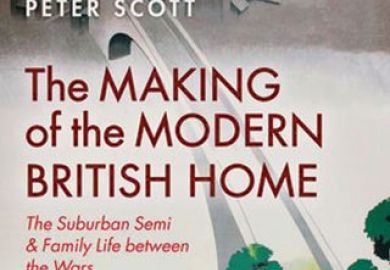
The Making of the Modern British Home: The Suburban Semi and Family Life between the Wars, by Peter Scott Grace Lees-Maffei on the sights and sounds of the suburbs 12 December
Fire and Ashes: Success and Failure in Politics, by Michael Ignatieff The death of an academic-cum-Liberal’s parliamentary career was really not so strange, argues Lynn McDonald 12 December
Laurence Coupe, Richard Joyner, R. C. Richardson, John Shand and David Shotter... A weekly look over the shoulders of our scholar-reviewers 12 December
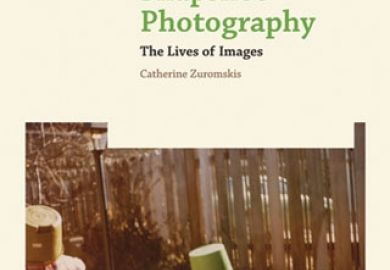
Snapshot Photography: The Lives of Images, by Catherine Zuromskis Annebella Pollen on the use of amateur photographs as cultural and artistic motifs 5 December
The Pleasure’s All Mine: A History of Perverse Sex, by Julie Peakman Alison Oram on changing attitudes to sexual perversions 5 December
The First Bohemians: Life and Art in London’s Golden Age, by Vic Gatrell Clare Brant revels in a compelling evocation of non-conformists in the capital’s cultural ‘heart’ 5 December
The Triumph of Human Empire: Verne, Morris and Stevenson at the End of the World, by Rosalind Williams Tom Wright on a study of how three late 19th century writers contemplated humanity’s impact on the environment 5 December
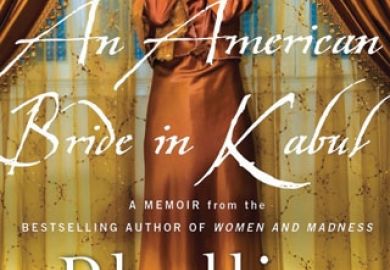
An American Bride in Kabul: A Memoir, by Phyllis Chesler Shahidha Bari would like more light and shade in this personal account 5 December
The Confidence Trap: A History of Democracy in Crisis from World War I to the Present, by David Runciman A. W. Purdue on the risky belief that participatory government can always muddle through any crisis 5 December
Sir David Bell, Helen Bynum, Michael Patrick Cullinane, Lynsey Hopkins and Ruth Richardson... A weekly look over the shoulders of our scholar-reviewers 5 December
What W. H. Auden Can Do For You, by Alexander McCall Smith Chris Jones on a passionate, personal account of poetry’s power 5 December
Armed with Expertise: The Militarization of American Social Research during the Cold War, by Joy Rohde Michael Patrick Cullinane on the military-academic complex 5 December