The Crisis of Islamic Masculinities, by Amanullah De Sondy Julia Droeber praises an interrogation of the image of the Muslim man 20 March
Hazel Christie, Laurence Coupe, Paul Greatrix, Christina Hellmich and Vladimir Tismaneanu... A weekly look over the shoulders of our scholar-reviewers 20 March
The Jacobean Grand Tour: Early Stuart Travellers in Europe, by Edward Chaney and Timothy Wilks Colourful travellers’ accounts move the start date for a rite of passage, discovers Claire Jowitt 20 March
Forging Romantic China: Sino-British Cultural Exchange, 1760-1840, by Peter J. Kitson Eva Shan Chou on a study of British knowledge - as opposed to fanciful assumptions - of China in the Romantic period 20 March
Bleak Houses: Disappointment and Failure in Architecture, by Timothy Brittain-Catlin Richard Williams on architectural criticism and how its narrowness affects our built landscape 20 March
Barbara Graziosi, Ruth Richardson, Bruce Scharlau, Clare Hemmings and Sharon Wheeler... A weekly look over the shoulders of our scholar-reviewers 13 March
Reading Darwin in Arabic, 1860-1950, by Marwa Elshakry Steve Jones considers a reflection on the Origin of Species’ influence on everything (except biology) 13 March
Beautiful Geometry, by Eli Maor and Eugen Jost Tony Mann admires a book where art and mathematics are in perfect harmony 13 March
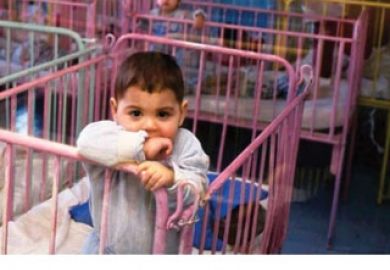
Romania’s Abandoned Children: Deprivation, Brain Development and the Struggle for Recovery, by Charles A. Nelson, Nathan A. Fox and Charles H. Zeanah A study of children in institutions offers a perspective on the cognitive benefits of parenting, find Mary K. Rothbart and Michael I. Posner 13 March
The Erotic Doll: A Modern Fetish, by Marquard Smith An exploration of mannequins as objects of lust makes fascinating reading for Laura Frost 13 March
First World War: Still No End in Sight, by Frank Furedi The conflict takes a backseat to questions about the state of ideological and cultural thinking, says Angela K. Smith 13 March
Risk: A Study of its Origins, History and Politics, by Matthias Beck and Beth Kewell Theories abound but Omar Malik wishes that more of them had been submitted to the test of reality 13 March
Mirror, Mirror: The Uses and Abuses of Self-Love, by Simon Blackburn Shahidha Bari delights in a lucid and graceful philosophical probing of self-consciousness 13 March
Laurence Coupe, Emma Herdman, R. C. Richardson, John Shand and Sharon Wheeler... A weekly look over the shoulders of our scholar-reviewers 6 March
The App Generation: How Today’s Youth Navigate Identity, Intimacy, and Imagination in a Digital World, by Howard Gardner and Katie Davis Tara Brabazon ponders an exploration of youth and new technology 6 March
I Met Lucky People, by Yaron Matras Shattering stereotypes starts with sharing everyday experiences, suggests Annabel Tremlett 6 March
How Universities Work, by John V. Lombardi Malcolm Gillies relishes the lean explanations in this drily witty and handy account of higher education 6 March
A Will to Believe: Shakespeare and Religion, by David Scott Kastan Peter J. Smith on the question of the Bard’s faith 6 March
Aleister Crowley and the Temptation of Politics, by Marco Pasi Clive Bloom praises an admirable introduction to the magical and political connections of a controversial figure 6 March
The Monkey’s Voyage: How Improbable Journeys Shaped the History of Life, by Alan de Queiroz Are tales of incredible animal excursions nonsense or did they shape our world? asks Tiffany Taylor 6 March
The Fissured Workplace: Why Work Became So Bad for So Many and What Can Be Done to Improve It, by David Weil Virginia Doellgast finds workers pay dearly when big firms devolve oversight of pay and conditions 6 March
Franco’s Crypt: Spanish Culture and Memory Since 1936, by Jeremy Treglown Mercedes Camino on a cultural analysis spanning seven decades 27 February
Pain and Retribution: A Short History of British Prisons, 1066 to the Present, by David Wilson A millennium of jails, their inmates and those in charge makes riveting reading for Yvonne Jewkes 27 February
Paper Knowledge: Toward a Media History of Documents, by Lisa Gitelman Colin Higgins on a history of printed materials that have uses but no readers 27 February
The Tell: The Little Clues That Reveal Big Truths About Who We Are, by Matthew Hertenstein Steven Schwartz on using physical attributes to predict people’s personalities and behaviours 27 February
Records Ruin the Landscape: John Cage, the Sixties, and Sound Recording, by David Grubbs David Revill tunes in to an ambivalence about capturing live musical performances 27 February
The Oxford Map Companion: One Hundred Sources in World History, by Patricia Seed Robert Mayhew is delighted to follow a determinedly non-Eurocentric cartographic collection through the ages 27 February
Life Interrupted: Trafficking into Forced Labor in the United States, by Denise Brennan Lee Maril on how immigration policies prolong the misery of the exploited 27 February
Are We All Scientific Experts Now?, by Harry Collins Athene Donald agrees that scientists, although not infallible, do know better about some things 27 February
Janet Beer, Clare Debenham, Rupa Huq, Carla Jardim and Peter J. Smith... A weekly look over the shoulders of our scholar-reviewers 27 February
Learning Trajectories, Violence and Empowerment Amongst Adult Basic Skills Learners, by Vicky Duckworth John Field is captivated by personal battles against educational disadvantage and illiteracy in marginalised communities 27 February
The Dream of the Great American Novel, by Lawrence Buell Peter Messent redefines the concept with close readings and illuminating insights 27 February
David Eastwood, Graham Farmelo, Matthew Feldman, Helen Taylor and Sharon Wheeler... A weekly look over the shoulders of our scholar-reviewers 20 February
Fragile by Design: The Political Origins of Banking Crises and Scarce Credit, by Charles Calomiris and Stephen Haber When the lending system isn’t working, interests rate a check, advises Howard Davies 20 February
Tribal Modern: Branding New Nations in the Arab Gulf, by miriam cooke Discussion of underground and emergent queer cultures are interesting, but Caroline Osella wishes for more insight from a respected scholar 20 February
The Politics of the Body: Gender in a Neoliberal and Neoconservative Age, by Alison Phipps Mary Evans agrees that feminism today focuses on women’s agency and identity at the expense of examining framing structures 20 February
The Burden of Female Talent: The Poet Li Qingzhao and her History in China, by Ronald C. Egan Eva Shan Chou lauds an original, erudite portrait of a writer whose courage matched her creativity 20 February
Literature in the First Media Age: Britain between the Wars, by David Trotter Gary Day on an exploration of new technologies’ effects on artists’ representation of the world 20 February
Rebellion: Britain’s First Stuart Kings, 1567-1642, by Tim Harris Ronald Hutton praises a tour de force on the causes of the English Civil War 20 February
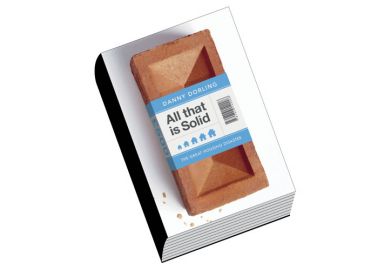
All That Is Solid: The Great Housing Disaster, by Danny Dorling Our use of housing as an asset to be traded is a collective failure that is preserving inequality, finds Tim Hall 20 February
Reclaiming American Virtue: The Human Rights Revolution of the 1970s, by Barbara Keys Marilyn Young on the development of human rights as an important issue in the US 13 February
Wizards, Aliens and Starships: Physics and Math in Fantasy and Science Fiction, by Charles L. Adler Her Star Trek dream dashed, Noel-Ann Bradshaw is still delighted by the science of impossible tales 13 February
The Watchdog That Didn’t Bark: The Financial Crisis and the Disappearance of Investigative Journalism, by Dean Starkman A demonstration of the need for modern muckrakers also celebrates the best work journalism can do, finds Tim Luckhurst 13 February
Following the Leader: Ruling China, from Deng Xiaoping to Xi Jinping, by David M. Lampton Jonathan Mirsky on a selective view of the Chinese political elite 13 February
I Spend, Therefore I Am: The True Cost of Economics, by Philip Roscoe Michelle Baddeley on an exploration of what makes us tick 13 February
Roderick Main, June Purvis, Sara Read, Ruth Richardson and Peter J. Smith... A weekly look over the shoulders of our scholar-reviewers 13 February
Our Mathematical Universe: My Quest for the Ultimate Nature of Reality, by Max Tegmark An intellectual adventure that seeks to explain everything through maths captivates John Gribbin 13 February
James Stevens Curl, Stephen Halliday, Michael Reiss, Peter J. Smith and Sharon Wheeler... A weekly look over the shoulders of our scholar-reviewers 6 February
The Falling Rate of Learning and the Neoliberal Endgame, by David J. Blacker Gerald Taylor Aiken concurs with a call to protect higher education as a universal and public good 6 February
Will China Dominate the 21st Century?, by Jonathan Fenby Jonathan Mirsky on a merciless dissection of a seemingly unstoppable country 6 February
Postcolonial Manchester: Diaspora Space and the Devolution of Literary Culture, by Lynne Pearce, Corinne Fowler and Robert Crawshaw Claire Chambers on how the colonial legacy is reflected in Mancunian writers’ work 6 February
Blockbusters: Why Big Hits – and Big Risks – are the Future of the Entertainment Business, by Anita Elberse Mega-budget shows are not a guaranteed recipe for success, says Janet Wasko. It’s not that simple 6 February
Country House Society: The Private Lives of England’s Upper Class after the First World War, by Pamela Horn A. W. Purdue on the changing social lives of the aristocracy and gentry between the wars 6 February
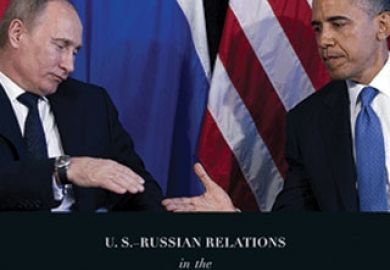
The Limits of Partnership: U.S.-Russian Relations in the Twenty-First Century, by Angela Stent Elizabeth Cobbs Hoffman on the give and take between the two superpowers since the Soviet collapse 6 February
Status Update: Celebrity, Publicity, and Branding in the Social Media Age, by Alice E. Marwick Silicon Valley’s stars ceaselessly shape their image to a neoliberal ideal, Finola Kerrigan discovers 6 February
Shakin’ All Over: Popular Music and Disability, by George McKay Anna Hickey-Moody on study of how performers have addressed disability in their compositions and performances 30 January
Social: Why Our Brains Are Wired to Connect, by Matthew D. Lieberman Tristan Bekinschtein welcomes a work showing that research into who we are can be based on science 30 January
Sex and Sexuality in Classical Athens, by James Robson Barbara Graziosi discovers what went on in the bedroom in ancient Greece 30 January
Mixed Emotions: Beyond Fear and Hatred in International Conflict, by Andrew A. G. Ross Gregory Kent explores the affective consequences of war 30 January
The Children’s War: Britain, 1914-1918, by Rosie Kennedy A. W. Purdue on how children shared in the nation’s experience of the First World War 30 January