
Looking beyond genetics: The AI model improving cardiovascular disease prediction
At the University of Hong Kong, a new AI tool promises to give individuals a better idea of disease trajectory – long before symptoms appear

Sponsored by the University of Hong Kong

Sponsored by

Sponsored by
While genetics dictates a baseline level of risk for many conditions, this isn't the whole story. Genetics are like the blueprint for a factory, but how that factory functions day-to-day depends on the machines and the workers within it. A team at the University of Hong Kong (HKU) is developing an AI model that looks beyond genetics to predict an individual’s risk of the most common cardiovascular diseases.
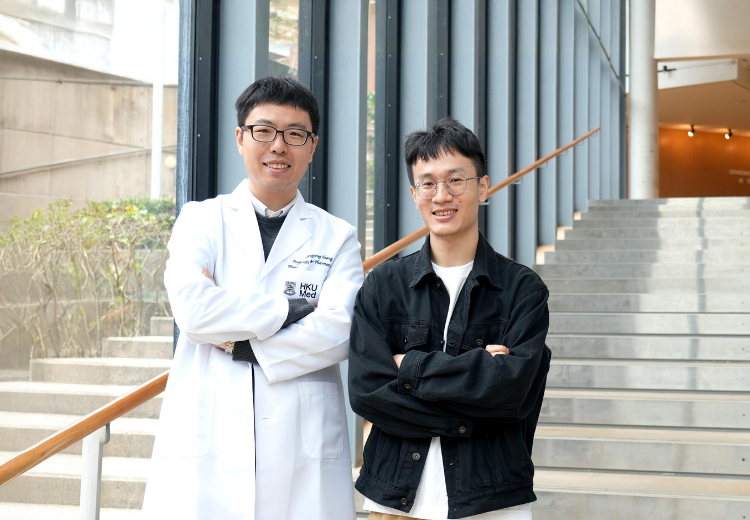
“Using AI, the CardiOmicScore is an innovative cardiovascular disease risk prediction framework,” explains Zhang Qingpeng, associate professor in the Department of Pharmacology and Pharmacy at HKU. “It uses multiomics sequencing data from a subject's blood, including the proteins and metabolites. For some patients, the genetic blueprint itself is flawed, leading to diseases that are purely genetic. However, for most cardiovascular diseases, it is more complex.”
This complexity is demonstrated by the fact that research by Zhang’s team has found that only two of the six most common cardiovascular diseases can be accurately risk-stratified using genetic information alone. Proteomics and metabolomics provide much better long-term risk predictions because they catch the tiny, early clues – such as fragile vessels or chronic inflammation – within the cardiovascular system.
While medications obviously impact the blood, the focus of Zhang’s research is on lifestyle, diet and social determinants. Dietary patterns, physical activity, environmental exposure, smoking, mental health and sleep can all have a significant impact on proteins, biological pathways and metabolic hormones. In the future, Zhang hopes to look more deeply into these specific factors to see how behavioural interventions, nutraceuticals or targeted lifestyle changes can be used to alter a patient’s disease trajectory before the condition worsens.
“While traditional medical tests are primarily diagnostic, looking for established biomarkers directly associated with the onset of a disease, chronic conditions have a long-term progression,” Zhang notes. “During this time, the human body acts as a complex, dynamic system shifting toward an unhealthy endpoint. Characterising this transition is incredibly difficult. This is where AI is proving essential. AI can handle the high-order, complex interactions between genes, protein regulation and chemical metabolites, helping us understand and predict what is happening inside an individual's body years in advance.”
For any medical AI project, it is vital to validate the model being used with independent cohorts possessing diverse ancestries and sociodemographic backgrounds. While the CardiOmicScore was initially trained using UK Biobank data, Zhang and his team have recently secured access to the China Kadoorie Biobank to test the model on the Chinese population. Beyond the Greater China region, they are also pursuing collaborations to access large biobank data from other countries.
“Another critical element of scaling this technology is affordability,” says Zhang. “As such, we are developing a light version of the CardiOmicScore that will deliver high predictive accuracy at a fraction of the cost. Making the test cheap enough for people to take periodically is key to its long-term success.”
Looking to the future, one of Zhang’s ambitions is shifting healthcare from reactive treatment to proactive prevention. Using the CardiOmicScore, an individual can see their trajectory precisely, identify the exact inflammatory or metabolic drivers pushing them toward cardiovascular disease and receive personalised suggestions for lifestyle modifications.
“We are currently expanding our scope to look at other major chronic conditions that burden global healthcare systems, and we have already identified strong predictive themes for various cancers and chronic kidney diseases,” Zhang continues. “I am a data scientist rather than a traditional cardiologist. We chose cardiovascular disease for this paper because we had fantastic cardiology collaborators, but the underlying machine learning methodology is transferable. The core objective remains the same: analysing the microscopic signals in the blood to forecast disease risk years ahead.”