
Uncovering nature’s blueprint for healthier joints
Scientists are deciphering the molecular design principles behind healthy joint lubrication to develop bio-inspired materials for future medical treatments

Sponsored by City University of Hong Kong

Sponsored by

Sponsored by
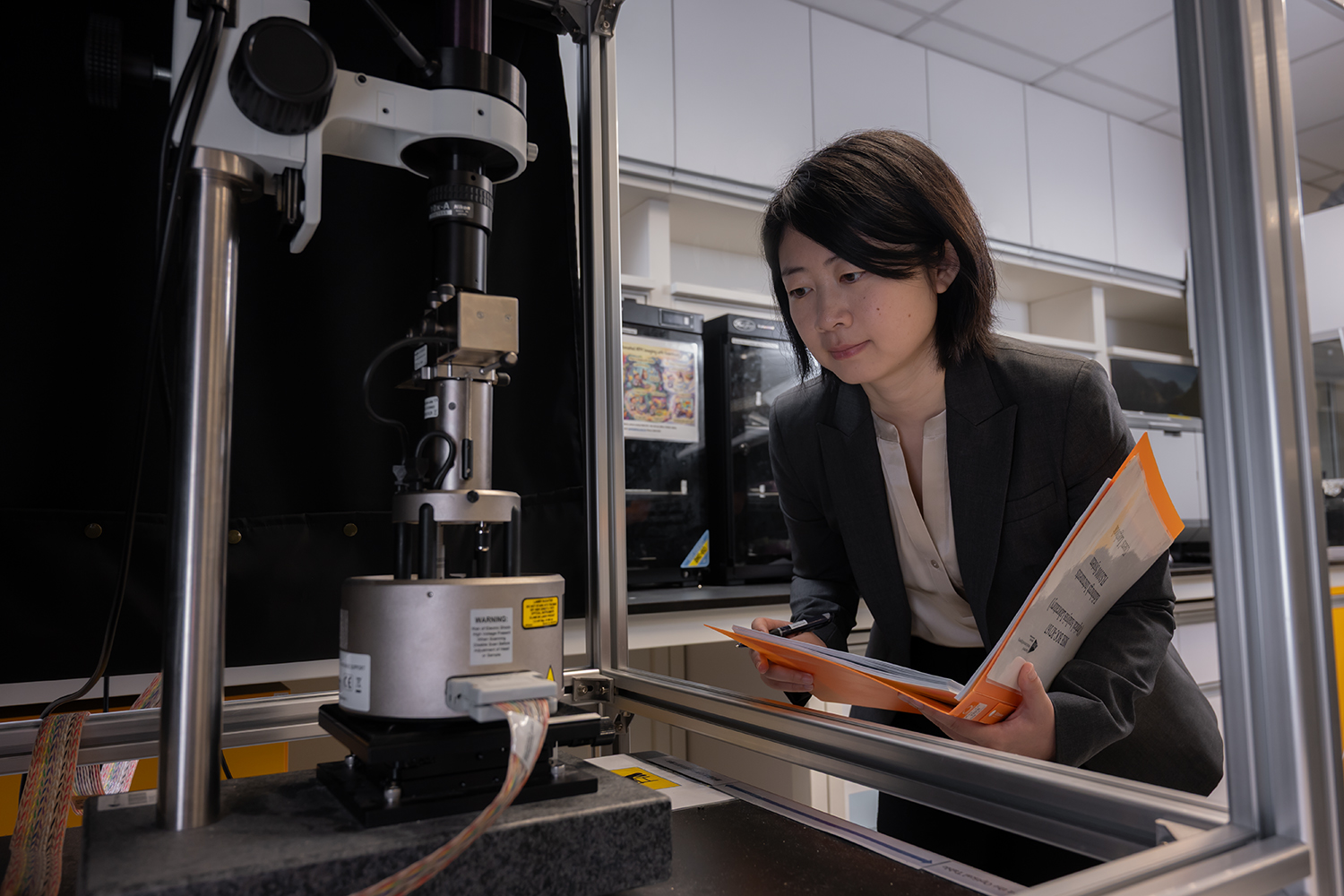
Healthy human joints are extraordinary examples of natural engineering. Every day they withstand immense forces while allowing almost frictionless movement, yet scientists are still working to understand exactly how they achieve such remarkable performance. At City University of Hong Kong (CityUHK), assistant professor Jin Di is investigating the natural lubrication systems of human joints with the aim of developing new materials and treatments for osteoarthritis.
Jin, who joined CityUHK in 2025 as a presidential assistant professor in the Department of Materials Science and Engineering, received the Croucher Tak Wah Mak Innovation Award in 2026. The honour recognises outstanding scientific achievement and includes HK$5 million (£480,000) in research funding over the next five years to support her work.
Her research focuses on the molecular mechanisms that allow healthy cartilage to resist wear over decades. Current evidence suggests that phospholipid membranes are among the most important boundary lubricants in cartilage. Their zwitterionic headgroups trap tightly bound water molecules, forming an ultrathin hydration layer that can withstand compression while remaining fluid during movement. This process, known as hydration lubrication, enables joints to move with exceptionally low friction.
However, Jin says the biggest unanswered question is why natural synovial fluid contains hundreds of different lipid species rather than a single highly effective lubricant. “We study how different lipid species cooperate to produce lubrication that is better than any individual lipid can achieve alone, and how these collective design principles can be translated into biomedical materials,” she says.
The work is particularly relevant because osteoarthritis affects hundreds of millions of people worldwide, with cases set to rise as populations age. Existing treatments primarily manage symptoms rather than restoring the natural lubrication system of healthy joints. Hyaluronic acid injections, for example, can provide temporary pain relief for some patients but do not recreate the protective lubrication found in healthy cartilage.
Recent clinical trials of liposome-based lubricants have shown encouraging results, suggesting that restoring lipid-mediated lubrication could be a promising therapeutic strategy. Rather than simply introducing lipids into damaged joints, Jin’s research aims to identify the molecular design principles that maximise lubrication, durability and load-bearing capacity.
To achieve this, Jin’s laboratory combines molecular dynamics simulations, machine learning and experimental validation. Researchers first study how natural lipid mixtures function using computer simulations to understand how different lipid compositions influence friction, membrane robustness and hydration. Functional polymer brushes are grafted onto these membranes to strengthen the hydration layer while maintaining structural stability. Machine learning is used to search the vast number of possible combinations of lipid species and polymer architectures, allowing the team to identify the most promising candidates for experimental testing.
Jin believes that fundamental scientific understanding and practical applications should go hand in hand. “I don't see fundamental science and translation as separate activities,” she says. “I believe the best engineering solutions emerge when they are built upon a deep understanding of the underlying physics.”
While osteoarthritis remains the primary focus, the same lubrication mechanisms could eventually contribute to advances in implant coatings, soft biomaterials, tissue engineering and lipid-based drug delivery systems.
Looking ahead, Jin hopes that bio-inspired materials research will move beyond copying individual biological molecules towards understanding the design principles of entire biological systems. Rather than imitating nature, her research aims to help scientists learn from the cooperative interactions that underpin biological performance, creating predictive frameworks that lead to more effective biomedical materials and, ultimately, better outcomes for patients.