ADVERTISEMENT
Journals should make more use of practitioners for peer review
Industry experience offers a unique perspective based around practical systems thinking, operational realities and trade-offs, says Jianyang Geng

Source: ene/iStock
I never expected that one of the most fulfilling parts of my professional life would be lived not in the office or at conferences but on commuter trains and at home over evenings and weekends.
As a Wall Street veteran with extensive experience in digital transformation, system engineering, and data and product analytics, I spent years immersed in complex analysis, technical challenges and team collaboration across different time zones. It’s a fast-paced world, driven by performance metrics and non-negotiable goals.
Yet when, many years ago, my professional networking began, prompting review invitations from academic journals related to my areas of expertise, I was flattered but felt out of my depth. Academia felt like a world with its own language, traditions and unwritten rules to me, and despite my extensive expertise, my initial reaction was to doubt that my contributions would meet scholarly standards.
Therefore, I spent hours on the first few manuscripts assigned to me, double-checking and sometimes even triple-checking facts and research methodologies, digging through the citations and carefully pondering the tone of my review comments. Even then, though, I was surprised when authors engaged thoughtfully with my comments, addressing my suggestions point by point.
But I was relieved to see that my comments often aligned with those of the other reviewers, who were usually academics. And my confidence gradually grew as the invitations kept on coming for an ever wider array of journals.
ADVERTISEMENT
By now, fulfilling those invitations has become more than just voluntary service for me. It has developed into a vital part of my intellectual growth, drawing me out of my day-to-day routines and into conversations with researchers, technologists and practitioners I would never otherwise encounter. It challenges me to stay connected to developments in both academia and industry, and – perhaps most meaningfully – allows me to contribute to scholarly dialogue and the evolution of ideas.
In industry, especially in the middle or back office of a financial services firm, recognition tends to remain internal. Impact is measured by work deliverables, programme metrics and operational indicators. But in peer review, your influence extends far beyond office walls. The feedback you provide can inspire research that sparks global academic conversations, influences real-world applications and eventually adds societal value. And while there is no plaque on my wall for doing peer review, nor any monetary reward, it is deeply rewarding to feel that my knowledge matters – not just in the business world but in the broader pursuit of knowledge.
From a scholar’s perspective, meanwhile, industry experience offers a unique analytical perspective based around practical systems thinking, operational realities and an instinctive awareness of implementation trade-offs. That can be a useful complement to theory, expanding the academic conversation in ways that purely scholarly training does not always make possible and often revealing underlying assumptions, feasibility shortcomings or overlooked impacts. Many authors have told me that such insights from practice showed them aspects they hadn’t fully considered before – especially in research aimed at generating practical impact.
It’s also important to emphasise that practitioner reviewers do not push any particular industry agenda. We review in our own names, and not on behalf of our employers. And we rely entirely on our general professional knowledge and publicly available information for our reviews, steering clear of any professional insider information. We strive to ensure that we compromise neither intellectual property nor academic integrity.
However, there are too few of us. To the best of my knowledge, very few fellow industry practitioners participate in peer review. Many have never been approached, and others may assume, as I feared, that their experience would not be valued in academic discussions.
Journals’ editorial offices should therefore consider more proactively reaching out to practitioners through professional associations, industry conferences and technical societies. And it would help to add a brief note in reviewer invitations indicating that applied perspectives from outside academia are welcome and valued.
Editors also need to demonstrate that welcome in practice. In my experience, some editors readily accept applied perspectives, while others clearly favour disciplinary conventions and existing theoretical frameworks. This made me realise that practitioners’ voices often need to be expressed within a specific framework, and it might be valuable for journals to offer a short, virtual orientation programme that explains expectations for reviewers who might be new to academic processes. But editors also need to be helped to fully understand the virtue of practitioner perspectives. Perhaps journals could start by establishing a specific, moderately sized pool of industry professional reviewers for manuscripts focusing on practical applications or case studies, where their knowledge indisputably brings unique value.
ADVERTISEMENT
Even practitioners who are fully familiar with the academic process will approach things a little differently to academics. Academic editors often point out that their expectations for reviewers from the practical field are the same as those for reviewers from academia: thorough reading, evidence-based reasoning and clear expression. But practitioners’ commitment to professional responsibility inclines them to value depth over speed and to carefully document their reasoning process. This sometimes obliges them to request more time to complete a review – or prompts them to express concerns about methodological issues that academics would accept as standard practice.
Editors need to accept and value this approach. They also need to accept that practitioners will not accept every reviewing request – not because of lack of interest but out of respect for the boundaries of their own expertise.
Equally, practitioners should be aware that when they decline an invitation, editors appreciate a clear explanation. The same applies when practitioners reject manuscripts because of practical industry feasibility issues; thoughtful suggestions are appreciated when manuscripts make suggestions that are methodologically flawed or impractical.
Inviting more practitioners into the process will build a richer, more inclusive and connected reviewing community, in which academic insight and practical expertise reinforce rather than exclude each other.
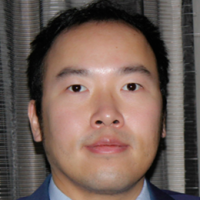
Jianyang Geng is a Wall Street veteran and an alumnus of the Harvard Kennedy School, Johns Hopkins University and Rensselaer Polytechnic Institute. He has peer-reviewed approximately 100 manuscripts for 12 journals covering engineering, innovation management and applied technology. The views expressed are his own.
Read more about
Related articles




Featured jobs
ADVERTISEMENT