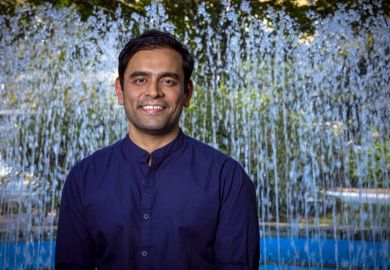
Appointing a team of academics to supervise PhD candidates increasingly “makes sense” in a world of widespread job losses and ever more complicated student needs, according to the lead researcher of a project exploring how decades-old doctoral practices should change.
Amid repeated criticism of one-on-one supervision for being too dependent on an individual, and ripe for potential abuses of power, a Research England-funded project has been examining potential alternatives.
Karen Clegg, co-director of the Research SuperVision Project, oversaw four recently published reports looking at different sector-wide aspects of supervision.
A key finding is that supervisors based in both academia and industry – and students themselves – view team supervision as beneficial, providing more opportunities including a greater interdisciplinary focus, access to additional resources and multiple points of contact if things go wrong.
Speaking to Times Higher Education, Clegg said: “Historically, students undertook a PhD with a view of gaining a qualification and pursuing a career in academia. This apprenticeship model prevailed in higher education for some time but has shifted quite significantly.”
Now there is an increasing “societal need for that broader skill base and for application of research”, said Clegg, who is reader in doctoral education and practice at the University of York.
Over the past two decades, the focus “on supporting students to develop transferable skills and career experience has also contributed to a change in the nature of the PhD”, she added. Simultaneously, “there are also changes in terms of the support that is needed to support the candidate, mental health and well-being being one example,” she said.
Clegg added that there is “pressure” on one or two supervisors “to support specialist knowledge, artificial intelligence, ethics, use of AI, transferable skills, careers” as examples of just a few things “that your average PhD student needs to be familiar with”.
The project did also reveal some drawbacks for team supervision such as students receiving contradictory feedback and supervisors not feeling adequately recognised for the work and time they put into supervision.
But Clegg pointed to the precarity in the sector at the moment, where many universities have let experienced staff go, as another reason why a team of supervisors might work better.
“Trying to provide a distributed team model of supervision would seem to make sense from a risk perspective because if you suddenly have a supervisor leave and they are your one port of call, of course that’s problematic,” she said.
Currently, Clegg said she is unable to put a recent figure on whether team supervision of PhDs is increasing, because the most recent data is from 2024 – but these figures showed that it had increased from 2021.
A UK research supervision survey from that year found that 76 per cent of 5,174 respondents reported taking part in team research supervision (up from 71 per cent in 2021). Seventy per cent of these respondents said that these teams offered a better experience for doctoral candidates (up from 60 per cent).
Clegg said universities should consider involving someone from industry as one of the supervisors on the team although acknowledged that this was “not without challenges”.
In an as yet unpublished focus group report, an industry supervisor points to potential friction between them and the academics involved. “We would see ourselves as full supervisors, but recognising that as the non-academic partner...we bring particular skills and things to it, and our role is about helping to shape the project...”
From the student side, the issue of whose advice to listen to is raised as a further concern.
“Currently my supervisory team are giving contradictory feedback which is making it extremely difficult for me to progress my studies and is resulting in me having to repeat or make significant changes to my work,” one participant said.
But Clegg, who stressed that she was speaking in a personal capacity, said these issues could be addressed with the right planning.
“Team supervision, like all collaborations, requires ongoing communication, clear roles and responsibilities and a time to review and reflect.”
Register to continue
Why register?
- Registration is free and only takes a moment
- Once registered, you can read 3 articles a month
- Sign up for our newsletter
Subscribe
Or subscribe for unlimited access to:
- Unlimited access to news, views, insights & reviews
- Digital editions
- Digital access to THE’s university and college rankings analysis
Already registered or a current subscriber?