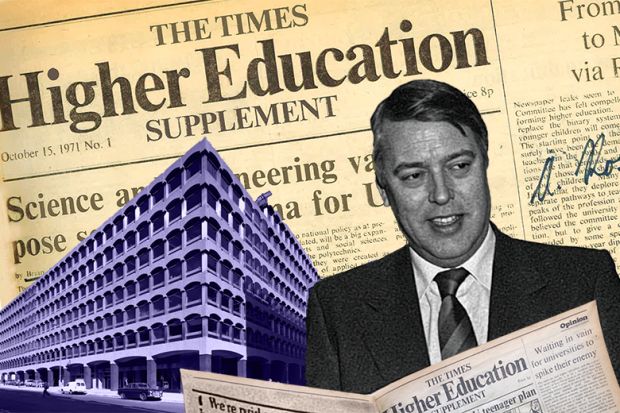
It has always been a major challenge to launch a newspaper.
“It’s very easy for a new product to die,” Brian MacArthur, the first editor of The Times Higher Education Supplement, once reflected, adding that he had been told that launch editors invariably get fired after four weeks. In the event, MacArthur remained at the helm for five years and, although it later became a print and then an online-only magazine, what is now Times Higher Education is still flourishing today.
To celebrate the 55th anniversary of our first edition on 15 October 1971, we wanted to look back on the generation who laid the foundations, learned their trade at the publication and often went on to high achievements elsewhere.
It was certainly a starry cast. Peter Scott, who served as MacArthur’s deputy, before succeeding him as editor from 1976 to 1992, became the vice-chancellor at Kingston University (where he had “the same obligatory love-hate relationship with the paper as do other vice-chancellors”). Peter Hennessy became a pioneering Whitehall correspondent at The Times and proved so successful at getting stories that the then prime minister Harold Wilson instructed civil servants not to speak to him – although his mischief-making didn’t prevent him, in 2010, from being nominated for a crossbench peerage in the House of Lords. He later reinvented himself as an academic, whose many books on contemporary history, he claimed on Desert Island Discs, offer “a journalistic approach mixed with an archival approach lubricated by gossip”.
The illustrious list goes on. Christopher Hitchens became one of the leading writers of his age. Stephen Pile and Lynne Truss produced two of the most celebrated non-fiction bestsellers of their day: respectively, The Book of Heroic Failures (1979) and Eats, Shoots & Leaves: The Zero Tolerance Approach to Punctuation (2003). Laurie Taylor, then an academic at the University of York, wrote a satirical column, The Poppletonian, that became one of the longest-running columns in UK journalism, running for more than 40 years, while Taylor himself became a well-known figure on Radio 4. Others ascended the heights of British journalism, as leader writers, education, science, arts and foreign correspondents and editors. We asked some of those who are still with us for their memories of the early days – and the links between then and now.
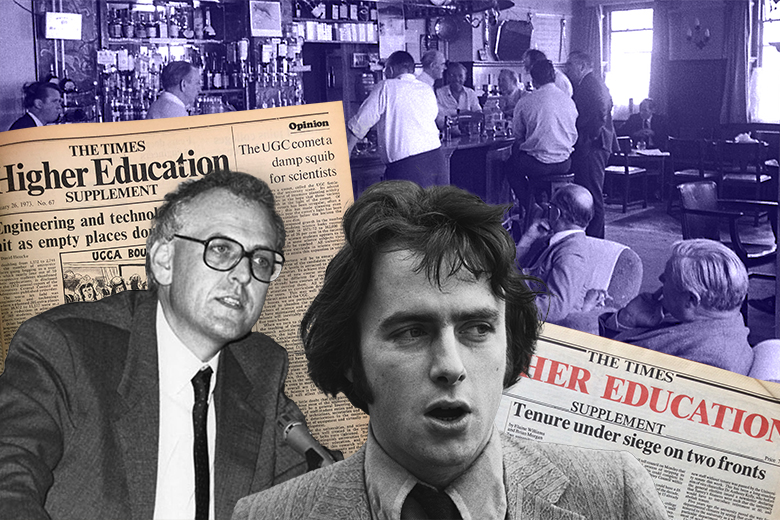
In some ways, of course, the 1970s was a very different world of longer lunches, heavier drinking and hot-metal printing. David Jobbins, who worked at The THES in various roles from 1978 to 2006, remembers regular lunchtime outings to “the Pakenham Arms, a backstreet boozer otherwise largely patronised by postal workers from the nearby Mount Pleasant sorting office and roadies awaiting a gig with a touring rock band”. Truss, who worked on the books section of The THES from 1978 to 1986, made frequent visits to the “stone” or printing room, where she saw “the type set in the formes by men in leather aprons using ancient-looking tools; the place reeked of ink; and with all the clacking and banging, it sounded like the inside of a cotton mill”. The stone was reached “through great leather flap-type doors, like going through the back of a wardrobe” and, on one alarming occasion, an irate printer marched straight through them “holding a fistful of Linotype which he theatrically banged down on [the books editor’s] desk in protest that we had unilaterally changed the spelling of ‘aging’ (which was Times style) to ‘ageing’ (which we preferred)”.
It was while serving as The THES’ science correspondent from 1978 to 1982 that Robin McKie “learned all the basics of what was to become my trade in a newsroom that was both fun and stimulating...From the moment of joining, we were given total independence to pursue our own agendas – which was a very radical change from the iron newsdesk discipline imposed in local papers.” He went on to become the legendary science editor of The Observer for 43 years, perhaps most famous for revealing the existence of Dolly the (pioneering cloned) sheep in 1997, voted one of British journalism’s all-time top scoops by Press Gazette.
Hennessy also once reminisced about how much he had enjoyed working at The THES, from 1972 to 1974, and how much he had learned while doing so. “MacArthur was very tolerant of a pushy youth like me, showed me how to operate as a journalist, how to work a crowd,” he said. “I loved having to produce vast amounts of copy and working with a small team in a very confined space.” The only downside was that “the window looked on to a vegetarian restaurant and it felt like living in a constant ambience of fart”.
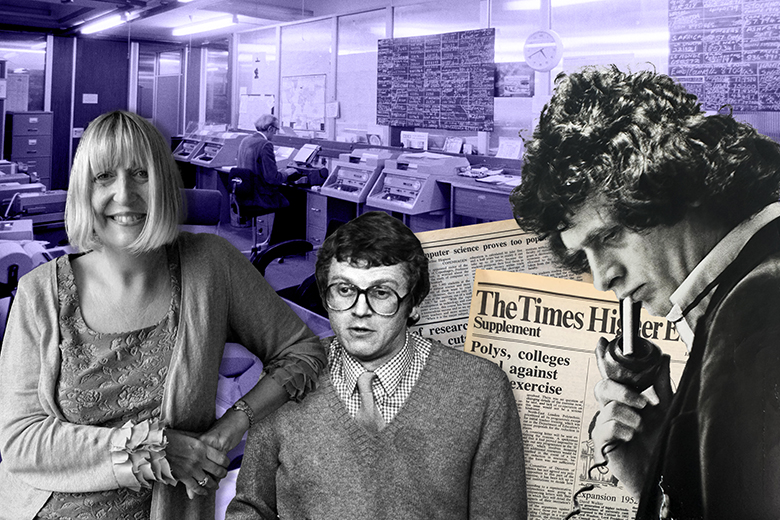
David Walker was on the staff at The THES between 1974 and 1977. He later took on prominent positions at the BBC as well as in print journalism, served as managing director of the Audit Commission and has more recently, with his wife Polly Toynbee, published a series of “report cards” on British politics, such as The Lost Decade: 2010–2020 and The Only Way Is Up: How to Take Britain from Austerity to Prosperity.
From the start, as Walker sees it, The THES had to negotiate the inevitable tension of being the kind of “critical friend” to the higher education sector it has remained to this day: “You don’t want to alienate the people who buy you and place ads with you, but you can’t be a cat’s paw. I don’t think there was any inhibition in reporting on scandals. Individual institutions and academics were fair game. We existed to underpin the expansion of HE, but that itself wouldn’t have been a subject of critical commentary.”
A number of the early staff proved exceptionally adept at sniffing out scandals. David Hencke, who died earlier this year, cut his teeth at The THES revealing the then Labour government’s plans to close most colleges of education. He then moved on to The Guardian, where he broke the 1994 “cash-for-questions affair”, which led to the resignation of two junior ministers for asking parliamentary questions on behalf of then Harrods owner Mohamed Al-Fayed, and uncovered the secret loan which briefly derailed the ministerial career of Labour grandee Peter Mandelson. And when Ngaio Crequer died in 2006, former colleagues at The THES praised her for her “pivotal role in exposing the then secret garden of academe to wider public scrutiny”. A keen Manchester United fan, she “gave some of her secret contacts football pseudonyms”, startling fellow journalists when she got calls from “Ryan Giggs” and “Gary Neville”.
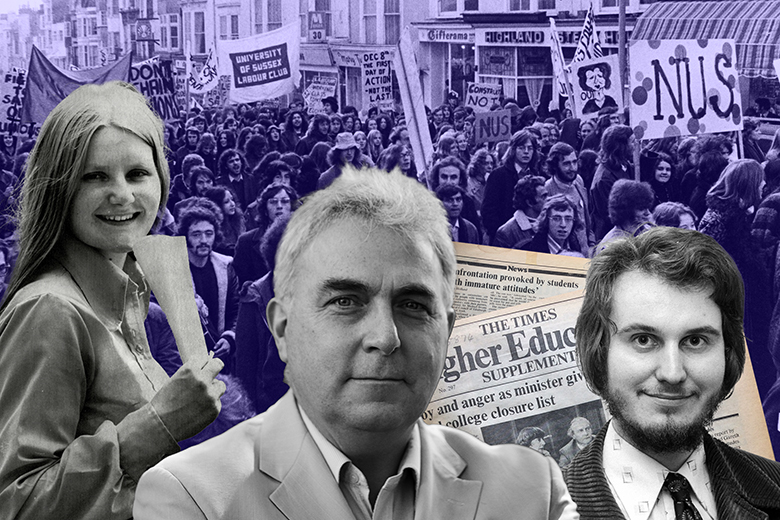
Editors at The THES in its early days were also bold in their pursuit of writing talent. As features editor, Simon Midgley (who joined the paper in 1977) remembers reaching out to the armed robber then dubbed Britain’s most notorious criminal, John McVicar: “I got wind of the fact that, while incarcerated in a high-security prison, he was studying for a degree by distance learning. I wrote to him and asked him whether he would write an article about his learning experience.” He agreed and produced some excellent copy, and they later met up in The Times newspaper lobby, where the tough and bullet-shaven McVicar proved an unusual and unsettling presence. The tabloid Daily Express was outraged that anyone was publishing him, but he went on to a successful career in journalism.
Another dramatic episode occurred during the 1981 IRA hunger strike when the imprisoned Bobby Sands was elected an MP in Northern Ireland before starving himself to death in the Maze prison. His successor, fellow Republican activist Owen Carron, was narrowly rejected as a speaker at a National Union of Students (NUS) conference in Blackpool. Jobbins “put out feelers for an interview and went through a cloak-and-dagger sequence of switched cars and pubs before catching up with him to ask why he was refusing to take up his Westminster seat”.
A British newspaper supplement published in the 1970s obviously had a largely British readership and focus. Yet even then The THES had a keen interest in international developments. Scott appointed a full-time US editor, sponsored two speakers at the American Association of Higher Education’s annual conference in Chicago and gave extensive coverage to the conferences of the Association of Commonwealth Universities and the Conference of European Rectors.
In that regard, it helped that reporters were given the freedom and the budget to travel widely. Jobbins got a chance to interview the late Aga Khan IV when he launched Pakistan’s first private university in 1983, an event that “included an introduction to then-president General Zia ul-Haq – possibly the most terrifying individual I have ever met”. McKie “even made it to Hawaii, to visit the huge astronomical observatory that had been built on top of the mountain of Mauna Kea”. Unfortunately, an unlikely Hawaiian blizzard meant that the visit to the observatory was cancelled and he “had to report back to the office that I had been hit by a snowstorm in Hawaii and had nothing to write about that week...On my return, it provided my colleagues with endless hours of fun during our after-hours drinking in the Pakenham Arms.”
A much less far-flung trip by an early THES luminary also caused trouble for editors. The famously combative Hitchens, according to Scott, “quickly lost Brian’s favour by leaving the NUS winter conference in Margate prematurely without paying his hotel bill and cleaning me and Brian out of cash before credit cards had become widespread”.
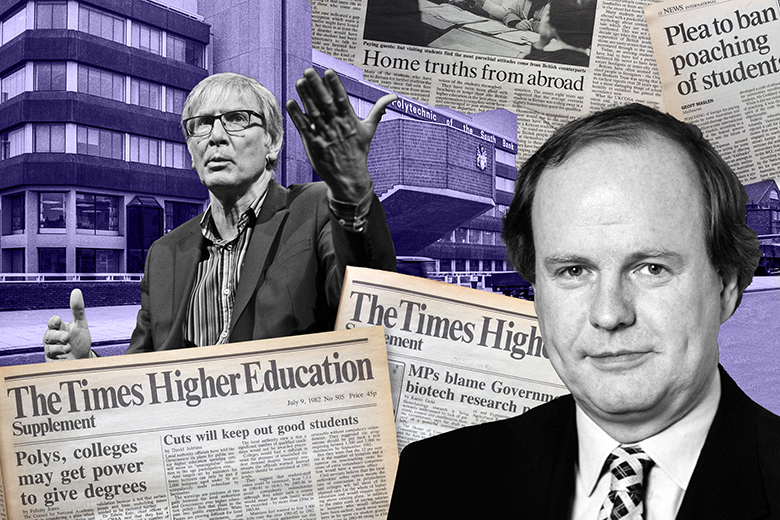
The early days of the paper were marked by fierce debates about the so-called binary divide in British higher education between autonomous universities and the more vocationally orientated polytechnics, mainly founded in the 1960s, which came under local authority control until they were “nationalised” in 1988 and then acquired university status in 1992.
Although this might now seem like ancient history, Walker very much disagrees.
“I have come to the view that one of the gravest policy errors in this sphere was to abolish polytechnics,” he explains. “There was much to be said for the distinctiveness of their local connections...Maintaining the diversity of HEIs would have been a preferable policy.”
Today, with a new British prime minister committed to decentralising power and continuing arguments about the comparative value of academic and vocational education, not least in the context of artificial intelligence, Walker believes that “The debates of the 1970s are still very much worth looking at in terms of contemporary policy discussions. The reasons why the polytechnics were created in the late 1960s remain hugely relevant to our understanding of what HEIs should be about in the 2030s.”
As someone who has become an important commentator on higher education policy (and is now emeritus professor of higher educational studies at UCL), how does Scott assess the changes and continuities in higher education in the 55 years since he joined The THES?
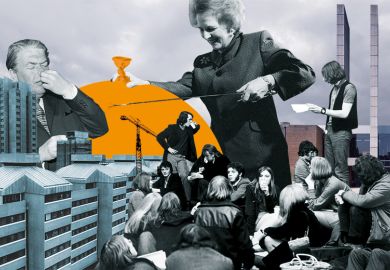
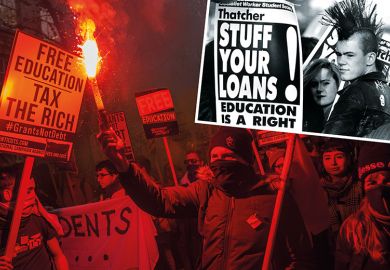
The core issues remain “very much the same”, he replied, while the context and detail are obviously very different. Although his period at the helm long predated student fees, university funding was very much on the agenda. So too was internationalisation, even if it was “not so focused on international students as an income stream”. There were already major debates around the best structure for the sector and on the correct balance between autonomy and accountability. There were even early inklings of “the culture wars”, Scott believes, with the student troubles of the time, including sit-ins and occupations, dominated by what was then known as the New Left.
Such developments were also central to The THES’ establishment. The proximate cause was the threat from Macmillan, the publisher of Nature, to launch a paper aimed at academics, which Times Newspapers feared would eat into the substantial advertising revenue of The Times Educational Supplement, which in those days also nominally covered higher education as well as schools. Yet a deeper reason, Scott said, was a greater public interest in higher education due to “student troubles in universities” in the late 1960s – in response to which “universities first appointed press officers. So the whole process of education reporting was becoming professionalised.”
It hardly needs saying that student protest has once again become a major public relations headache, in the US and beyond, in an era of student occupations in protest against the war in Gaza.
But while The THES partly arose out of the professionalisation of higher education, it also contributed to a sense within higher education of itself as a bona fide professional sector, according to Walker. He credits the supplement with “creating the community of [British] HE – they were a bunch of disparate institutions, but the existence of The THES said to them: ‘You belong to the same community, even though you are very different.’ It happened on a subtle level, but people related to one another differently as a result of the existence of The THES.”
That, we hope, is also something that remains very much true to this day.
Register to continue
Why register?
- Registration is free and only takes a moment
- Once registered, you can read 3 articles a month
- Sign up for our newsletter
Subscribe
Or subscribe for unlimited access to:
- Unlimited access to news, views, insights & reviews
- Digital editions
- Digital access to THE’s university and college rankings analysis
Already registered or a current subscriber?