Academic grades are public goods. Strong grades earn scholarships, internships and admission to postgraduate programmes. They decide who wields influence over others’ lives, in professions such as medicine, law, engineering and teaching.
When an institution awards strong grades, it certifies that knowledge, judgement or proficiency has been displayed by a particular individual.
No grade has ever been perfect evidence. Some students have bought essays. Yet these forms of help often cost money, took time or created visible risks of detection. Hence, most instructors could assume that most take-home work was substantially produced by the student who handed it in.
Large language models change those conditions. They are freely available to everyone, and they can generate a plausible essay in minutes at most. They can supply an outline, revise a rough draft, translate a passage, suggest sources or write the reflective statement that is supposed to document the student’s process. A university often cannot know which intellectual steps were taken by a student and which were taken by a machine.
The debate over artificial intelligence in education is often presented as a contest between two bad options. One side wants a prohibition. The other treats every new tool as an inevitable improvement to teaching and learning. However, neither option is proving adequate.
Prohibition fails because it is hard to enforce. AI-detection software has been shown to regularly misclassify writing. It has also been found to disadvantage writers who use English as an additional language. And more generally, a university should be reluctant to treat a machine judgement as evidence for a disciplinary accusation.
Instead, higher education needs to ask whether it has enough evidence to turn a category of work – the essay – into a claim of competency on which other people are invited to rely. Does the institution’s own practice say more than its evidence can support?
This question makes clear the social stakes of the question of students’ honesty. It also implies that simply allowing students to use AI in any graded assignment cannot be the way to go. If a university cannot know whether a student has taken the intellectual steps its grading is supposed to assess then its certification loses meaning.
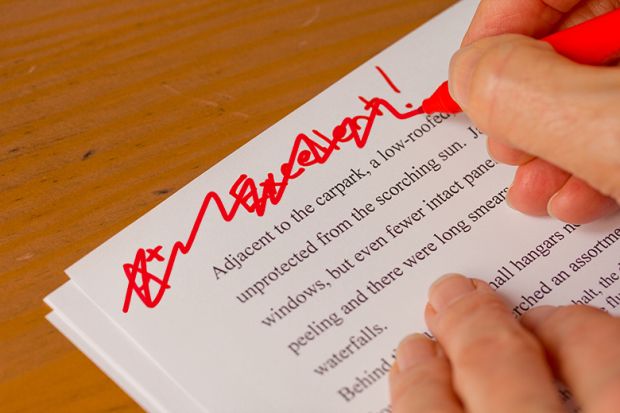
I contend that universities should retain coursework but stop grading it. Essays, problem sets, labs, reading journals, group projects and design work give students repeated chances to practise. They make feedback possible. They permit revision. And when they are not reduced to a mechanism for making claims about someone’s merit, a space is created in which AI use can be discussed openly rather than hidden.
In other words, a university can require a student to complete and discuss an essay without having it determine a grade that later appears on their transcript. It can simply use coursework to guide teaching and prepare students for a more attributable demonstration of competence at sparser checkpoints.
What counts as an adequate checkpoint might vary by field. A history student might defend an interpretation in a short oral examination. A computer science student might complete a supervised programming task. A nursing student might show clinical judgement in an observed scenario. An architecture student might explain decisions in a studio critique. An open-book examination can be useful when it asks students to apply ideas rather than reproduce information.
Needless to say, alternative formats cost money and require staff time. They also must be designed with serious attention to equity, including dimensions such as disability, anxiety and language. There is a risk that, say, a return to the three-hour handwritten examination might solve one problem and revive others.
But no matter what the final ideal design looks like for an institution, it must be created with attribution in mind. At key moments, universities should ensure they retain the ability to say: “We have seen this student demonstrate this competence.”
Ultimately, the focus of universities has to be on preserving the meaning of the credentials they award. A transcript is a compact between an institution and the world beyond it. The institution says: this person has met a standard. We have grounds for saying so.
That compact matters most for students. Their degrees should stand for something more durable than an ability to produce an acceptable file of essays. Generative AI might help students explore, revise, test and create yet it does not remove the need for a line between assisted learning and certified achievement.
So keep the take-home essay and let it teach. But do not grade it. Do not confuse a polished document with proof of a person’s academic value.
A grade is a promise. Universities should award it only when they can stand behind it.
Simona Aimar is lecturer in philosophy at UCL.
Register to continue
Why register?
- Registration is free and only takes a moment
- Once registered, you can read 3 articles a month
- Sign up for our newsletter
Subscribe
Or subscribe for unlimited access to:
- Unlimited access to news, views, insights & reviews
- Digital editions
- Digital access to THE’s university and college rankings analysis
Already registered or a current subscriber?