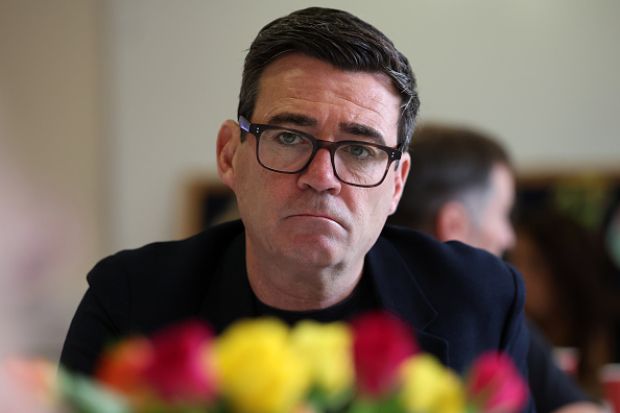
Brussels’ push for cheaper fees for European Union students at UK universities could prove to be one of the first major tests of Andy Burnham’s fledgling premiership, with institutions dead set against the idea, warning that it could cost them hundreds of millions of pounds.
The prime minister is expected to meet EU leaders at a UK-EU summit this autumn. Student fees and a proposed youth mobility scheme, which would allow young people to spend a limited period in the UK or EU to work, study or travel, are among the issues already under negotiation ahead of the summit.
Since Brexit, EU students have generally paid international tuition fees at UK universities after losing their entitlement to domestic fee status, which is capped at £9,790 in the 2026-27 academic year. Burnham is open to lowering fees if the bloc offers significant concessions on trade, according to reports.
The Russell Group, which represents 24 leading public research universities in the UK, has warned that restoring “home fees” could cost the sector more than £500 million a year.
“The UK university sector benefits greatly from a positive and productive relationship with the EU. We want to see closer ties that encourage student and staff mobility and valuable research collaborations,” said Hollie Chandler, director of strategic policy at the group.
“But a deal that costs the sector over £500m is not good news for universities or for the UK as a whole.”
She said the move could put further pressure on home student places, teaching and research at a time when universities were already dealing with financial difficulties.
But Marco Seeber, professor at the University of Agder in Norway and an expert on European higher education policy, said the impact would not necessarily be the same across the sector.
He said prestigious universities in the UK that attract lots of international students who pay high fees would have more to lose from a return to cheaper fees for EU students.
“For [elite universities], it’s probably an economic loss. But for many other universities and the UK, it would be more of an opportunity,” he said, adding that cheaper fees could help the country attract more students at a time when some institutions are struggling to recruit and student numbers are projected to decline due to demographic trends.
Brussels’ insistence on home fees is rooted in the EU principle that citizens should get similar treatment across Europe, Seeber explained, but the issue has also become politicised and symbolic of the bigger effort to reset relations with the UK after Brexit. Reports have previously suggested that the bloc would be prepared to compromise on a deal, and accept its students paying fees halfway between domestic students and all other international enrolments.
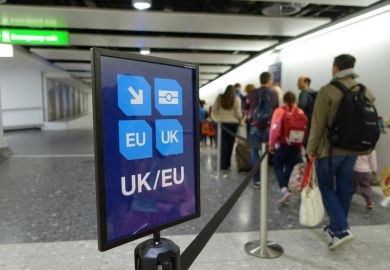
In the 2024-25 academic year, there were 63,600 EU students studying at UK higher education institutions, a figure that is 16 per cent lower compared with 2023-24, according to the Higher Education Statistics Agency. Enrolment has been declining since 2020-21 after the UK officially left the bloc.
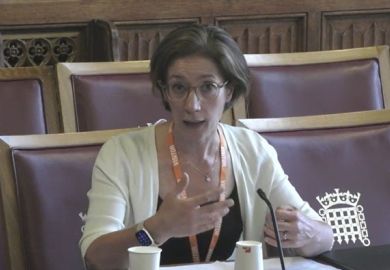
“There are now no EU countries in the top 10 of student-sending countries to the UK,” said Johanna Waters, a professor of Human Geography and co-director of the Migration Research Unit at UCL.
“There are several reasons that account for this decline, and these include visa requirements, an NHS surcharge and, most importantly of all, the introduction of international tuition fees for EU students.”
Waters explained that more European countries were offering courses taught in English, while tuition is free in countries such as Germany and Norway. “It is hardly surprising, then, that price-sensitive students are avoiding the UK as a study destination,” she added.
But she recognised that reintroducing domestic fees for EU students could further add to the financial pressure universities are facing. “Whilst universities will, in principle, support and welcome more EU students back into classrooms, the government will have to make up for any shortfalls in fee income. Universities will not be able to absorb this,” Waters warned.
Register to continue
Why register?
- Registration is free and only takes a moment
- Once registered, you can read 3 articles a month
- Sign up for our newsletter
Subscribe
Or subscribe for unlimited access to:
- Unlimited access to news, views, insights & reviews
- Digital editions
- Digital access to THE’s university and college rankings analysis
Already registered or a current subscriber?