Academics fear they are being “set up to fail” after several institutions finished the academic year by announcing fresh job cuts, casting doubt over who will return after the summer break, and what courses they will be teaching.
Numerous UK universities have in recent weeks announced further restructuring programmes, including at Exeter, Dundee, Hertfordshire, Lincoln, Sussex and Northumbria, just as the busy exam and graduation period comes to a close.
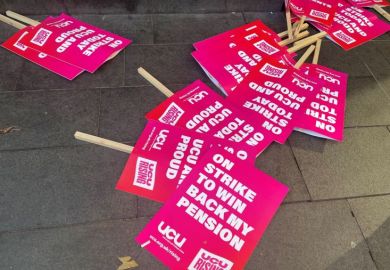
Unions have accused institutions of making announcements at a time they will struggle to take industrial action, with the approaching end of the financial year on 31 July also likely to be influencing decisions.
The uncertainty was making it difficult to plan for next year’s teaching and a crucial period in the 2029 Research Excellence Framework, some of those affected said.
At the University of Lincoln, 140 staff have been put at risk of redundancy, with the institution intending to eventually lose 34 staff and some decisions expected before the end of August.
“We are trying to plan for the next year, we’re trying to do work loading, we’re trying to work out who is going to teach what and so on, but we can’t do that because we don’t know who’s going to be here,” said Owen Clayton, vice-chair of the UCU branch, who said he felt the handling of the cuts had been “cruel”.
“In my opinion, it’s hard to imagine that this timing hasn’t been chosen deliberately in order to blunt the effectiveness of industrial action,” he added.
The university said it was “experiencing shifts in student demand, demographic change and increasing competitive pressures”, and was “adapting accordingly”.
“Our focus remains on ensuring the university is sustainable, agile and well placed for the years ahead, continuing to deliver high-quality teaching, strong student outcomes, and playing a vital role in supporting the economy and communities of Lincolnshire and beyond.”
The new year could be marked by renewed industrial action across the sector as a result of recent announcements, disrupting the start of studies for new and returning students.
Lincoln UCU said it will pursue strike action if management does not change course, and Exeter’s UCU branch won an indicative vote to pursue a formal strike ballot.
At Exeter, which announced last month plans to cut 150 jobs, the UCU branch chair Michael Flexer said, “it would be a waste of any of our time to start preparing, because we don’t know whether we’re going to be teaching those things”.
Humanities staff, who bear the brunt of the cuts, have been told that they may be unable to take planned research leave over the summer, as they might be “recalled” to cover any disrupted teaching as a result of the redundancies.
“We’re basically paralysed until the start of term, even if you wanted to prepare,” Flexer said. “They’ve really harpooned us. Unless they give some real clarity about who will definitely be around in term one, no one can get their teaching for the year in place. We’re essentially running without any clear decisions or real leadership from our highly paid executive.”
He added that Exeter is a “great” place to study, “but our hands are being tied by a management who are saying ‘you can’t do any serious planning until you’re in the midst of it’. We want students to have a good experience at the university, but management is setting us up to fail.”
A spokesperson for the university said: “We fully understand that this is a worrying time for those who are affected by the ongoing consultation process – however it is important to stress and reiterate that these are proposals at this stage. The University is not proposing to close any departments or disciplines, and under these proposals Exeter would continue to have one of the largest faculties of Humanities, Arts and Social Sciences in the UK.
“We hope to achieve these changes through voluntary measures and are committed to working closely with our community and the trade unions to avoid compulsory redundancies wherever possible.
“All colleagues affected by the proposed changes will receive all the information they need throughout the process, along with every opportunity to ask questions, raise concerns, and participate fully. The University will ensure that this process is fair and consistent throughout.”
At Northumbria, where there have been disputes over changes to pensions and job cuts, staff have been told they have until the end of July to apply for voluntary severance.
The UCU branch said compulsory redundancies have not been ruled out, which could cause “absolute chaos” to the beginning of the year if people are made to leave mid-term, the branch chair, Adam Hansen, said.
The cuts and the timing of the cuts mean “stress levels are high” for all staff, but he added it also has a “massive impact on research”, as academics preparing submissions for the REF “don’t know what staff will still be available, or what submissions will look like”.
“All these things are causing massive stress for the people who lead on research, the people who lead on teaching, and the people who deliver the research and teaching,” he said.
A university spokesperson insisted that the cuts are not a “university-wide exercise”, but concentrated to four out of 12 of its academic departments “where current and projected student recruitment trends…need to be realigned with demand”.
They are working with UCU to ensure redundancies “can be achieved through voluntary measures to support planning ahead of the next academic year”.
“While reductions are being made in some areas, we are also investing in areas of growth to ensure Northumbria is fit for the future, maintaining a broad range of disciplines and providing students with the subjects they want to study, and the skills employers need for the careers of today and tomorrow.”
Register to continue
Why register?
- Registration is free and only takes a moment
- Once registered, you can read 3 articles a month
- Sign up for our newsletter
Subscribe
Or subscribe for unlimited access to:
- Unlimited access to news, views, insights & reviews
- Digital editions
- Digital access to THE’s university and college rankings analysis
Already registered or a current subscriber?