For Elleke Boehmer, her major recent monograph is nothing less than “a spur to a different kind of planetary awareness”.
The professor of world literature in English at the University of Oxford grew up in South Africa, the child of Dutch parents, but has been based in the UK since 1985. She is highly unusual in being both a major critic – her study of Colonial and Postcolonial Literature: Migrant Metaphors remains a strong seller more than three decades after publication – and an acclaimed fiction writer.
Boehmer’s first novel, Screens against the Sky (1990), was very successful and shortlisted for the David Higham Prize for Fiction. She describes it as a book about “anti-apartheid moral stasis, where characters are doomed to repeat, even though they try and escape from the situation”. While this clearly draws on her own experience growing up as a radical white South African in the darkest days of apartheid, her subsequent novels and short stories are notably wide-ranging in their themes and settings – and largely avoid the terrain of campus satire trodden by well-known novelist/academics such as David Lodge. Her second novel, An Immaculate Figure (1993), for example, is about “gun-running around Mauritius and is loosely based on the arms smuggling going on at the time involving Margaret Thatcher’s son, Mark”.
Admitting that it has sometimes been “challenging and frustrating” to combine the two strands of her working life, Boehmer – who is also a governing body fellow of Wolfson College, Oxford – recalls “a difficult conversation with my then head of department – a fork-in-the-road conversation – when I was still enjoying the aftermath of the success of Screens Against the Sky and building up to my second novel coming out. He called me in and said, ‘You need to think about knuckling down and writing an academic book’.” Yet today she “cannot imagine not doing the two side-by-side” and sometimes feels “a bit like a dousing rod with two arms”, exploring similar themes in parallel through very different media.
That is certainly true of her latest monograph, Southern Imagining: A Literary and Cultural History of the Far Southern Hemisphere (published by Princeton University Press at the end of last year), and her sixth novel, Ice Shock: A Love Story, which comes out this week.
The two books were conceived at more or less the same time, but the research grant Boehmer received for Southern Imagining included a travel allowance, so she had planned to “go and sit with Captain Cook’s logbook, held in the Australian National Library in Canberra”. In the event, the pandemic forced her to come home to her family in England before all planes were grounded, so she turned to the novel as a lockdown project.
Ice Shock works as a page-turner, a “will they, won’t they” love story – set in the context of climate change. Niall and Leah have the ultimate long-distance relationship, shaped by the vagaries of poor communications, since he takes a job literally at the ends of the Earth, on a scientific station in Antarctica, while she embarks on a creative writing course. Boehmer decided to set it precisely in the years 2010-13, “just before the [ubiquity] of smartphones, which work reasonably well in Antarctica, at least when the weather is fine. I didn’t want there to be an easy means of sharing images, for example.” She also drew on her research for Southern Imaginings, during which she kept noticing that “earlier Antarctic explorers practised a kind of coordinated thinking with their loved ones, such as agreeing in advance to look at birds at the same time”, wherever they are.
As with many such stories, much of the tension of the book comes from whether events in the lives of the separated couple – flirtations, sexual fantasies about other people and, in this case, something far worse – will affect their relationship or whether what happens in Antarctica stays in Antarctica. It turns out that we are all interlinked, that climate fluctuations in Antarctica affect the whole planet. What Niall witnesses and comes to understand there changes him profoundly and makes him determined to alert the world to the risks of environmental catastrophe. But will there still be a place, the reader wants to know, for love and Leah in his life?
So how does the hugely ambitious Southern Ocean rim “literary and cultural history” that Boehmer presents in Southern Imagining fit in?
There have been many works of cultural criticism, such as Edward Said’s Orientalism, which explore how certain groups have been “othered”, denigrated or exoticised and try to draw attention to their real lived experiences. The case of those living in the far south is rather different, according to Boehmer, in the sense that the problems arise from neglect rather than misrepresentation. They have been “occluded, bracketed off and not thought about for 500 years – throughout the time northerners have travelled in to colonise and exploit southern hemisphere oceans and lands”.
Such marginalisation and exploitation, she argues, continue to this day: “When the first Blue Marble images were being beamed from Apollo 17 in 1972, they showed Antarctica at the top of the world. When they were published across the world the next day, the planet had been silently flipped.
“When The Guardian, at the end of 2025, picked 46 images and events to encapsulate a quarter-century, not a single one came from the southern hemisphere, not even the Indian Ocean tsunami.” Nelson Mandela, to whom Boehmer devoted a powerful volume in Oxford University Press’ Very Short Introductions series, was a very rare example of an acknowledged world leader from the south.
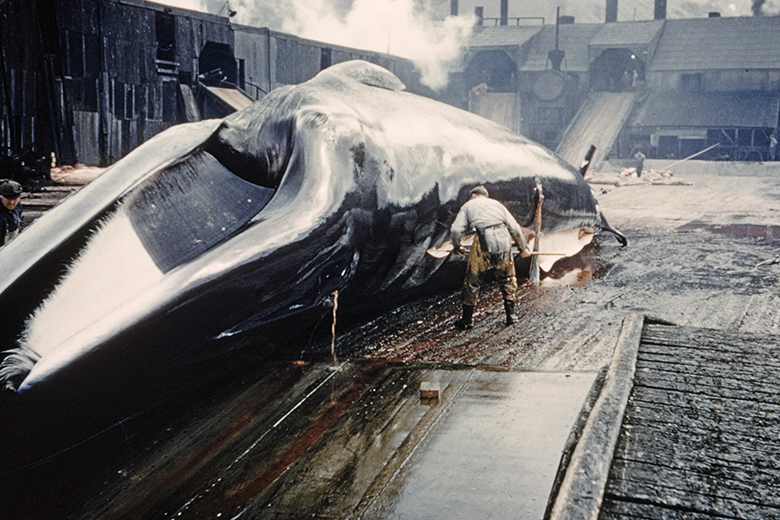
For centuries, she goes on, northerners treated “the far south as a rubbish tip or a dumping ground”, a frontier that was “exploitable and violent, certainly in terms of what was done to whales and indigenous peoples” – and so “an epitome of wider exploitation”.
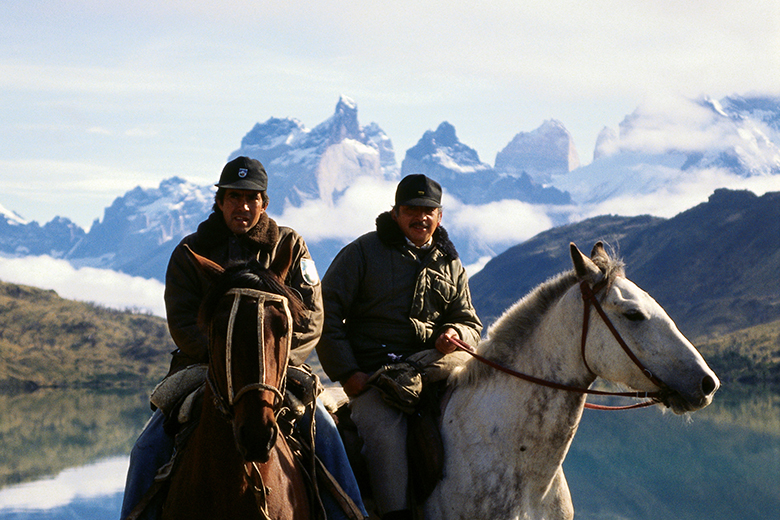
Islands such as South Georgia and South Shetland “were out of sight and out of mind for most of the world’s people and became extraordinary rendering factories – whales processed in huge numbers, as Herman Melville says, to light the cities of North America” (not only in domestic spermaceti candles and whale oil lamps but also in street lighting and even lighthouses). The same thing applied to “the great herds of cattle of Patagonia rendered into Oxo cubes to feed and sustain the troops in the world wars”.
Even now, Boehmer points out, “when Elon Musk dumps his Starlink satellites, he uses the South Indian Ocean – and the nightly Qantas flight between Sydney and Johannesburg has been compromised by the debris coming down. It’s still a dumping ground.” More significantly, “the Southern Ocean has been warming faster than any other ocean since the 1990s, though that has only been recognised since the 2010s…And that is extremely serious for the rest of us...We need to wake up and consider these places which are largely ocean. The far edge is also central and a part of everywhere else.”
Southern Imagining features some intriguing but rather tenuous links that straddle the peoples of the southern hemisphere. Indigenous peoples from Patagonia to Australia by way of South Africa all imagine constellations of flightless birds among the starscapes they share, for instance. We can find parallel stories about human interactions with whales on both sides of the Southern Ocean. And it was precisely by comparing and contrasting what he found right across the “watery hemisphere” that Charles Darwin developed his theory of natural selection.
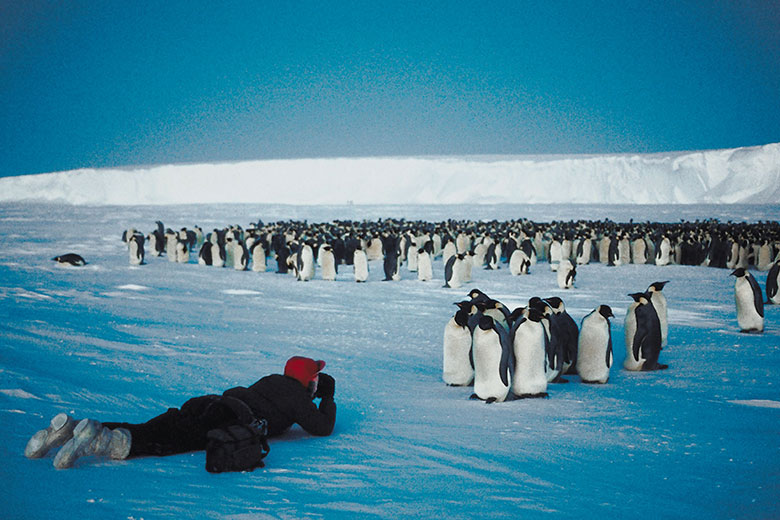
Yet it remains obvious that “southernness” is not a single coherent cultural or political identity, so Southern Imagining is not a work of identity politics in the same way as Boehmer’s earlier writing on postcolonial themes was: “I am not speaking up for the inhabitants of southern hemispheres,” she declares, “and saying we should all join hands and, for example, alert the rest of the world to the cataclysmic fall in emperor penguin populations. No, it’s an invitation to planetary awareness by thinking from the south through books.”
So what do we find?
Some of Southern Imagining explores northern images and stereotypes of the south all the way back to the time of Luís de Camões, who was probably “the first European artist to cross into far southern waters” and who wrote the 16th-century Portuguese national epic about the explorer Vasco da Gama known as the Lusíads. Nineteenth-century writers from Melville to Mary Shelley, some of whom never crossed the equator themselves, depicted ventures into the far south as “not only dangerous but also self-undermining”. Many outsiders understood the whole hemisphere as a terrain of “trackless immensity”, Boehmer writes, even after it had begun to be explored, or viewed it “from the perspective of the [South] Pole, always in relation to its distinctive features of wateriness, remoteness, and soul-shrinking solitude”.
Other chapters examine indigenous writing that can help northerners see southerners as “active subjects” and “observe something of the south on its own terms”, rather than as somewhere “arrived at or entered into”. A further strand looks at the writers from European “settler” stock, brought up in European literary traditions, who struggled to find ways of capturing the reality of their own southern lives and sometimes addressed painful topics such as “land clearances”, “indigenous haunting” and “colonial guilt”.
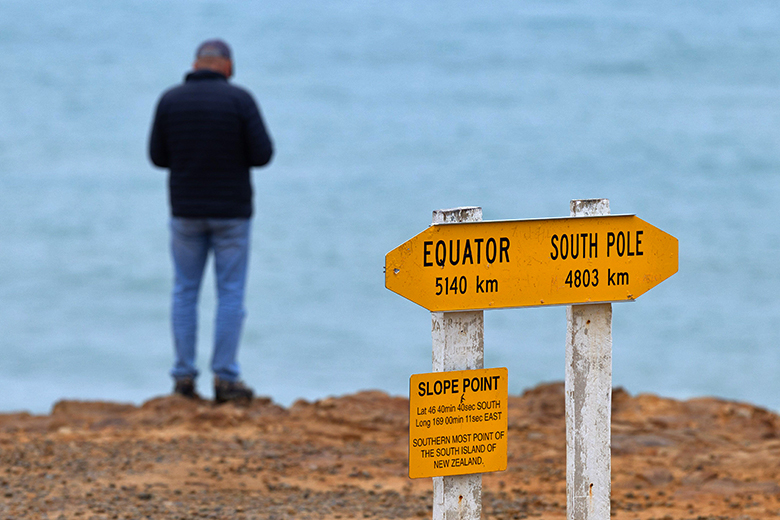
But at the heart of Southern Imagining, as of the hemisphere itself, is the uninhabited (except by scientists) continent of Antarctica. Although it is obviously very inhospitable territory, the “highest, driest, coldest, windiest, remotest continent”, the South Islanders of New Zealand, in particular, are “confronted...by the cold eye of the continent staring from just over the horizon”. Moreover, our changing climate means that what goes on in Antarctica is also “vital to the survival of us all”.
Boehmer calls Southern Imagining “the book I have been wanting to write for 40 years”. It is “a study of perception” that captures “something that I have seen and want to share” – though she acknowledges it would have been unwise to have written such a speculative, wide-ranging book earlier in her academic career – particularly one without an established disciplinary niche, such as postcolonialism.
She now offers it as “a probe, an exploration of the condition of being secondary, from the less considered half of the planet. I hope I show how much thereby is missed.” Although she agrees that a sense of coming from the margins of the real action is not exclusive to southern writers – a radio interviewer from Wyoming told her he had experienced very much the same thing – Boehmer also believes that “the far south epitomises what I am trying to probe in a very interesting way”.
Furthermore, she is convinced that she already has “the southern reader on board. Every Australian understands what they call [cultural] ‘cringe’ – to think from the position of the default, because you yourself do not inhabit the norm.” That is, to feel the need to come to the UK and win acclaim there to count as genuinely successful. She is therefore “appealing to northerners, syllabus makers, world literature teachers and readers...to imaginatively move South”. She has also created her own new syllabus, without any northern theoretical writing, for the 2026 Berlin summer school organised by Harvard’s Institute for World Literature.
“It will be an interesting experiment to teach exclusively southern works,” she reflects, “and to explore with the students what that shows us.”
It remains to be seen how far flipping the map can generate an urgently needed new form of “planetary awareness”, but it is certainly a very striking attempt. And who is to say that Boehmer will not be more successful than her lovelorn novel character, Niall, in doing so?
Register to continue
Why register?
- Registration is free and only takes a moment
- Once registered, you can read 3 articles a month
- Sign up for our newsletter
Subscribe
Or subscribe for unlimited access to:
- Unlimited access to news, views, insights & reviews
- Digital editions
- Digital access to THE’s university and college rankings analysis
Already registered or a current subscriber?