Lecturing students and then asking them to write essays about what they have learned is not a model of higher education that “will survive for very long”, according to the outgoing leader of a university known for its unique approach.
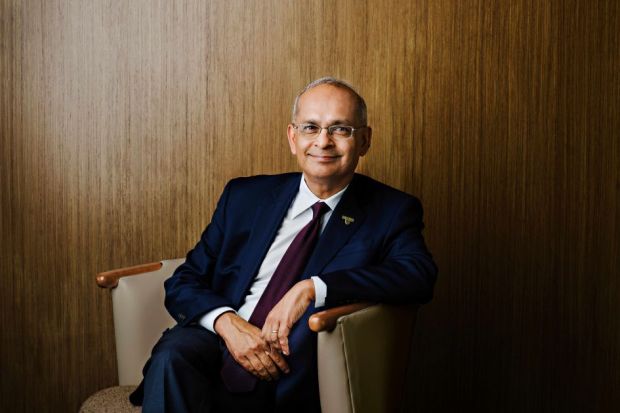
Vivek Goel is stepping down as president and vice-chancellor of the University of Waterloo in June, after five years at the helm of an institution that runs a co-operative education programme.
With about 25,000 co-op students each year alternating between four months in school and four months as full-time employees, Goel said the “secret sauce” of the model makes it hard for other universities to copy.
“It’s built into the DNA of the institution, so the curriculum is built around the co-op model,” he told Times Higher Education.
“When you start to walk through how the curriculum is structured – how the flow of students from one term to the next revolves around the work terms – people start to realise it’s very hard to retrofit into existing models of curriculum structures.”
A former vice-president for research and innovation at the University of Toronto, Goel said more institutions are beginning to include some form of experiential learning in their courses.
He said this will be important as ballast against some of the headwinds that higher education currently faces, including threats from artificial intelligence (AI) and scepticism over high fees.
“Those sorts of things are going to be what institutions…will have to provide, and if we’re just in a model where we continue to provide lectures and ask students to write essays and then grade them, I don’t see that that’s going to be something that will survive for very long.”
Another element of the co-op model is “capstone courses” – third- and fourth-year projects completed over an eight-month period in teams, often across different faculties.
Although the co-op initiative has run since the university was founded in 1957, Goel said it has become even more important when institutions are trying to differentiate themselves from AI platforms that can provide the same content and outcomes.
Goel, who has been chairing a task force on AI for the Council of Ontario Universities, said there is a critical need for collaboration among institutions in the “middle powers” on issues such as AI, which will cause significant disruption, referencing a speech by Canadian president Mark Carney that called for nations such as Canada, Australia and the UK to work together.
“As I look to the future, university leaders that believe that somehow there’s a genie that can be put back in the bottle and locked away and we just continue to operate the way we always have are not going to succeed in maintaining their institutions.
“We have to look at these technologies very critically and very quickly because they are moving really fast, and our students are adopting them way faster than we can understand them.”
Goel, the founding president and chief executive of Public Health Ontario, plans on remaining at Waterloo as a professor to try and tackle some of the “big, wicked” problems of public health.
He will be succeeded as president by Bill Rosehart, currently provost and vice-president academic at the University of Guelph, on 1 July.
Register to continue
Why register?
- Registration is free and only takes a moment
- Once registered, you can read 3 articles a month
- Sign up for our newsletter
Subscribe
Or subscribe for unlimited access to:
- Unlimited access to news, views, insights & reviews
- Digital editions
- Digital access to THE’s university and college rankings analysis
Already registered or a current subscriber?