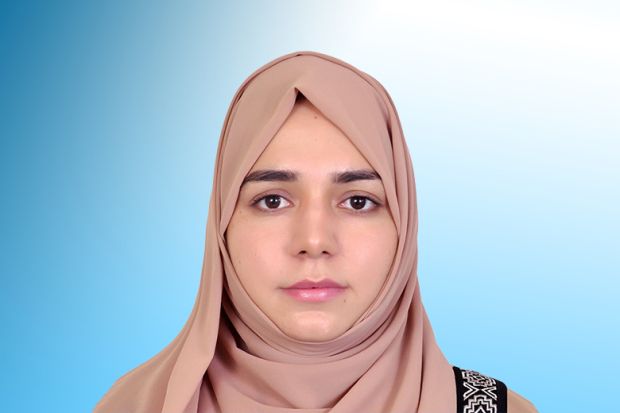
A would-be Chevening scholar says she has lost “years of work” after the UK government blocked study visas from her country, as campaign groups warned that the controversy showed a more “structured” approach to supporting students was needed.
Beheshta Taib, an applicant from Afghanistan who had secured offers from three UK universities and was hoping to be awarded funding under the prestigious scheme, was among those affected after home secretary Shabana Mahmood introduced new restrictions earlier this month, citing a large rise in asylum applications.
Students from Afghanistan, Myanmar, Sudan and Cameroon have all been blocked from coming to the UK to study, with the Home Office ruling out making exceptions for the government’s own Chevening programme, which supports exceptional foreign students to do master’s courses.
Taib, who was told her application had been automatically terminated because of the decision, said it was “devastating” for her and others affected.
“It was like the last door which was open for us, the last hope which was available, was also closed,” she told Times Higher Education.
Meanwhile, a joint statement has been issued by organisations including Mosaik Education, Refugee Education UK and Cara (the Council for At-Risk Academics) expressing concern about the wider UK government ban.
It says that access to higher education for students from the affected countries is already “severely constrained by conflict, displacement and systematic exclusion”.
“A place at a UK university is one of the few viable options to continue their education,” the statement says, adding that for some students it is also “an essential pathway to safety”.
“These are not people abusing the system. They are people for whom the system has no adequate provision.”
The organisations argue that increasing asylum claims through student visa routes reflect a lack of “a lawful, well-designed pathway for students in crisis-affected contexts” and call for a dedicated humanitarian route for displaced students as part of a “more structured response” from the government.
Taib, whose job involves working with women and young people on economic empowerment, said she had spent six years preparing for the opportunity to study in the UK.
When her interview was cancelled, she said it reminded her of 2021, when restrictions on women’s access to education inside Afghanistan were first announced
“It’s one of the very few opportunities that professionals like me have in Afghanistan to continue education,” Taib said of the Chevening scheme.
“In the long term it will have very negative impacts for the country,” she said. “Because if the situation does not change, we will not have enough professional or academic talent in Afghanistan.”
For many applicants, the decision compounds an already shrinking set of options. Taib said she had previously secured admission and funding opportunities in the US, only to be blocked by visa restrictions there.
Register to continue
Why register?
- Registration is free and only takes a moment
- Once registered, you can read 3 articles a month
- Sign up for our newsletter
Subscribe
Or subscribe for unlimited access to:
- Unlimited access to news, views, insights & reviews
- Digital editions
- Digital access to THE’s university and college rankings analysis
Already registered or a current subscriber?