Japan’s new prime minister has been urged to follow through on promises to reform the country’s universities after gambling with a snap election she hopes will secure her a direct mandate.
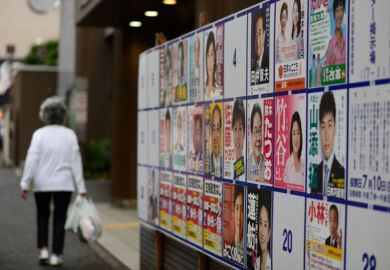
Sanae Takaichi has called a surprise election for Japan’s lower house on 8 February after coming to power last autumn, with the vote widely being seen as a test of her fledgling leadership.
With a compressed timetable limiting time for policy debate – and the vote being dominated by geopolitical tensions and economic concerns – higher education is not expected to feature heavily in the campaign.
But scholars are urging Takaichi to acknowledge the challenges facing the sector, should she win a majority.
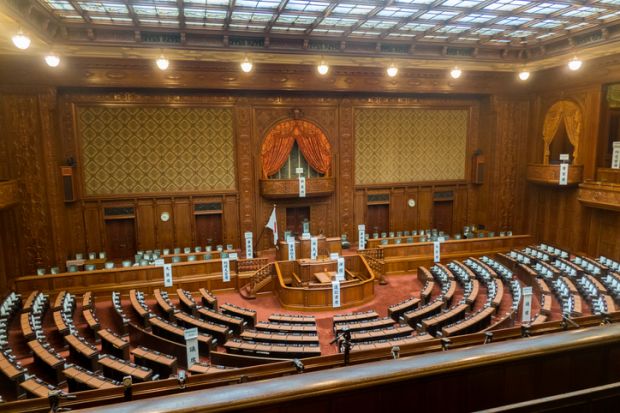
In a policy speech to parliament last October, shortly after becoming prime minister, Takaichi said Japan would push forward efforts to bolster public education and reform universities, with the aim of advancing science and engineering and fostering human resources for a technology-driven nation.
“It would be meaningful to see clearer commitments around sustainable funding, internationalisation and the role of universities in addressing demographic decline particularly through lifelong learning and reskilling,” said Matthew J. Wilson, president and dean of Temple University’s Japan campus.
“However, given the speed of this election, such changes are unlikely to be raised or sufficiently addressed during the campaign itself. More substantive policy movement would be more realistic after the election, once the government has a renewed mandate and greater political bandwidth.”
Wilson added that “there is broad rhetorical support for universities as drivers of innovation, human capital and international competitiveness, but few concrete new funding or governance commitments”.
While Takaichi is known for her support for high public spending, fiscal pressures could further constrain universities after the election.
Among proposals under discussion are a plan to suspend an 8 per cent tax on food for two years, costing an estimated $32 billion (£23 billion) in lost revenue, while defence spending is also rising.
“Lower taxes and higher defence funding could impact education and other areas in the long term,” Wilson said.
Others argue that significant policy shifts affecting universities are already under way, largely outside of public view.
Koichi Nakano, professor of Japanese politics and political theory at Sophia University, said the government has been steadily defunding national universities, forcing them to compete for targeted grants and become more aligned with government and corporate priorities.
He said the government has been aggressively promoting military or dual-use research in universities, adding that more institutions are now allowing researchers to apply for defence ministry grants.
Concerns about longer-term decline are also growing. Akira Arimoto, professor emeritus at Hiroshima University, said higher education policy “has not attracted political attention” because it is not seen as a vote-winner.
He pointed to stagnating research performance, noting that only two Japanese universities appear in the top 100 of the Times Higher Education World University Rankings – the same number as eight years ago.
“Policies that do not foster a rich base below the mid-tier universities clearly drain vitality from the university system,” Arimoto said, warning that population decline could force about 100 private universities to close within 15 years, deepening regional decline.
Register to continue
Why register?
- Registration is free and only takes a moment
- Once registered, you can read 3 articles a month
- Sign up for our newsletter
Subscribe
Or subscribe for unlimited access to:
- Unlimited access to news, views, insights & reviews
- Digital editions
- Digital access to THE’s university and college rankings analysis
Already registered or a current subscriber?