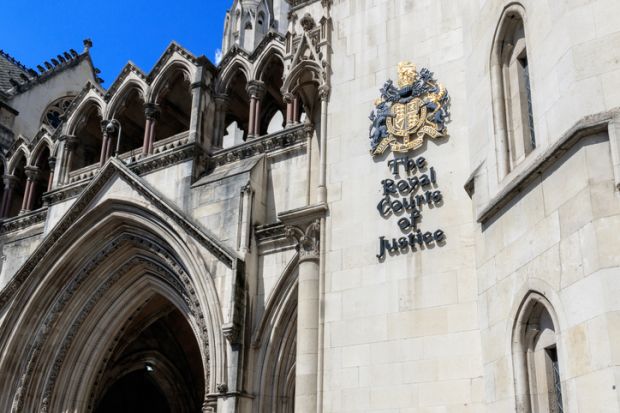
The home secretary has failed to adequately explain why she singled out specific countries when she introduced a “brake” on student visas earlier this year, the High Court has heard.
The measure, which saw Shabana Mahmood’s department suspend applications for study visas for citizens of Afghanistan, Sudan, Cameroon and Myanmar, begs one “stark and critical question…Why have you chosen these countries?”, said lawyers representing a group of students currently barred from accepting places at British universities.
On the final day of a three-day hearing challenging the decision at the High Court, lawyers said that Mahmood’s decision “cries out for explanation”.
The Home Office’s legal team argued that there is a “very high level of risk” that people issued visas from the suspended countries would later go on to claim asylum, potentially contributing to abuse of the system.
Seven impacted students have brought the challenge after they were blocked from studying, despite receiving offers from leading institutions.
One claimant, Razan Farah, holds an offer for the MSc in applied digital health at the University of Oxford, and has ambitions to “advance digital health in Sudan”, while another, Rawan Ali, wishes to study an MSc in women’s health at UCL, where she has deferred her place until 2027-28 as a result of the brake.
Currently residing in Egypt, Ali hopes to apply her studies to preventing female genital mutilation in Sudan.
Another, Shahira Sadat, has had her application for a Chevening scholarship terminated as a result of the policy.
The challenge follows changes to the UK system introduced in March, which restricted applications for student visas made by people from one of the four affected nationalities.
A visa brake for skilled worker visas was in addition applied exclusively to Afghanistan. At the time, the government justified the policy by pointing to figures showing the number of asylum claims from people who arrived in the UK on a visa or other legal means had “nearly tripled” since the end of September 2022.
It said the brake would “reduce strain” on the immigration system and its associated costs and “increase public confidence”.
But lawyers representing the students have contested the suggestion that student visas have any correlation with abuse of the immigration system.
The claimants’ team argues that the Home Office’s reliance on the so-called conversion rate – which looks at how many people from a country who entered on one specific legal route went on to try to remain in the UK under a different one – “bears no relationship to the factual rate at which student visa holders claim asylum”.
Those demanding a formal review of the Home Office policy called the conversion rate an “arbitrary metric” and disputed the idea that applying for a student visa is a “predictive” action of future behaviour.
They also allege the home secretary carried out “fettering of discretion” – a principle that holds that public bodies must not refuse to listen to an application or reject it out of hand – by failing to allow students to be considered “on their merits”.
The Home Office lawyers told the High Court that the home secretary’s intention is to “lift” the brake “as soon as possible”, “if data” backs that decision.
They said the percentage of asylum claims from the suspended countries “remains very high” and questioned the suggestion that the opportunity to study in the UK is “the only or best option” for the claimants.
Moreover, the brake, lawyers said, is “to do with immigration and border control”, an aspect “entrusted” to the secretary of state.
Both sides will now await a decision on whether a judicial review of the policy is to be granted.
Justice Steyn said she hoped to issue a judgment “swiftly”, aiming for a decision as soon as the middle of next month.
Register to continue
Why register?
- Registration is free and only takes a moment
- Once registered, you can read 3 articles a month
- Sign up for our newsletter
Subscribe
Or subscribe for unlimited access to:
- Unlimited access to news, views, insights & reviews
- Digital editions
- Digital access to THE’s university and college rankings analysis
Already registered or a current subscriber?