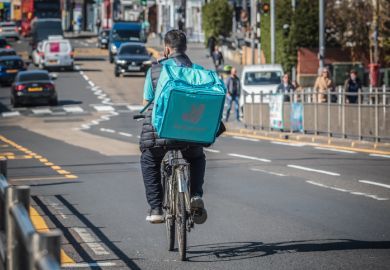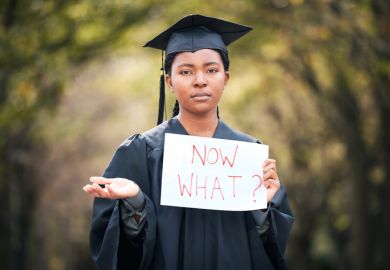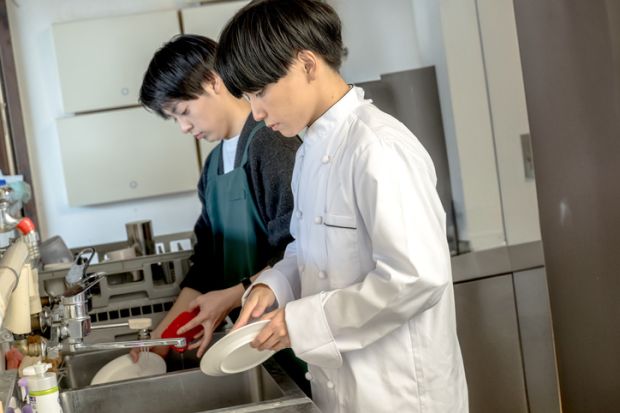
Rising living costs are pushing Japanese university students into taking on more part-time work, reducing time spent on study and widening divides in academic engagement.
A recent survey by the National Federation of University Co-operative Associations found that 77 per cent of students in Japan now work part-time while pursuing their studies, a figure that has risen above pre-pandemic levels.
At the same time monthly spending on books has fallen to below ¥1,000 (£4.70) for the first time in 10 years, while food expenses have increased.
Among students working 23 hours or more per week, 64 per cent reported spending “zero minutes” per day reading, compared with 52 per cent among those working less than seven hours.
The more hours students worked part-time, the higher the proportion who spent “zero hours” studying outside university, whether for class preparation or review. As working hours decreased, the share of those studying 10 hours or more per week increased.
However, the data also point to a growing divide, with some students reporting no reading at all while others continue to read for 60 minutes or more regardless of working hours.
Emi Sakamoto, professor in Japanese studies at Cardiff University, said the shift was likely to reflect deeper systemic pressures.
“The recent surge in inflation is having a significant impact on students and is likely to drive longer-term structural changes, rather than simply representing a short-term response,” she said.
“It is increasingly difficult for students to keep pace with such rapid increases in expenses, particularly given the constraints on their time and earning capacity, as well as relatively low wages.”
Sakamoto warned that the implications for learning outcomes could be significant.
“Heavy work commitments reduce the time and mental space students have for reflection, critical thinking and deeper engagement with their studies. As a result, this not only affects the time available for learning, but also risks diminishing the overall quality of their academic work.”
The findings come amid broader concerns about student financial pressures and their impact on higher education systems globally.
Jeremy Breaden, associate professor of Japanese studies at Monash University, said the relationship between work and study needed to be understood in a broader context.
“The weighting toward work has been creeping up over many years – with the exception of the pandemic years of course – so it isn’t just a reaction to recent inflationary pressures.”
Breaden said casual work should not be viewed solely as a negative trend: “Many, if not most, Japanese university students have always juggled casual work and extracurricular commitments alongside their studies. This variety of activities could actually be seen as a defining feature of Japanese university student life.”
Sayaka Oki, a professor at the University of Tokyo, said increased working hours may not necessarily be reducing academic output.
“Most students I know seem to work more than previous generations in both part-time jobs and university studies. Their scholarly output does not seem inferior to prior generations, though they may be utilising AI to assist with information gathering and refining their writing.”
Comparative research led by Reiko Yamada, professor at Doshisha University, drawing on surveys of students in Japan, the US, South Korea, Taiwan and Australia, suggests that Japanese students spend relatively more time in part-time work outside university than their peers, while spending less time socialising.
More than 20 per cent of Japanese students reported spending zero time with friends, compared with about 4 to 11 per cent in other countries, while time spent attending social gatherings was also significantly lower. These patterns emerged during the Covid-19 period and have persisted post-pandemic.
Register to continue
Why register?
- Registration is free and only takes a moment
- Once registered, you can read 3 articles a month
- Sign up for our newsletter
Subscribe
Or subscribe for unlimited access to:
- Unlimited access to news, views, insights & reviews
- Digital editions
- Digital access to THE’s university and college rankings analysis
Already registered or a current subscriber?