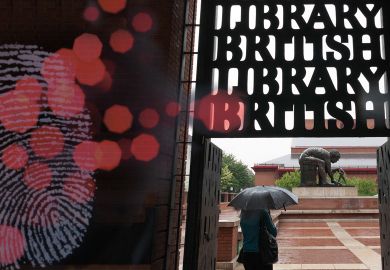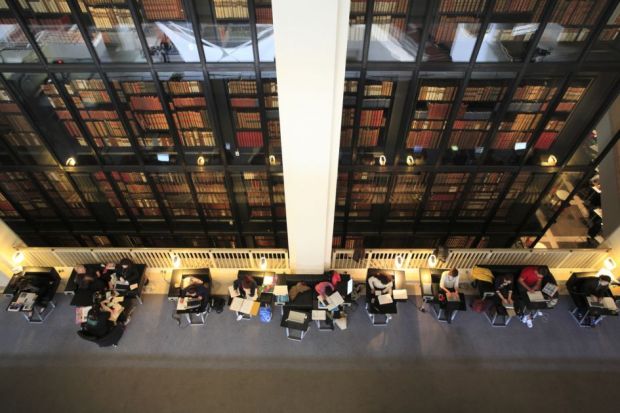
A metadata-only version of the British Library’s sorely missed PhD thesis repository will be a pale imitation of the service that disappeared more than two years ago after a cyberattack, experts have warned.
Until it was badly damaged by Russian hackers in October 2023, the national library’s Electronic Theses Online System (EThOS) was one of the UK’s most used digital academic resources with about 80,000 thesis views every month.
Overall, it held records for more than 600,000 theses, of which 300,000 were available to download, following large-scale digitisation efforts by UK universities.
While most of the British Library’s digital resources and search functions are back online, there is no firm timeline on when EThOS might return. Its latest update from September 2025 states work to restore downloads and automated requests for digitisation will begin “later in 2026”.
However “work is underway to restore an interim platform in early 2026”, it added, though this portal will “not have files but will link out to each university’s repository where you may be able to download individual theses, if the university has made it available”.
While this platform may help some researchers find documents, it would be a poor substitute for the all-round discovery service offered by EThOS, said Martin Paul Eve, professor of literature, technology and publishing at Birkbeck, University of London.
“Having a metadata-only platform is really disappointing because the key thing about EThOS was centralisation – you could research in a single place,” he said.
A click-through service to institutional repositories would be far more cumbersome and would likely limit the range of available PhD theses compared with the old EThOS system, continued Eve. “The more contemporary PhD theses will be accessible as these are automatically digitised but the older ones might not be there – that’s the material that is often most useful,” he said.
“I don’t want to slate the British Library’s IT staff who have faced an enormous task in restoring services but it seems EThOS hasn’t been given the priority it deserves considering it was such a well-used resource for academics and research students,” said Eve.
“It wasn’t just a great research tool featuring high-quality work not published in journals but it was an amazing teaching tool to which I’d often refer my PhD students. They could get a feel for what a good doctoral thesis looks like,” he noted, adding: “But it was the extra things – not just search – that made EThOS so useful.”
Concern over the slow restoration of EThOS follows mounting criticism of the St Pancras institution with British Academy chief executive Hetan Shah calling for MPs to conduct an inquiry into the library’s issues. In recent months it has been hit by strike action while its chief executive unexpectedly quit after less than a year in charge.
The British Library was approached for comment about when the new EThOS portal would start.
Caroline Ball, community engagement lead at the Open Book Collective, a charity which brings together publishers and scholarly libraries, agreed the one-stop nature of EThOS meant it was hugely missed by researchers.
“Many repositories host open access copies of research [including PhD theses], but knowing about these repositories and where to find them, and having to search them one by one, really limits the benefit of this kind of open access,” she said.
“Part of the problem these days is that there are so many avenues for searching, many with a great deal of overlap, and it’s hard to know which to search, which indexes what, what kind of coverage or access or full-text options [are provided],” she continued.
That said, it was understandable that the British Library had prioritised other areas because “most of the data does at least exist outside of the library’s holding”, unlike some physical and digital material taken offline.
“These theses might not be as centrally located or easy to access as they were via EThOS, but they are out there, in their parent institutions, in some format or other,” said Ball, a former university librarian.
This year’s IT build should also prompt a conversation on whether its replacement should “go beyond what EThOS does”, continued Ball, suggesting “some kind of integrated discovery service or catalogue for institutional repositories themselves” could be created “for all content in these repositories, not just theses, either hosting these materials or just their metadata”.
“The repository is meant to be a central source of a university’s research output, so this might mean journal articles, book chapters, monographs, conference presentations and papers, reports, sometimes conference posters, sometimes datasets, sometimes master’s-level dissertations,” said Ball.
“A central hub would be of enormous benefit, and the model is there with EThOS – it would just expand its scope and ambitions,” she said.
Register to continue
Why register?
- Registration is free and only takes a moment
- Once registered, you can read 3 articles a month
- Sign up for our newsletter
Subscribe
Or subscribe for unlimited access to:
- Unlimited access to news, views, insights & reviews
- Digital editions
- Digital access to THE’s university and college rankings analysis
Already registered or a current subscriber?