Gazan students applying to UK universities are “back at square one” amid uncertainty over whether a government evacuation programme will continue.
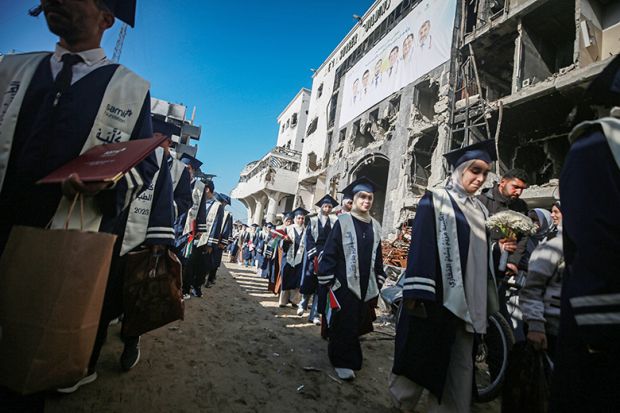
Under pressure from MPs and campaigners, last autumn ministers stepped in to ensure 40 Gazan students who had fully funded scholarships and offers at UK universities were able to obtain the necessary documents to begin their studies.
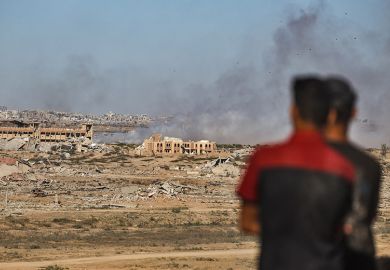
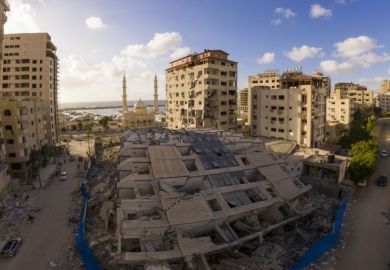
The closure of visa centres and borders as Israel bombed Gaza following Hamas’ attacks on 7 October 2023 meant obtaining the relevant bibliometric checks was impossible.
Despite the intervention, Nora Parr, a volunteer at the Gaza Scholarship Initiative, said there had been “chaos” in getting the students out, with some arriving as late as December. She said five students who had been due to start UK university courses in September remained in Gaza.
Campaigners hope that these students will still be evacuated and take up their places, alongside dependants of students who have already made it to the UK, but warn that as uncertainty remains over the future of the policy, those currently applying to UK universities are at risk of “falling through the cracks”.
The Home Office said that the government “is reviewing the impact of the policy implemented to date” and that “any decision on future support will depend on the evolving international situation”.
Meanwhile, universities asking whether students who were due to start courses in January might be considered for evacuation are being told that the impact of the evacuation policy is “currently being assessed” and that future support will be determined.
Parr, a research fellow at the University of Birmingham, said that the announcement of a ceasefire in October has “hampered” student progress “because it gives the false sense that the urgency for student support is over”, when visa centres remain shut and citizens have no way of leaving Gaza.
“Students in Gaza, and universities who advocated for them, are back at square one. There is no way to apply for a visa. They’re waiting for the Rafah Crossing to open, and frankly they’ve been waiting for Rafah to open for three years now, so they don’t know if there will be continued support,” she said.
The scope of future support needs to be made “explicit” to allow for planning ahead, said Parr. “This is urgent for both universities and hopeful students. Eleven students in Gaza have interviews at Cambridge this year, one has already been made an offer to Oxford, and tens of others have offers at top universities across the country. Neither students nor university admissions teams know if they will be able to take up their spots.”
In September, home secretary Yvette Cooper announced plans to introduce a “permanent framework” for refugee students to study in the UK, but Parr said a lack of further announcements means this is “unlikely” to be in place for students looking to arrive in September, and said a temporary solution needs to be found.
“Ultimately, if the UK is committed to supporting the future of bright students who will rebuild Gaza, the support must be sustained and built on predictability,” she said.
A government spokesperson said it has done “everything in its power to assist eligible students and their eligible dependants to exit Gaza, and take up their places in the UK”.
“Arranging these departures has been a hugely complex task, entirely dependent on cooperation from our international partners. The UK can only assist once permissions have been granted by third countries, and that can make the timelines for each departure extremely unpredictable and difficult to control”.
Register to continue
Why register?
- Registration is free and only takes a moment
- Once registered, you can read 3 articles a month
- Sign up for our newsletter
Subscribe
Or subscribe for unlimited access to:
- Unlimited access to news, views, insights & reviews
- Digital editions
- Digital access to THE’s university and college rankings analysis
Already registered or a current subscriber?