Burnham in EU fees balancing act as crunch talks loom

Any concessions made by new prime minister likely to be fiercely opposed by universities fearful of losing millions of pounds in income

Published on
August 25, 2026
Last updated
August 25, 2026
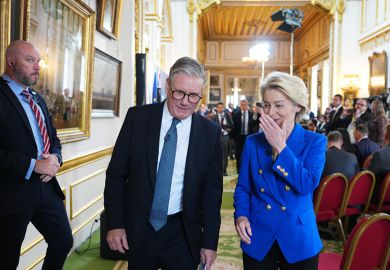
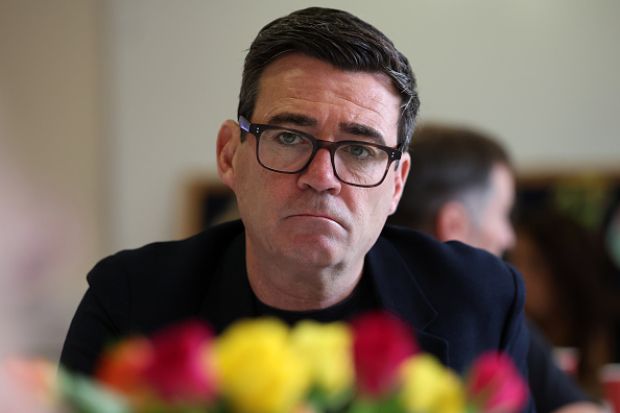
Britain's Prime Minister Andy Burnham
Source: Getty Images/WPA Pool

Brussels’ push for cheaper fees for European Union students at UK universities could prove to be one of the first major tests of Andy Burnham’s fledgling premiership, with institutions dead set against the idea, warning that it could cost them hundreds of millions of pounds.

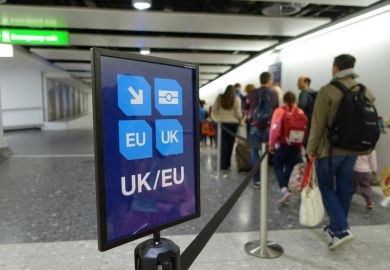
The prime minister is expected to meet EU leaders at a UK-EU summit this autumn. Student fees and a proposed youth mobility scheme, which would allow young people to spend a limited period in the UK or EU to work, study or travel, are among the issues already under negotiation ahead of the summit. 

Since Brexit, EU students have generally paid international tuition fees at UK universities after losing their entitlement to domestic fee status, which is capped at £9,790 in the 2026-27 academic year. Burnham is open to lowering fees if the bloc offers significant concessions on trade, according to reports.

The Russell Group, which represents 24 leading public research universities in the UK, has warned that restoring “home fees” could cost the sector more than £500 million a year. 

ADVERTISEMENT

“The UK university sector benefits greatly from a positive and productive relationship with the EU. We want to see closer ties that encourage student and staff mobility and valuable research collaborations,” said Hollie Chandler, director of strategic policy at the group.

“But a deal that costs the sector over £500m is not good news for universities or for the UK as a whole.”

ADVERTISEMENT

She said the move could put further pressure on home student places, teaching and research at a time when universities were already dealing with financial difficulties.

But Marco Seeber, professor at the University of Agder in Norway and an expert on European higher education policy, said the impact would not necessarily be the same across the sector.

He said prestigious universities in the UK that attract lots of international students who pay high fees would have more to lose from a return to cheaper fees for EU students.

“For [elite universities], it’s probably an economic loss. But for many other universities and the UK, it would be more of an opportunity,” he said, adding that cheaper fees could help the country attract more students at a time when some institutions are struggling to recruit and student numbers are projected to decline due to demographic trends.

ADVERTISEMENT

Brussels’ insistence on home fees is rooted in the EU principle that citizens should get similar treatment across Europe, Seeber explained, but the issue has also become politicised and symbolic of the bigger effort to reset relations with the UK after Brexit. Reports have previously suggested that the bloc would be prepared to compromise on a deal, and accept its students paying fees halfway between domestic students and all other international enrolments.

In the 2024-25 academic year, there were 63,600 EU students studying at UK higher education institutions, a figure that is 16 per cent lower compared with 2023-24, according to the Higher Education Statistics Agency. Enrolment has been declining since 2020-21 after the UK officially left the bloc. 

“There are now no EU countries in the top 10 of student-sending countries to the UK,” said Johanna Waters, a professor of Human Geography and co-director of the Migration Research Unit at UCL. 

“There are several reasons that account for this decline, and these include visa requirements, an NHS surcharge and, most importantly of all, the introduction of international tuition fees for EU students.”

ADVERTISEMENT

Waters explained that more European countries were offering courses taught in English, while tuition is free in countries such as Germany and Norway. “It is hardly surprising, then, that price-sensitive students are avoiding the UK as a study destination,” she added.

But she recognised that reintroducing domestic fees for EU students could further add to the financial pressure universities are facing. “Whilst universities will, in principle, support and welcome more EU students back into classrooms, the government will have to make up for any shortfalls in fee income. Universities will not be able to absorb this,” Waters warned.

ADVERTISEMENT

seher.asaf@timeshighereducation.com 

Register to continue

Why register?

  • Registration is free and only takes a moment
  • Once registered, you can read 3 articles a month
  • Sign up for our newsletter
Please
or
to read this article.

Related articles

Reader's comments (9)

One additional issue is that surely other nations when negotiating trade deals will also be pressing the UK will subsequenly also press for the same reduced fee for their nationals from the UK and requiring "most favoured nation" terms in their agreements?
Dead right - can’t see President Trump not demanding the same deal for American citizens. Rejoining the failing EU would involve our paying a massive annual fee into its wasteful EU budget, ditching the £ and taking on the €, and allowing.mass movement of all the non-EU immigrants that such as Spain has let in - utterly crazy and not likely to be approved in a new referendum (assuming the public is even allowed a say…).
Some Post-92’s are already charging Home fees. There is also a view of the UK being far too expensive in terms of living costs. Not too long ago I sat with representatives from about 25 Spanish universities, the noise from them when they heard about the NHS surcharge said a great deal.
But UK students in the EU have to apply for a UK GHIC and additional Health insurance is also highly recommended. Healthcare is not provided free to UK students studying abroad by Spain or the EU taxpayers, or anywhere else. I am not sure why there was so much noise.
Are we not also contributing over half a billion for Erasmus Plus?
Burnham's government only controls fees and funding in England. He cannot negotiate on behalf of UK higher education (or FE). Scotland attracted more EU students pro rata previously, mainly because it's undergraduate education system is much more educationally aligned with most EU states (6 years secondary, 4 years to bachelors - rather than rUK's 5+2+3 outlier), but also because of the more enlightened pro-EU attitude among the broader population. The traditional UK government method of compensating devolved governments with extra funds for additional allocations in England, the Barnett formula = pro rata population compared to England, could therefore be ill-equipped for dealing with a genuine UK wide policy. [This is even leaving aside the complicating factors that Barnett is only formally calculated once a year, in a UK government Budget that is 28 October this year for a financial year beginning in April, whereas education funding like this needs to largely follow academic years starting in September; and that the 3 devolved governments are under a legal obligation to run balanced budgets so cannot easily compensate institutions in advance of knowing funds are being released into their UK government-determined block grants. ] It's non-statutory so there's nothing to stop the UK government agreeing something that compensates devolved governments according to their actuall enrolment rather than cash spent in England The correct governance process would be for UK government to put forward a "four government" solution in advance of negotiating with the EU, a solution that satisfies both all three devolved governments and their respective institutions. But Burnham doesn't want to do that because unlike England, where he uses either the brute force of OfS or the echo chamber of his Mayoral cohorts, the devolved governments are led by parties hostile to his agenda of refusing additional devolution to them (especially Cymru/Wales where Labour were completely trounced in May's elections, leading to what political scientists call 'partisan vertical incongruence' with SNP/Plaid Cymru with stronger mandates than Burnham's). The three parties holding all three First Minister posts (SNP, Plaid Cymru, Sinn Fein) have now created an informal 'Celtic Alliance' to unite in demands for greater devolution. If Burnham has to go cap in hand to them to get agreement before negotiating with the EU he may have to be willing to concede on other fronts - like policing in Cymru. If he just goes to the EU first, he risks the wrath of the devolved governments sharpening their knives if his solution is seen as unfair or unworkable to any one of them - accelerating moves towards a further break-up of the UK state. The Good Friday Agreement and the role of the government of the EU-member state in Ireland in all this may also cause complications, as will the fact that much of Scottish HE is located in the FE sector, putting pressure for a deal that covers not just universities but FE as well. It's even more of a headache for Burnham than this article makes it appear but his desperation to get something with the EU that helps UK growth may force him down paths his party and the opposition parties from England in the Westminster parliament are intensely unhappy with. Michael Picken, Glasgow
This is an important series of points. Thank you. One wonders if this a=or the previous government has any grasp of devolved finances?
There is such naivety here on the part of the previous and the new administration. If you say to your domestic audience to curry favour, "my government's priority is to restore our relationship with the EU", then you have shown that you have a very weak negotiating position indeed and very tough, professional negotiators like the EU will drive a very hard bargain. They also have to justify any agreement to the 27 and show that they have driven a very hard bargain! They, at least, are realists.
Exactly, if you make it a poilicy promise then you are obliged to deliver it putting additional pressure on you to compromise to avoid failing. Our former EU partners have their own serious financial worries and will squeeze every concession they can and closer relations are not their priority, restoring as much of the lost UK budget payaments ias they can is! Govt happy to sacrifice UK Universities financial well being. And Presidents Modi, Xi, and Trump will be wanting the very same concessions for their students in exchange for for trade deals and access to their markets and inward investment in future (and why would they not?). And that's before we even think about the complexities of the devolved systems within the UK. If we want closer relations there will be a high price to pay. Of course, if the govt can point to a counter balancing series of benefits from such a concession (the fantasy of improved groweth etc) then there might be a case. The EU do not negotiate nilaterally with thitrd nations, they negotiate from a position of membership privilege which governments have to pay to access.

Sponsored

Featured jobs

See all jobs