Psychology and psychiatry
US academics unwilling to share ‘socially costly’ views because they fear abuse, ostracisation and disciplinary action
ChatGPT scores half a grade higher than psychology undergraduates in experiment at University of Reading
Scholars suggest reproducibility testing might be helping to self-correct psychological research
UCL and King’s researchers clash over ‘sarky’ critique of paper that questioned root causes of depression
Machine learning study finds university prestige and citations have no association with replicability, but author experience is key
Women now have a better chance of getting in than male scholars with similar track records, suggesting attempt to redress historic injustices
The president of the University of Würzburg discusses the differences between the two systems, why he’s joined a European university alliance and the benefits of interdisciplinary working
Our higher valuation of scarce commodities and our aversion to losing things we value now play in digital education’s favour, suggests Paul Penn
Few academics abused the autonomy they used to have – and fewer still complained about their salary, says Adrian Furnham
Audit of top psychology and neuroscience titles highlights relative lack of female editors and US dominance that may be harming science, say authors
Accurate reporting of results is important, but meaning is rarely distorted by orthographic or grammatical slips, says Adrian Furnham
Tributes paid to ‘single-minded’ researcher who could tell you anything ‘you ever needed to know about sleep’
The escalating pressures of university life are resulting in all manner of exotic new psychological disorders. Adrian Furnham opens his casebook
Tributes paid to psychologist who was ‘the father of flow’
Tributes paid to ‘one of the most influential psychiatric scientists of his generation’
High levels of personal optimism block decisions to depart a dysfunctional workplace or halt a failing project, say Alexander Clark and Bailey Sousa
Shifting fields takes courage, but if a tenured professor can’t take the leap to address the ecological emergency, who can, asks Adam Aron
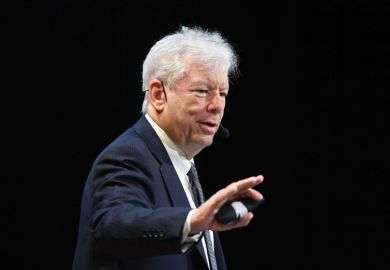
John Morgan meets the Nobel prizewinning father of nudge economics, who believes that the dismal science can only be improved by taking account of people’s ‘predictable mistakes’
Despite its insights into democracy, this loosely linked collection of previously published essays and reviews leaves Lennard Davis unimpressed
The professor of psychiatry and author of Of Fear and Strangers discusses learning about America from Twain, the ‘history of xenophobia’ and how to address it
Deborah D. Rogers is unconvinced by an ambitious attempt to apply the insights of neuroscience to centuries of literature
But journals’ open access fees are suddenly increasing researchers’ need for funding, says Adrian Furnham
New book puts ‘deep learning’, meaningful relationships and even spirituality at the heart of proposed new discipline
We need knowledge and content that go beyond the Western world to design a meaningful decolonised, research-led curriculum, says Masi Noor
Martin Cohen finds many insights and a dose of logic in a book about brain science that aims to help us think better
Universities need to establish clear and transparent criteria for assessing those with borderline results, argues Andy Grayson
Aggrieved Victorian universities should see new mental health levy as an opportunity to harness resources, conference hears
Public confusion is one thing, but some subjects provoke quizzical and sometimes dismissive frowns even among colleagues from different departments. Here, nine academics set the record straight about what they do – and why it matters
Articles in leading journals that can be reproduced gain 16 fewer citations a year on average, say Californian economists
The professor of the history of medicine and author of Broken Dreams on teenage angst, exploring medical pasts and getting to the heart of midlife crises
Interdisciplinarity will not meet its problem-solving potential unless graduates are primed to embrace challenges, says Paul O’Keefe
Anil Seth has mixed feelings about an ambitious study of consciousness that draws extensively on psychoanalysis
Matthew Broome is impressed by a study of our changing ideas about dementia that combines scientific and cultural analysis
David A. Sanders enjoys a clear and comprehensive, if flawed, study of where science is going wrong and how to put it right
Being Well in Academia offers guidance on ‘bullying, conflict, death, poverty, racism and violence’, says author and ‘agony aunt’ Petra Boynton
The experience of Monash University suggests that staff members’ greatest mental health needs are not necessarily obvious, says Kim Cornish
A. W. Purdue is impressed by a dazzling analysis of the human capacity for violence and how it has moulded our lives
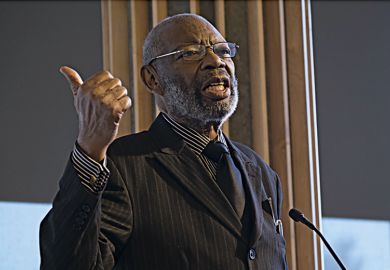
Tributes paid to ‘one of the architects of the black psychology movement’
Randy Malamud admires a distinctly engaging account of an energy-sapping emotion
The prizewinning economist discusses how economics must focus on beliefs and identity, along with the influence of TV on our choices
UK government adviser Stephen Reicher argues that the discipline, which often comes under fire, can help in articulating ‘between the social and the individual’
John Gilbey is fascinated by an ambitious attempt to analyse and address the disastrous human impact on the biosphere
The historian and author of The Politics of Humiliation discusses fairy tales and myths, the history of emotions, and the relationships between victim, perpetrators and onlookers
Michael Marinetto enjoys a bold attempt to challenge the scientific consensus about consciousness
Joe Moran is intrigued by a deep history that has gained unexpected relevance at a time of self-isolation
It is widely acknowledged that universities need to do more to support student mental health. Yet many academics and service staff are worried that well-intentioned initiatives pathologise ordinary anxieties and can do harm as well as good. Kathryn Ecclestone listens to their concerns
Gail Marshall considers a wide-ranging exploration of readers’ desire to find life lessons in books of many kinds
Adam Kucharski, author of The Rules of Contagion, on books that piqued his interest in mathematics, and those that showed how maths could be applied to serve public health by modelling infectious diseases – and happiness
Jane O’Grady is intrigued by an analysis of the psychological depths plumbed by the fiction of George Eliot and Thomas Hardy
Shane O’Mara considers the many different and always inadequate metaphors we have used to analyse our mental functioning
Book of the week: Constantine Sandis admires a subtle and judicious analysis of the communications skills of our fellow creatures
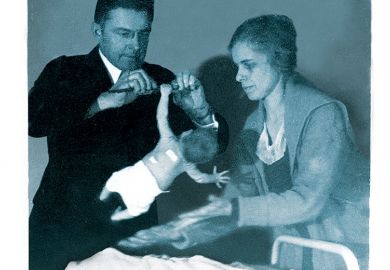
In 1920, psychologist John Watson described his infamous experiments on an infant in a bid to show that the human mind is a blank slate. A hundred years on, Antonio Melechi examines the rise and fall of behaviourism, and the utopian – or dystopian – reflexes that it conditioned
Steven Groarke is unconvinced by an overview of 1970s challenges to mainstream approaches to mental health
Simon Young enjoys an oblique but revealing account of a pioneering group of ‘psy’ researchers
Michael Marinetto learns some crucial lessons about good writing and research
Matthew Broome considers what psychiatrists can learn from the sheer variety of memoirs about mental illness
Lennard Davis is intrigued by an exceptionally wide-ranging account of the many things on which humans get high
More Russian universities join top 100 of subject tables
Martin De Saulles appreciates a subtle analysis of consciousness and what it means for artificial intelligence
US study reveals that it’s not just a matter of how much sleep learners get – when they go to bed matters, too