When India’s Supreme Court paused the introduction of new regulations aimed at curbing caste discrimination in Indian higher education, it followed its US cousin’s recent intervention into the fraught issue of whether efforts to redress the prejudice and historic disadvantage faced by minority groups can tip into discriminating against the majority.
The Indian court’s intervention at the end of January is, however, less dramatic than the US Supreme Court’s 2023 decision striking down race-conscious admissions on the grounds that the practice violates the equal protection laws of the US Constitution. For one thing, India’s post-independence constitution, framed in 1950, explicitly recognises the historical disadvantage faced by what are known as “scheduled castes” (SCs – also known as Dalits) and “scheduled tribes” (STs).
Moreover, it declares that the state may make “any special provision for the advancement of any socially, and educationally backward classes of citizens of or for the Scheduled Castes and the Scheduled Tribes”. And, in particular, the state will “promote with special care the educational and economic interests of the weaker sections of the people”.
In practice, this meant reserving 22.5 per cent of government jobs and seats in educational institutions for SCs and STs. In 1980, a quota of 27 per cent was also introduced for “other backward classes” (OBCs), following a landmark government commission.
But, more recently, concerns have arisen that while Dalits may be permitted a certain number of university seats, discrimination against Dalit students is still widespread. The University Grants Commission, India’s higher education governing body, introduced guidelines in 2012 setting out how universities should handle such complaints, but a spate of suicides by Dalit students in recent years pushed the issue up the political agenda.
The deaths of Rohith Vemula in 2016 and Payal Tadvi in 2019 triggered nationwide protests and raised uncomfortable questions about institutional accountability. For years, such tragedies were framed primarily as being the result of individual mental health crises, but activists argued that they revealed patterns of systemic discrimination and a lack of institutional safeguards, and their parents sought legal acknowledgement of this.
In 2023, the suicide of a Dalit student at the Indian Institute of Technology Bombay, Darshan Solanki, also prompted protests about discrimination, as did the deaths of two Dalit students who died by suicide at IIT Delhi in the same year, Ayush Ashna and Anil Kumar. The parents of the IIT Delhi students made a legal complaint about the police’s refusal to report the cases as instances of caste discrimination. Their cases, too, ultimately ended up at the Supreme Court, which ordered the formation of a judge-led “national task force” to investigate the causes of student suicides and make recommendations on strengthening existing protections.
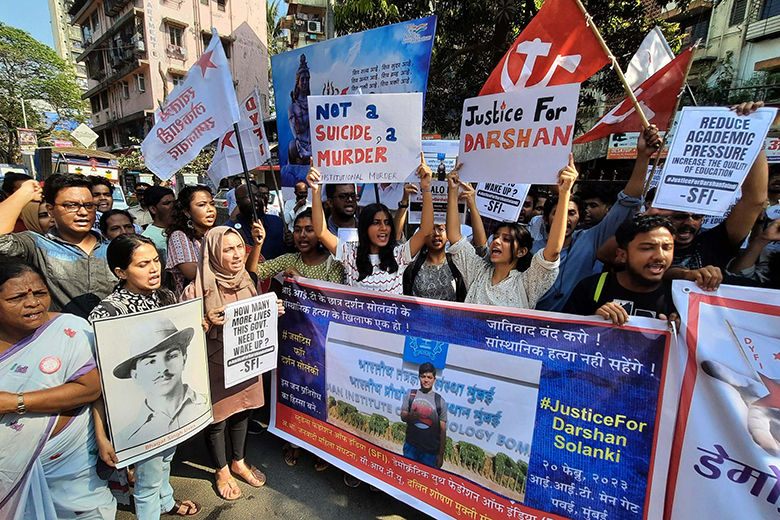
Dalits complain that the existing guidelines were weakly enforced, that complaints were under-registered and that internal investigative committees lacked independence. Anubhav Singh, a Dalit activist based in India who works on right-wing nationalism and caste, told Times Higher Education that the existing guidelines do not clearly define discrimination or provide sufficient monitoring mechanisms. In some cases, for instance, allegations of caste discrimination are dismissed or reframed as “ragging”, he said, with institutions more concerned about protecting their reputations than enforcing anti-discrimination measures.
Hence, in January, the UGC published updated guidelines, known as the “Promotion of Equity in Higher Education Institutions Regulations 2026”. Changes include the requirement that all higher education institutions establish an “Equal Opportunity Centre” to “oversee the effective implementation of policies and programmes for disadvantaged groups; to provide guidance and counselling regarding academic, financial, social, and other matters; and to enhance the diversity within the campus”.
Twice a year, the centre “must produce a report detailing the demographic composition of students and staff, dropout rates of the students for the previous academic year, grievances/complaints received under these regulations, and their current status”. Financial penalties, such as grant cancellations, could ensue for universities deemed to be falling below equity standards or ignoring discrimination complaints.
A university must also “designate at least one stakeholder in each of its units, departments, faculties, schools, hostels, libraries, or facilities to act as an ‘Equity Ambassador’”, to “act as torchbearers of equity on the campus”, and “a nodal officer for implementing the programme or activities planned by the Equal Opportunity Centre in their units and shall also report any equity violation without delay”.
Every institution must also establish “Equity Squads”, reporting to the centre, “with such representation as is considered necessary for maintaining vigil and preventing any discrimination on the campus”, including by visiting “vulnerable spots” on campus “frequently”.
And, most controversially, each university must establish a dedicated “Equity Committee” to handle complaints related to discrimination based on caste, religion, gender or disability; such committees must be chaired by the head of the institution and include women, people with disabilities and representatives of OBCs, SCs and STs.
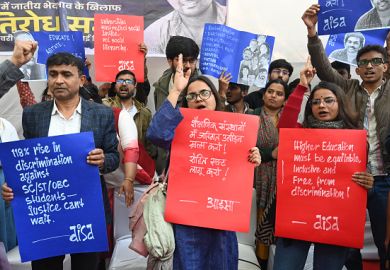
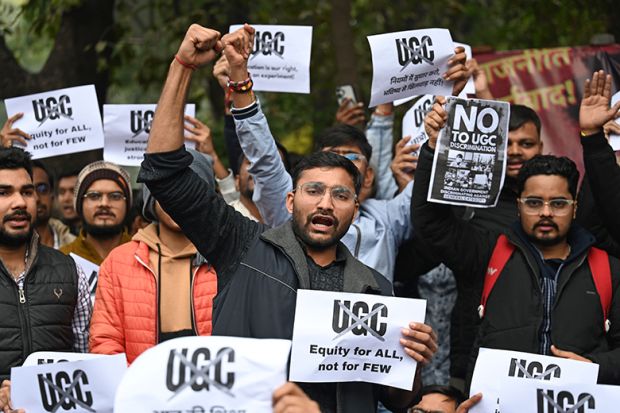
However, higher-caste Indians quickly cast the rules as a threat to fairness, seeing them as part of a historical pattern of reverse discrimination against upper-caste students and faculty. Their dismay was such that they not only petitioned the Supreme Court to intervene but also took to the streets in opposition. In the northern city of Kanpur, for instance, demonstrators shaved their heads while condemning the new guidelines as dictatorial and likely to promote casteism, according to The Times of India. Students also protested on campuses and even outside the UGC’s headquarters in Delhi.
The court agreed that the rules could be divisive, partly because they were “vague” and “capable of misuse” by people pursuing personal vendettas, partly because they do not address non-caste-based discrimination such as ragging and partly because the mechanisms of redress for caste-based discrimination are only open to people from the SC, ST and OBC categories. Students from non-reserved categories claim they can also be victims of caste-based harassment and derogatory labelling.
The court worried that this imbalance may run contrary to India’s constitutional commitment to equal treatment for all. Hence, just days after they were released, the new guidelines were temporarily stayed – prompting protests from Dalit students.
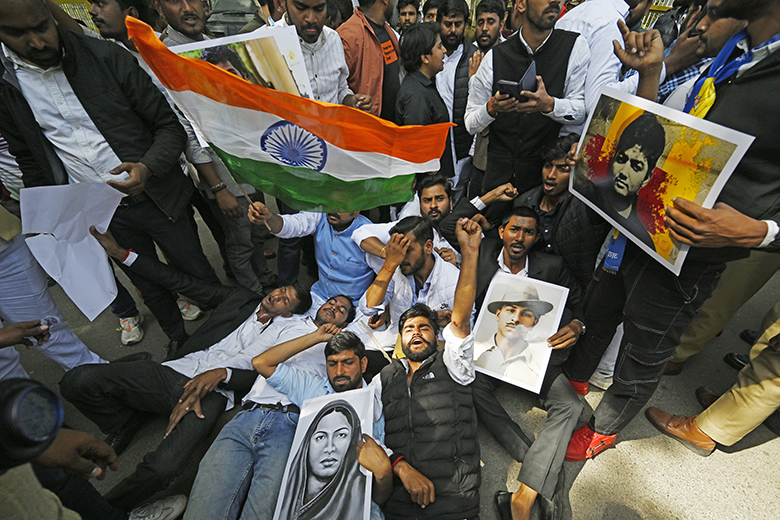
Caste is every bit as controversial a topic in India – and among its expatriate populations around the world, including students – as race is in the US.
At one end of the ideological spectrum, some even question the whole conception of caste; for instance, Prakash Shah, reader in culture and law at Queen Mary University of London, argues that contemporary understandings of caste discrimination are rooted in colonial interpretations and that regulatory approaches risk entrenching rigid categories. He suggests that post-independence policies have created “unearned benefits” and fostered conflict rather than equality.
Other sceptics suggest that whatever the reality of caste categories themselves, caste-based prejudice is not a major problem in India, and some members of upper castes complain that they are unfairly denied limited opportunities to attend prestigious universities and to land government jobs: a complaint only amplified in a tight job market.
For his part, Singh conceded that discrimination on campus is rarely overt, but he insisted that it was structurally embedded. It operates “along institutional lines, social lines and personal lines”, he said. And it may appear in grading patterns, in access to supervisors and recommendation letters, or in who is included in informal academic networks.
“There is no smoking gun,” Singh said. “You can’t just point to one moment and say, ‘This is caste discrimination.’ But your experience as a whole determines how isolated you are, how discriminated [against] you feel.” And he noted that allegations of caste-based harassment have surfaced at some of India’s most prestigious institutions, including the University of Hyderabad and the All India Institute of Medical Science (AIIMS) in Delhi.
While the idea that Dalits are literally untouchable – as their former name declared – may have “largely changed, at least in certain urban areas”, discrimination can take other forms, including humiliation, exclusion and the assumption that students admitted through reservation lack merit, Singh said.
That argument is as old as the constitution, according to Saikat Majumdar, an Indian novelist and professor of English and creative writing who has written extensively on caste and education. But he argues that the “quota versus merit” narrative “conveniently ignores the implied caste bias of dominant definitions of merit itself”.
Elite institutions remain disproportionately upper caste relative to India’s demographic composition. Government data indicate that in 21 prestigious Indian Institutes of Technology, about 80 per cent of faculty belong to dominant caste groups, with Dalits accounting for 6 per cent, despite SCs accounting for 16.6 per cent of the country’s population, according to the most recent census, carried out in 2011.
And in 2023, India’s Ministry of Education revealed that of the 45 prestigious central universities, only two have vice-chancellors from SCs or STs – who make up a combined 25 per cent of the population – with five from OBCs, estimated to account for almost 50 per cent of the population. It also revealed that only 96 professors out of 1,341 professors in central universities are Dalits. And Dalits that do succeed in obtaining faculty positions often feel that they have to abandon their caste identity if they are to have an academic one.
Merit, in this framing, becomes a language that masks inherited advantage, Majumdar said. Access to elite schooling, private coaching, English fluency and professional networks – resources unevenly distributed along caste and class lines – shape who appears “deserving” long before formal evaluation begins, he believes.
Similar arguments have also been long made regarding affirmative action for African Americans in the US, of course. But the Supreme Court’s 2023 striking down of race-based affirmative action in university admissions has been followed by the Trump administration’s crusade against other diversity, equity and inclusion (DEI) efforts on campus – arguing that such policies, too, discriminate against white students. And pushback from the lower courts on the administration’s efforts to ban all DEI work has not dampened the government’s determination to press on.
Similarly, those who opposed the Indian regulations argue that they risk enabling false complaints and unfairly targeting upper-caste students and faculty. Singh rejects that framing, however: “It’s like a white person saying that a Black person accusing me of racism is racist,” he said. And one significant difference between the US and Indian situations is that while the Republican Party’s base appears to be firmly behind its anti-DEI, anti-“woke” agenda, India’s ruling BJP is more conflicted, drawing support from both upper-caste constituencies and from segments of OBC and marginalised communities.
Hence, while some BJP members of parliament have questioned why the views of general-category students were not sought or addressed in the formulation of the new guidelines, the party’s official responses to the controversy over the UGC guidelines has been cautious. For instance, education minister Dharmendra Pradhan said the aim of the new guidelines was to ensure a safe and equal academic environment for all students.
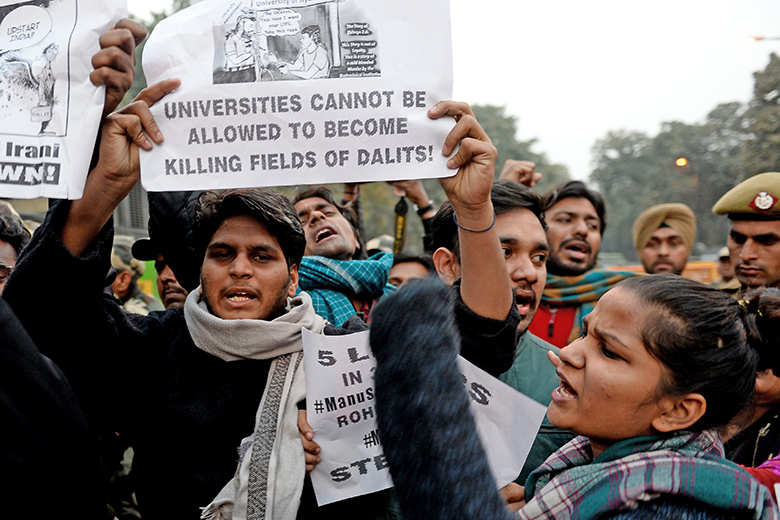
Faizan Mustafa, vice-chancellor of Chanakya National Law University and a constitutional law scholar, echoed that verdict.
“There was no reverse discrimination” entailed by the new regulation, he said. “The idea was to create equity within campuses.” He also noted that the anti-discrimination framework extended beyond caste discrimination alone: “It covered discrimination on the basis of gender and thus covered upper-caste women as well.”
Singh argues that the current controversy nevertheless marks a significant shift. “Until now, there were protests against affirmative action in India,” he said. “Now, this is the first time that there are protests against anti-discrimination measures…along the lines that this amounts to reverse discrimination.” In his view, the Supreme Court’s stay “gives legitimacy to such kinds of thought…You are legitimising protests to anti-discrimination measures which are constitutionally mandated. It has never happened in India before.”
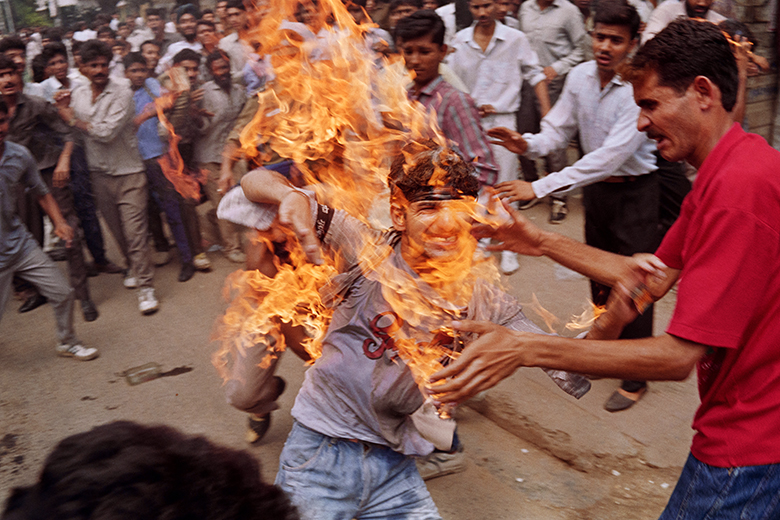
But Mustafa contested the idea that the current controversy represents an unprecedented backlash against affirmative action in India. He described the protests as “very small” compared with the “mass protests” provoked by the Indian government’s 1980 move to expand reservation to OBCs, when several protesters self-immolated. Indeed, there is a long history in India of resentment among upper-caste Indians against the reservation system.
Nor should the significance of the Supreme Court’s ruling be overestimated, Mustafa warned: “Its observations are basically on the poor legislative drafting in the regulations,” he said. “The Constitution in Article 15 is categorical that citizens have a right to non-discrimination. That right is available to everyone, including persons belonging to upper castes.”
The Supreme Court has asked for responses from the government and the UGC by 19 March to its stay on the new regulations, and it has suggested forming a committee of jurists and social experts to examine and revise the regulations to ensure the rules are not susceptible to misuse and that all student categories have access to redress for discrimination.
“The objective is to ensure fairness and prevent any inadvertent discrimination,” the judges observed while passing the interim order. But given the amount of devil in that detail, the court is “unlikely to decide this issue any time soon”, Mustafa predicts.
Until then, the 2012 guidelines will continue to apply – and the debate will rage on.
Register to continue
Why register?
- Registration is free and only takes a moment
- Once registered, you can read 3 articles a month
- Sign up for our newsletter
Subscribe
Or subscribe for unlimited access to:
- Unlimited access to news, views, insights & reviews
- Digital editions
- Digital access to THE’s university and college rankings analysis
Already registered or a current subscriber?