The difficulty of agreeing rules on how to ensure that under-represented minorities are treated fairly in higher education has been aptly demonstrated in the past few years in the US, where the Trump administration has torn down universities’ DEI policies on the grounds that they discriminate against the majority.
The same dynamic is also evident in India. On 13 January, the country’s University Grants Commission introduced new “Promotion of Equity in Higher Education Institutions Regulations” after the Supreme Court demanded government action in response to cases in which Dalit students died by suicide after being harassed and discriminated against.
The new regulations replace earlier UGC equity guidelines from 2012 and place greater responsibility on institutions to ensure compliance. But, following a backlash, the court has now stayed the new regulations.
These rules make heads of institutions directly responsible for preventing and responding to discrimination on the basis of caste, religion, gender or disability – by students, teachers or non-teaching staff. And there are stricter penalties for failure to uphold standards, including fines and the withdrawal of grants.
Institutions are required to submit annual reports to the UGC detailing the number of discrimination complaints received and the actions taken. Complaints must be investigated by a 10-member “equity committee”, which must include women, persons with disabilities and members from Scheduled Castes (SCs), Scheduled Tribes (STs) and Other Backwards Classes (OBCs).
Importantly, the new rules expand the 2012 definition of discrimination to include discrimination against OBCs: a collective term used by the government to classify more than 3,000 socially and educationally disadvantaged castes. They are part of India’s broader reservation system, which aims to ensure equitable representation in education, employment and various other sectors.
For centuries, caste has dictated almost every aspect of Hindu religious and social life, with each caste occupying a specific place in this complex hierarchy. India’s constitution, instituted in 1950, stipulated that 22.5 per cent of government jobs and seats in educational institutions should be reserved for Scheduled Castes and Tribes (the lowest in the caste hierarchy).
However, it was not until 1980’s Mandal report, drawn up by what was officially known as the Second Backward Classes Commission, that the extent of the OBC population was calculated – 52 per cent of the population – and that employment and higher education quotas were recommended for this group, too.
This landmark report was the first admission that discrimination against OBCs also exists in India, but it was not implemented until 1990, and the quotas were not implemented until 1992 – after the Supreme Court dismissed objections that quotas based solely on caste amounted to discrimination (because they were not a reliable indicator of “backwardness”) and should instead be based on economic criteria.
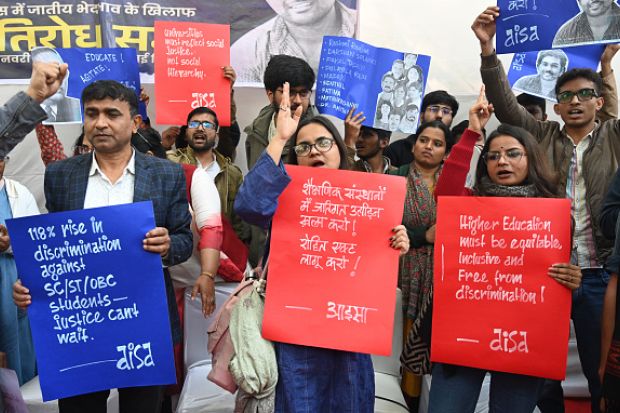
However, in spite of just under 50 per cent of government jobs and higher education seats now being reserved for SCs (15 per cent), STs (7.5 per cent) and OBCs (27 per cent), discrimination on the basis of castes continues even today – and is getting worse. UGC data provided to the parliamentary standing committee on education in 2025 shows that over the past five years the number of caste-related complaints has gone up exponentially, from 173 in 2019 to 378 in 2023-24.
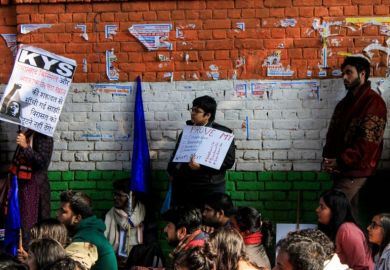
A petition to the Supreme Court filed by the mothers of two students, Rohit Vemula and Payal Tadvi, who died by suicide in 2016 and 2019 respectively, drew attention to alleged systematic discrimination driven by caste-based social hierarchies and enforced by state institutions, sparking widespread protests on various university campuses.
The petition demanded, among other things, strict implementation of the 2012 regulations and sanctions on universities in failure to take strict action. The Supreme Court responded by asking the government to implement new safeguards against caste-based discrimination in higher educational institutions.
Those safeguards also include a 24-hour hotline to report complaints about discrimination and the requirement that institutions respond promptly to them. The equity committees are mandated to meet within 24 hours of a complaint being received and to submit their report within 15 days. The head of the institution has to take action within seven days of receiving the report.
However, the new regulations have triggered protests across the country by mostly upper-class Hindu groups, who argue that they amount to “reverse discrimination”. Their specific objections include the alleged unfeasibility of the timelines prescribed for enquiries, the lack of penalties for false complaints of discrimination, and the definition of caste-based discrimination exclusively in terms of reserved categories of students – creating a presumption the protesters consider erroneous that only upper-caste Hindus can be guilty of discriminating against other groups.
Since most of the upper-caste activists vote for the governing BJP party, the government is obliged to assuage their feelings and it indicated its unwillingness to implement the new rules. But, at the same time, it needs to demonstrate that that is not working against lower castes, many of whose members are also BJP voters.
Luckily for the government, the Supreme Court’s intervention on 29 January to stay the new regulations has rescued it from that particular quandary. But it is unlikely to end the controversy.
The court complained that the UGC’s new wording is vague and easy to misuse. It also feared that the regulations would be divisive. But so, of course, is its move to quash them.
It has asked the government and UGC to respond to its concerns by 19 March. In the meantime, the arguments rage on.
Mukhtar Ahmad is a former professor of electrical engineering at Aligarh Muslim University.
Register to continue
Why register?
- Registration is free and only takes a moment
- Once registered, you can read 3 articles a month
- Sign up for our newsletter
Subscribe
Or subscribe for unlimited access to:
- Unlimited access to news, views, insights & reviews
- Digital editions
- Digital access to THE’s university and college rankings analysis
Already registered or a current subscriber?