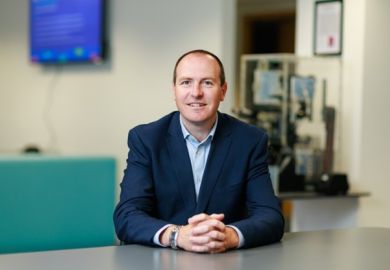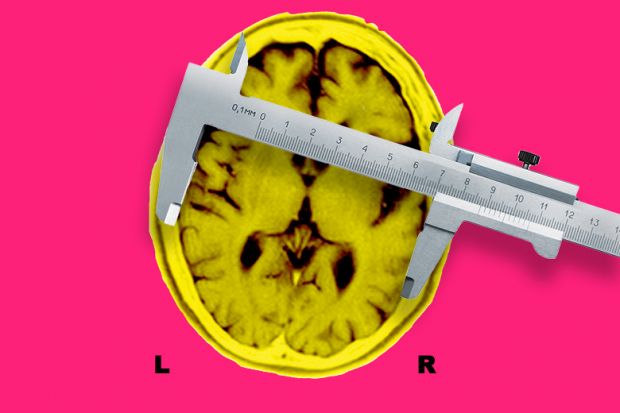
“If our project achieves its true potential, the world will change,” reflects Jacques Carolan, head of a £69 million project to create neuroscience tools capable of interacting with the brain at the circuit level and delivering personalised brain healthcare.
“The cost of brain disorders to the UK alone is immense – about £4.4 billion to the NHS and another £100 billion in indirect costs to the economy,” adds Carolan, one of the founding programme directors at the Advanced Research and Invention Agency (Aria), the UK’s fledgling agency for “high-risk, high-reward” research, which recently marked its third anniversary.
Carolan, an applied physicist who spent time applying photonic technologies to quantum computing at the Massachusetts Institute of Technology and Copenhagen’s Niels Bohr Institute before moving into neuroscience at UCL, admits the task will be challenging. “We don’t know how to get there – if we did, someone could just set up a company and make this technology,” he said.
That sort of project – an expensive moonshot with no guarantee of ultimate success – is not the sort of thing that has traditionally been favoured by the UK’s research councils, which have tended to prefer smaller, more tractable problems with a good chance of meeting their professed aims. That is why Aria’s model of large-scale, potentially long-term support for big scientific challenges has found such wide political support.
A UK version of the US’ Defense Advanced Research Projects Agency (Darpa, or Arpa in earlier iterations) was originally championed by Dominic Cummings when he was Boris Johnson’s self-styled maverick chief adviser. Innovation policy was Cummings’ main area of interest and after leaving office he told a parliamentary committee that it had been one of his four demands for agreeing to enter government.
He was insistent that Aria must be “decisively different from other funding agencies” and have “extreme freedom” from the “horrific bureaucracy” of Whitehall and the UK Research and Innovation (UKRI) structure. It must be the “opposite to how all normal funders work and how Whitehall works”, he said, with just a director and four trustees left to fund potentially game-changing research in areas of their choosing.
In reality, Aria has an executive team of five and eight trustees, but the core idea of a stripped-down, “high-risk-high-reward” agency has survived changes of prime ministers remarkably unscathed, with its founding legislation passed in June 2021 and an initial five-year budget of £800 million, beginning in January 2023. This autumn’s Budget saw current chancellor Rachel Reeves increase that budget, announcing that the agency will receive £1.2 billion over the next four years, with its annual turnover hitting £400 million by 2030.
But that level of funding has raised eyebrows at a time when budgets for blue-sky science within the UK have been cast into uncertainty as several research councils pause current funding streams ahead of a reorganisation of their spending into three “buckets” in order to better meet the government’s growth priorities. Can it really be justified to spend so much money on uncertain reward as promising projects funded through conventional means face disruption and potential termination? And even if it can, is it right that Aria should be exempted from the oversight and accountability – the requirements for papers, start-ups, patents, scholarly outputs or venture capital investment – demanded from other parts of UK science?

For his part, Carolan is insistent that Aria’s structure makes success more likely than it otherwise would be. While traditional research council funding focuses on one-off grants or periodically reviewed research centres in UK universities, making long-term projects difficult to sustain, Carolan is empowered to do things at a grand scale. The 19 teams funded by his precision neurotechnologies programme include some based in US universities, as well as in British start-ups and hospitals (overall, about 40 per cent of Aria’s funding is spent outside academia, often within start-ups).
But that doesn’t mean that the funding comes without any monitoring of results, Carolan insisted. “The unique thing that Aria does is actively managing its programmes,” he explained. “Early on, we set milestones and monitor what’s going on – if the science isn’t working out, we see if people are willing to pivot. We’re trying to solve hard problems in a relatively short time and the level of ambition we set means things will not work out, and we might need to be adaptive.”
As a programme director, Carolan can also double down on areas showing greater promise, he added: “In terms of tackling brain disorders, £69 million isn’t a huge amount but, because I sit across a broad spectrum of funded projects, I can take a view about which ones are delivering or where teams might need to work together to solve a problem.”
But even some of the politicians who shepherded Cummings’ big idea through Parliament are questioning whether programme directors should be left entirely alone to steer their ships.
“I backed Aria because our research ecosystem has become far too bureaucratic, slow and political, and in the global race for cutting-edge science leadership, we urgently needed an exciting UK frontier science ‘moonshot’ programme that wasn’t stifled by filling out UKRI and HMT [Treasury] forms every six months,” said George Freeman, who was a science minister under both Johnson and Rishi Sunak and is now deputy chair of the House of Commons’ Science and Technology Committee.
Aria insists that it is the most transparent of all UK research funders given its regularly updated descriptions of projects and grant calls. Each programme publishes a large amount of information about its activities, including summaries of each of the funded projects, an overview of why the programme was funded (including proposals) and various videos with the scientists explaining their work.
However, Freeman – whose pre-parliamentary career was spent largely in biotech venture capital – thinks there “must be a mechanism for Aria to be accountable back to the minister and Parliament on its strategy, criteria and performance. That’s a basic accountability any organisation should accept, even more so when you’re receiving £800 million of scarce public money,” he said, referring to Aria’s founding legislation, which allows it to avoid ministerial review in its first decade.
“This is absolutely not about imposing ministerial control,” he insisted. “This is not about subjecting Aria to the tyranny of Treasury or UKRI bureaucracy or interfering SPADs [ministerial special advisers], but its chair and board must come before the Public Accounts and Science committees and explain their strategy. They should want to do this,” he said.
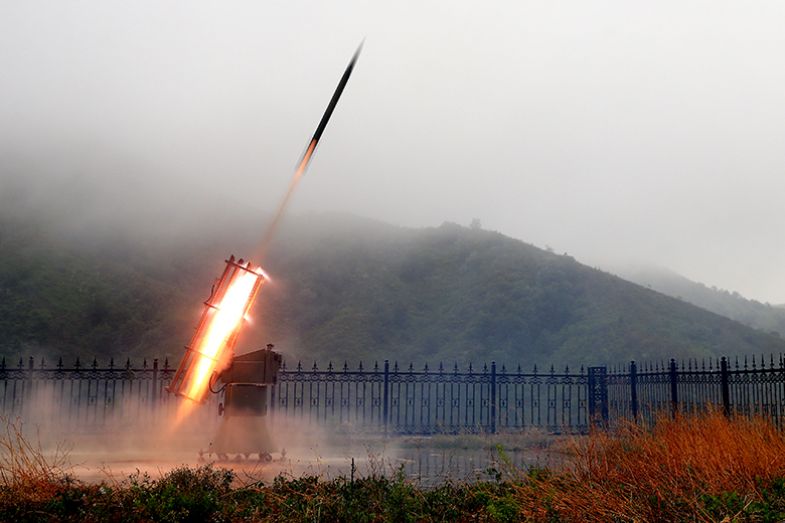
Freeman is particularly worried about how Aria’s model will work given the diffuse nature of its grant portfolio, which covers everything from neuroscience, manipulating the weather and food security, to predicting the future and boosting human immunity. “Whilst Aria was inspired by Darpa, we have to recognise that it doesn’t have the US defence procurement budget behind it,” he said. “So it will be essential that Aria has a clear strategy for protecting sovereign IP, leveraging in global funds and becoming a sustainable world-class discovery agency.”
Arpa was founded in 1958 in response to the launch of the first satellite by the Soviet Union, but its name was changed to Darpa in 1972 as its funding became restricted to projects with direct military application. The agency did become Arpa again in 1993, reflecting the Clinton administration’s short-lived interest in dual-use technologies, before reverting to Darpa three years later.
“The UK, European and global defence spending surge does create opportunities for some exciting ‘dual-use’ scitech,” said Freeman, noting that another of the UK’s recently established stand-alone research organisations, the Turing Institute, was recently required by the then science secretary Peter Kyle to adopt national security as one of just three priorities, as a condition of continuing its funding.
The institute was founded in 2015 as the UK’s leading centre for data science (with artificial intelligence added to its mission two years later). However, amid moves to cut dozens of jobs and scrap research projects, a complaint submitted to the Charity Commission by disgruntled staff last year accused the institute’s leadership of making “a series of spending decisions that lack transparency, measurable outcomes, and evidence of trustee oversight” and of presiding over “an internal culture that has become defined by fear and defensiveness”. The institute subsequently confirmed that it will “step up” its defence work and strengthen “relationships with the defence, national security and sovereign AI communities at executive and board level”.
A major criticism was that the Turing Institute – whose funding comes from the Engineering and Physical Sciences Research Council – had missed out on the artificial intelligence boom despite receiving £200 million since 2015. According to a report by the Labour-aligned thinktank Centre for British Progress, published last summer, the institute had a “fragmented and thinly spread research portfolio” and had been “susceptible to mission creep”.
“The most significant example of this has been its drift away from its core technical mission toward work rooted in social and political critique,” the report added, citing work on “equity in the data science and AI fields”.
Leaving Aria to mark its own homework without any accountability to ministers or Parliament until 2033 was never the plan, Freeman said. For that reason, he supports the Labour government in “insisting the public science budget of £21 billion a year be allocated in three key priorities – discovery, growth and strategic sovereign missions. That is an exciting opportunity for Aria to show what an agile, dynamic and impactful 21st-century research agency looks like.”
But how do you provide evidence for projects in mid-flight, particularly those addressing the fiendishly difficult challenges that Aria has sought to tackle, such as a £50 million initiative aimed at reducing the cost of AI hardware one thousandfold, a £46 million programme aimed at engineering the human body’s immune system to make us more resistant to viruses and a £57 million programme aimed at examining the feasibility of geoengineering to address climate change? It is difficult but not impossible, said Steven Chu, the Nobel prizewinning physicist who, while energy secretary in Barack Obama’s cabinet, established the Advanced Research Projects Agency–Energy (Arpa–E), an agency within the Department of Energy to research advanced energy technologies.
As a metric for success, “the only thing we could point to, in spades, was whenever Arpa–E money flowed, a lot more private sector money came behind it within months,” recalled Chu, who has returned to Stanford University as a professor of molecular and cellular physiology and of energy science and engineering. “Then the venture capitalists and angel investors started attending the Arpa–E conferences regularly because, while they’re savvy people and ask good questions, they are not actually well equipped to evaluate technology. Having Arpa–E scientists and engineers evaluate what was going on was important and we began seeing private sector money follow.
“Some of the richest Republican donors came to our first Arpa–E summit. Fred Smith, who founded FedEx, said this is the best US research programme he’s ever seen. So it’s endorsements like that that help,” Chu said.
That reputation for attracting private funding ($1.8 billion between 2009 and 2016) was vital to fight off attempts by Donald Trump to “zero out” the agency’s $300 million budget in 2017, at the start of his first term as US president, said Chu. “Every time he called for zero [funding, the budget actually] just went up slightly,” he recalled, thanks to the “non-partisan support” in Congress that the agency had sought to cultivate in its early days. Similar moves in 2026 have also been repelled, although the agency’s budget for 2026 will drop to $350 million.
To achieve success, however, Arpa–E had to be ruthless in culling projects that were unlikely to bear fruit. “We kept things on a very short leash. You’d get reviewed quarterly and I don’t mean paper reviews that nobody reads. Programme managers were obligated to really understand what’s going on,” said Chu, who said funded scientists would often appreciate these conversations. “They’d say ‘You guys are different. You’re actually helping us solve some of our technical problems.’”
And from programme managers, Arpa–E demands “total honesty”. “We’d ask, ‘What’s really going on [in a project] because…it won’t go well for you if we find you’re hiding something.’ So they would tell us, ‘This is working; this is not working; here’s what we’re worried about,’” recalled Chu. He said that model was partly based on Darpa but also on the fabled Bell Labs, where he worked for nine years at the start of his scientific career and which is famous for its Nobel prizes for such innovations as radio astronomy, transistors and lasers.
But doesn’t this constant scrutiny defeat the object of shielding such agencies from the usual bureaucracy?
Demanding quarterly progress reports is not excessive, insisted Chu. “Even with blue-sky research in my own lab now – we’re doing something in batteries to make metal anodes work – if you haven’t done anything in three months, something is wrong. So you talk about these things.
“At Arpa–E we were encouraging people to say, ‘If this project is going to work, the A, B, C and D have to work. But one or two of those might be crucial. If they don’t work, the whole project fails. And we wanted to see people work on those things, not just the easy stuff, because [otherwise] researchers tend to do the stuff that is sure-fire going to work so they get a good progress report [and the funding] continues.”
Arpa–E makes clear that scientists should “go after the heart of a problem”, Chu explained. “If it doesn’t work, we’d pull the funding, but [that would not confer] demerits for the next time you propose something [to Arpa–E, since] we appreciate you proposed something a bit daring.”

In public, Aria’s outgoing founding CEO, Illan Gur, has insisted that the organisation’s success cannot be judged on short-term results – but if it does succeed, the effects will be transformational. “For us, success means not just a world-changing technology but drastically transforming the future of the UK,” Gur told The Times in November. A single breakthrough on the scale of ChatGPT or [weight-loss drug] Ozempic would justify the investment, he said. This month, Gur, who was formerly a programme director at Arpa–E, has been replaced by Kathleen Fisher, who previously ran a centre at RAND applying AI to cybersecurity and, before that, led Darpa’s Information Innovation Office.
Pippy James, Aria’s chief product officer, echoes Gur’s view about what success would mean: “It should be obvious if Aria achieves a similar impact to Darpa as it would mean a technology or capability that would change all of our lives.”
But while Aria’s decade-level time frame for impact remains, the agency is also introducing a set of interim metrics on “tangibility” based around three pillars: community, capability and capital flows, James continues. On community, “If we are creating new interdisciplinary communities, that is important – getting people in rooms together who might never have met,” James said.
“Capabilities” will be assessed on the basis of whether new technologies are starting to emerge from Aria, while capital flow is not just about the number of new start-ups with their roots in Aria research, continues James. “We have created 15 companies already through Aria, but nine [additional] companies have created a UK headquarters following engagement with Aria,” she explained.
Yet separating spin from substance may be tricky if Darpa’s example is anything to go by, believes Terence Kealey, the former vice-chancellor of University of Buckingham, who has written extensively about international research policy. “Darpa frequently boasts of being the best research agency in the history of humanity, but how can we know this?” asked Kealey, referring to the agency’s alleged resistance to meaningfully engaging with any form of audit. According to a 2019 study by Massachusetts Institute of Technology economists, the agency had “proven to be very resistant to systematic evaluation”, which made it “difficult…to compare Darpa to other funding agencies with a different organisational structure and approach”.
“Defence research in the US is huge, and of course something must come out of it, particularly when it is mission-focused,” continued Kealey. “The question is: has Darpa pushed the technology faster than it would otherwise have gone?”
Even Darpa’s oft-cited claim to have invented the internet through its Arpanet project of the late 1960s should be treated with some scepticism given that the underpinning packet-switching technology was developed by Paul Baran of RAND and Donald Davies at the National Physical Laboratory in the UK, working independently from each other, said Kealey.
As Kealey sees it, UK politicians have largely accepted Darpa’s folklore without attempting much serious scrutiny of it. “Darpa has refused to be audited and now Aria has been set up without even an attempt at a cost-benefit model – it’s quite extraordinary,” he said.
Moreover, Aria’s tendency to hand substantial grants to private companies might replace blue-sky R&D investment rather than supplement it, Kealey worries.
“As we’ve seen with private finance initiatives in the UK, industry has learned to leech off the public sector when it can, and there is strong data from Germany that suggests this kind of state R&D investment ‘crowds out’ industry funding, rather than ‘crowding in’ spending,” he said.
Even the critical MIT study concedes that, given its military missions, Darpa’s achievements cannot be reduced to counts of patents, citations or start-ups. Yet without such a compelling focus, will Aria claim the same level of long-term support if ground-breaking discoveries don’t emerge reasonably quickly?
That remains to be seen. But the risk of failure is built into the very idea of Aria, James pointed out: “If everything were neat and perfect, and played out exactly as we expected it to, it’s very unlikely that we’d get to that step-change level of impact that we were designed to achieve.”
Register to continue
Why register?
- Registration is free and only takes a moment
- Once registered, you can read 3 articles a month
- Sign up for our newsletter
Subscribe
Or subscribe for unlimited access to:
- Unlimited access to news, views, insights & reviews
- Digital editions
- Digital access to THE’s university and college rankings analysis
Already registered or a current subscriber?