Can IB students apply to university in Germany?
Germany is an attractive destination for international students – but applying as an IB student can be a complicated process. We demystify it here

Sarah Robertson






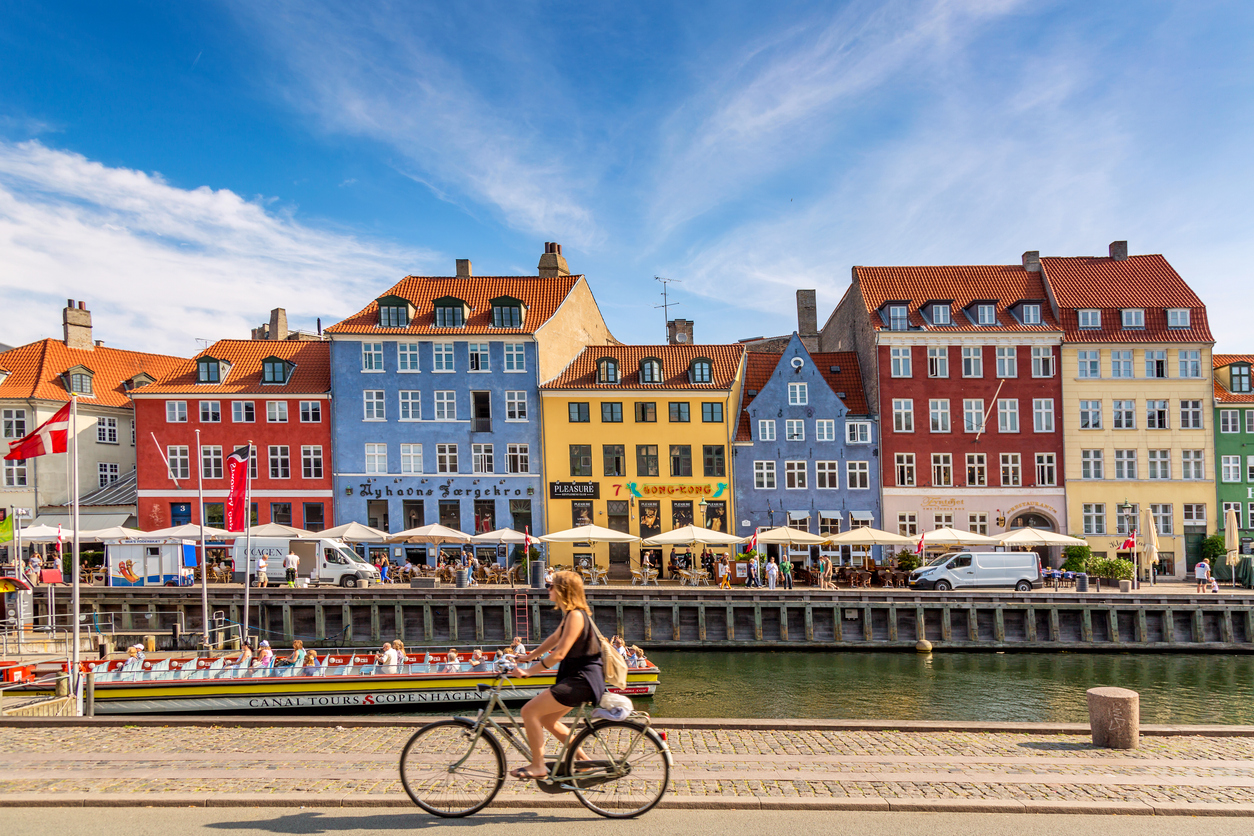
Germany is an attractive destination for international students, especially those from the European Union: no visa requirements, no tuition fees, good infrastructure and an increasing number of English-language courses on offer.
At the moment, it seems that international students are more interested in studying in Germany than Germans are. But applying to German universities as an international student can be an extremely complicated process. Germany rewards organised, resilient individuals – as well as counsellors who demystify the system.
Applying to German universities with an International Baccalaureate
Conversations about studying in Germany need to start early. If International Baccalaureate students choose the wrong subjects for their diploma programme, public university in Germany is quite simply not an option.
Students and their parents should be informed of this as early as grade 9.
To qualify for the equivalent of the Abitur – the German school-leaving certificate – international students must study:
- at least one of these subjects at higher level: a language, mathematics or a natural science (chemistry, biology or physics)
- two languages at level A or B, of which at least one should be studied at higher level
- a natural science
- mathematics (AA or AI)
- a social science: history, geography, psychology, business or economics
- an elective, such as computer science, environmental systems and societies or music.
To pass, students must complete two years of study – changing subjects or levels invalidates Abitur equivalence. More than one grade 3 is invalid, and any grade 3 must be balanced by a grade 5. Check requirements using this IB tool.
Obtaining a statement of compatibility recognising a qualification as equivalent to the Abitur equivalency diploma involves UniAssist or a local Zast office. (Zast is Zuständige Stelle für Ausbildung und Studium, the official German authority responsible for recognising foreign qualifications.) Both authorities require various documents – transcripts, subject details and ID – to be submitted before IB results day.
Students wanting to start at a German state university in the autumn semester should apply by 15 July.
What if a student doesn’t have Abitur equivalency?
A number of private institutions do not require Abitur equivalency. There are also a few state universities that are moving this way, and which recognise the IB diploma.
In the state of Baden-Württemberg, Furtwangen University has already made the changes and has applied it to their English-taught business programmes. Students do need to complete additional testing (such as SAT, ACT, TestAS or ITB) and the university recommends the ITB business management plus for international business management or ITB technology for international engineering.
Several private institutions will also accept students without Abitur equivalence. Popular destinations among our students include EBS, WHU, SDI and Lancaster Leipzig. There are others, but it is important to note that state-recognised business schools, such as Munich Business School and ISM, will usually require the Abitur.
It is essential that all students check requirements directly with the specific university, because they can change frequently.
Different types of German university
It is also important that students appreciate the difference between the different types of German university.
Universities and Hochschulen: degrees typically take three years. Engineering and tech may lead to a Diplom, while medicine, law and pharmacy lead to a Staatsexamen.
Fachhochschulen: practical, four-year bachelor’s degrees in fields such as engineering and business, often integrating internships and requiring prior work experience.
Duales studium programmes: translating as “dual-study programmes”, these are practical courses, reflecting growing trends in the future of education and work. They combine a degree with paid work experience (about €1,000 a month) and strong job prospects.
Numerus clausus: restricted admission courses, which have more applicants than places. Grade requirements vary by semester; check recent cut-offs on this website. Some programmes require application through Hochschulstart.
There is no common application portal, no common set of required documents and no common application procedure – the situation varies in each federal state and from university to university.
Finding English-speaking courses in Germany
There are two excellent websites for finding English courses in Germany: My German University and Daad.
Visa requirements
Non-EU students can use the Bewerbervisum (applicant visa) for short stays to attend interviews or enrol. Valid for between three and six months, this visa requires proof of application and funds, and can be converted to a residence permit once a university place is confirmed.
Funding in Germany
Living costs average between €900 and €1,200 monthly, with non-EU students requiring approximately €11,904 annually to qualify for a visa. Despite low administrative fees (€100 to €400), further funding is available based on merit and need.
Daad is the primary agency for international exchange scholarships and counsellors should direct students there early for funding advice.