Studying in Denmark: a guide
Denmark offers world-class universities with modern facilities, supportive staff, an international environment – and, importantly, no tuition fees for EU students

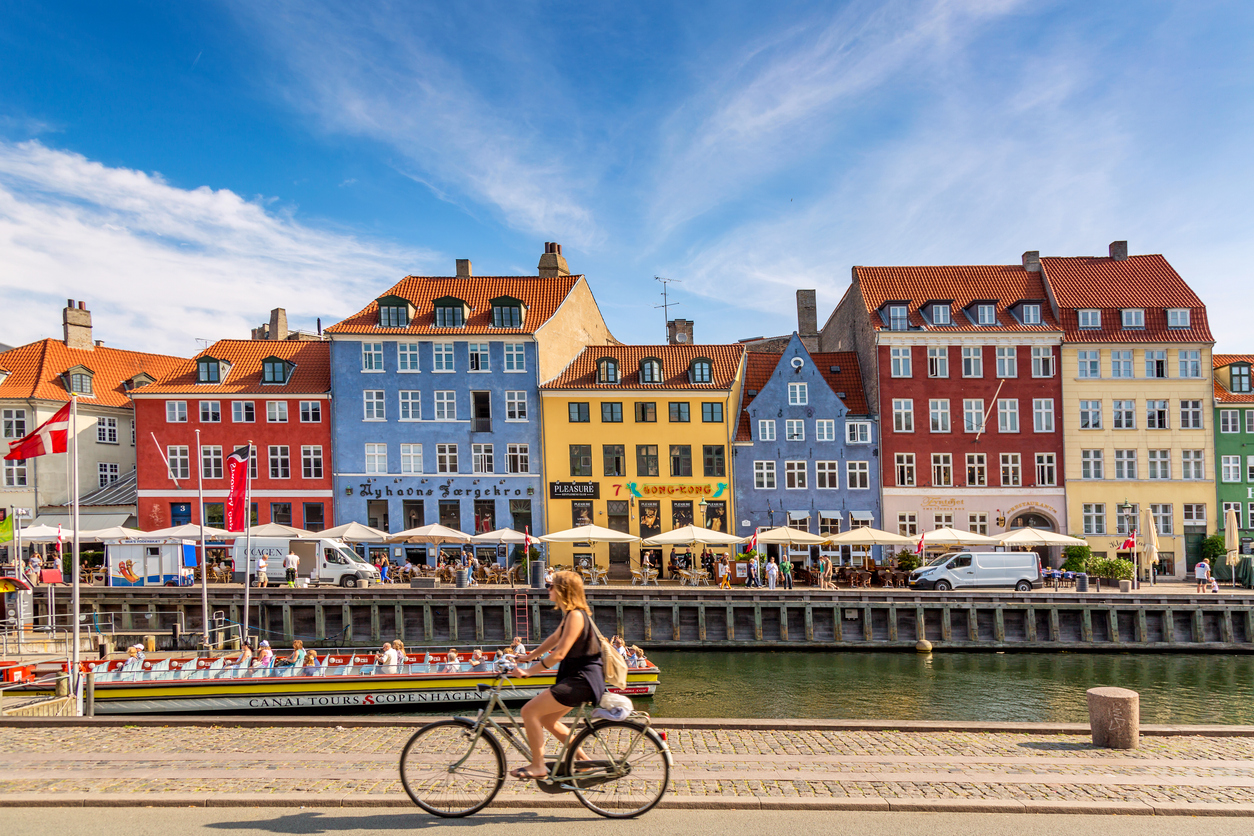
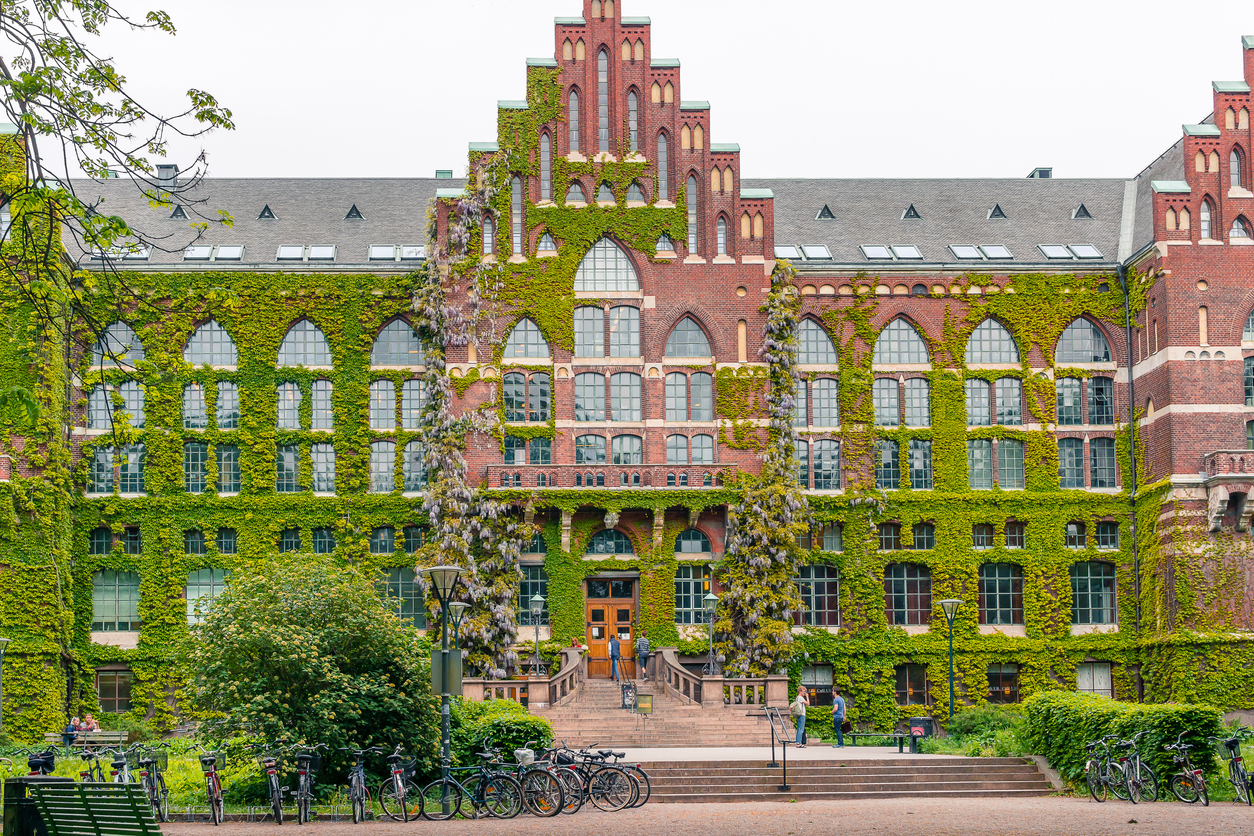



Denmark offers world-class universities, such as Aalborg and Aarhus, with strong research, modern facilities, supportive staff and an international environment. In addition, there are no tuition fees for students from the EU or EEA.
Education in Denmark follows the Scandinavian model, emphasising hands-on projects, problem-based learning, group work and student autonomy. The Danish teaching style is student-centred and egalitarian – the faculty-student relationship is informal, and students call their professors by their first names.
Universities tend to have close connections to industry, leading to solid job prospects. Denmark has a strong culture of work-life balance, and offers a high quality of life, featuring eco-friendly living.
Studying in Denmark: the universities
There are five types of higher-education institution in Denmark, comprising:
- business academies, offering vocational programmes
- university colleges, offering professional degrees
- universities: research-based institutions offering bachelor’s, master’s and PhD degrees
- institutions of architecture and art, and maritime educational institutions, both taught in Danish.
Overall, there are 525 English-taught degrees at Danish higher-education institutions.
There are eight universities in Denmark, all public and research-based. Of these, five are comprehensive universities: Aalborg University, Aarhus University, University of Southern Denmark (SDU), Roskilde University and Copenhagen University. There are also three subject-specific universities: Copenhagen Business School, IT University and the Technical University of Denmark.
How to apply to university in Denmark
For Danish universities, the IB diploma and a select list of national high-school diplomas are admitted qualifications. It’s worth looking at the full list of national high-school leaving diplomas qualifying for entry to Danish higher education (general entry requirements).
Moreover, additional specific admission requirements may apply, which can differ by university and programme. These can include a minimum GPA requirement (overall or per subject) or a requirement for a specific subject.
Students may also be asked to provide a letter of recommendation, letter of motivation, CV, score for an admission exam (such as the uni-test for SDU) and score for an English-language exam (this is waived for IB candidates).
It is worth noting that applicants with a US high-school diploma must additionally pass three advanced placement (AP) tests in academic subjects with a minimum grade of three in the College Board examination. Alternatively, they can undertake one year of university study or three IB higher-level certificates in academic subjects. (Specific APs are required for certain courses.)
It is possible for a prospective student to apply for a pre-assessment of their academic qualification between 1 October and 15 November to ascertain whether their upper secondary education qualifies for admission to a specific bachelor’s programme in Denmark.
Applications (except for master’s programmes) are exclusively submitted online via Optagelse.dk, which opens on 1 February and closes at 12pm on 15 March for EU-EEA-Swiss students.
Students can apply for up to eight programmes. This means that applications are coordinated centrally, but assessed locally by each higher-education institution. The Coordinated Admission (KOT) body ensures that applicants do not receive more than one offer for a study place.
The deadline to submit all documentation is 5 July, with final admission decisions issued by 28 July for bachelor’s courses commencing that year (and by 10 June for master’s programmes). These deadlines may vary for non-EU and non-EEA students.
How much does it cost to study in Denmark?
EU, EEA and Swiss students do not pay tuition fees. Tuition-fee rates for non-EU or non-EEA citizens are set by individual institutions, and tend to range between €6,000 (£5,220) and €16,000 a year.
SDU, the Royal Danish Academy of Music and Copenhagen Business School offer scholarships waiving 100 per cent of tuition fees for international (non-EU) students. (At SDU, this is limited to STEM courses and dependent on uni-test scores.) Aalborg University offers a full scholarship exclusively to international graduate students.
It must be noted that Denmark does not have a centralised system guaranteeing housing for all students (although certain campuses do offer a housing guarantee). Renting student accommodation typically costs about €450 per month. A typical cost of living, including rent, would be €1,000 per month.
Applying for a visa
Non-EU and non-EEA students will need to apply for a visa. The standard visa application fee is about €300.
Being issued with a visa is conditional on receiving a study offer. The visa-application process is initiated by the university and the applicant then completes it online and submits it at their nearest Danish embassy or consulate. It is mandatory to apply in person, so you can provide biometric information.
International students holding a student visa generally have the right to work part time, for up to 90 hours per month, and full time between June and August. The Danish student visa is valid for three years following graduation.
In terms of career opportunities, there is strong demand in Denmark for high-calibre graduates. It is estimated that by 2040 Denmark will have a shortage of around 20,000 STEM candidates. Some universities, such as SDU, offer a guaranteed first job for STEM graduates, subject to certain conditions.