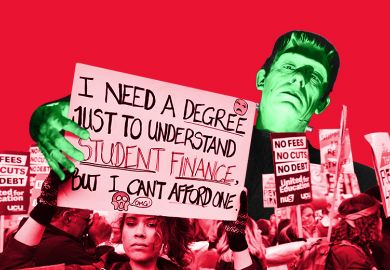
The present furore regarding student loan repayments in England should be no surprise. Once the burden of graduate debt starts to permeate the lives of those not only on lower salaries but also those in and from the middle classes, the political backlash begins.
This has been seen most clearly in the US, the other country where student debt has reached a peak – and where politicians’ responses offer some pointers for the Labour government in England.
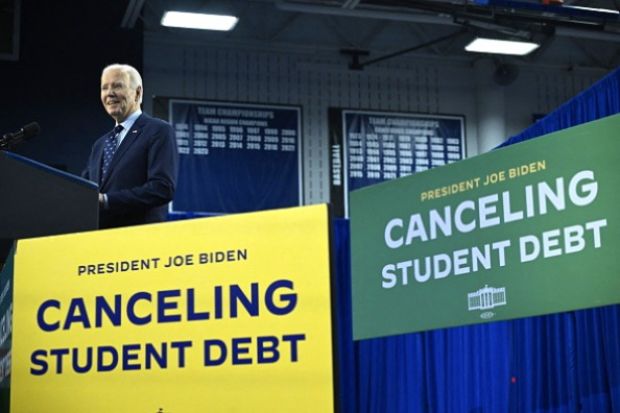
With total student debt at nearly $1.7 trillion (£1.3 trillion) – averaging more than $40,000 for each of more than 40 million borrowers – student loan forgiveness was an important part of Joe Biden’s presidential campaign in 2020. Once elected, Biden initially attempted to cancel $10,000 of debt for all graduates, rising to $20,000 for those from lower-income backgrounds, but this was blocked in the courts.
Undeterred, he then pursued a more multifaceted approach. He overhauled the previously underutilised Public Service Loan Forgiveness (PSLF) programme, launched in 2007 to allow student debt forgiveness for schoolteachers, firefighters, social workers and other public servants if they make 10 years of payments and do 10 years of public service. Before Biden took office only 7,000 people had received PSLF debt relief, but by December 2024, more than $78.5 billion of debt for 1.1 million borrowers had been erased.
The centrepiece of the Biden approach, though, was the Saving on a Valuable Education (SAVE) programme. Launched in 2023, this provided relief to more than 7 million borrowers on income-driven repayment (IDR) plans – the same student loan model as in England. SAVE had four elements. First, borrowers with undergraduate loans saw payments reduced from 10 to 5 per cent of their discretionary income, defined as the difference between their actual income and 225 per cent of the US Department of Health and Human Services Poverty Guideline amount for their family size.
Second, those on lower incomes had their debt cancelled entirely. Third, the loans of those with smaller balances were written off more quickly, easing the burden on those who had attended only one or two years of community college. And, fourth, borrowers were guaranteed never to see their balances grow as long as they kept up with their required payments.
Since Donald Trump returned to power in 2025, the government’s passion for student loan forgiveness has waned, but it hasn’t died entirely. And what is striking is that even Trump’s approach is more progressive than the Plan 2 loans issued in England between 2012 and 2023 – and that are still issued in Wales (albeit within a more generous system of maintenance support).
The special recognition for those working in public service remains, albeit that the PSLF has been revised to exclude those engaged in activities deemed to threaten national security or “American values”. The SAVE programme looks to have ended, but a replacement called the Repayment Assistance Plan (RAP) will be launched this summer.
Unlike under SAVE, RAP’s interest rates mean that US borrowers on the same levels of income will have higher monthly repayments in the US than they do in England. It also extends the period before loans are forgiven to 30 years from the 20 to 25 years under SAVE. But the RAP promises a progressive payment structure. There will be a minimum monthly payment of $10 for those earning under $10,000, and from then on payments will increase by one percentage point for every $10,000 of income, up to 10 per cent for borrowers who earn more than $100,000.
The RAP also provides some relief when graduates’ outgoings are highest and they have dependants; monthly repayments will reduce by $50 for each dependent child. And, crucially, the RAP retains the acceptance that no one should see their loan amount increase while they are making repayments, addressing a key gripe shared by the UK’s Plan 2 debtors. Any interest that isn’t covered by a borrower’s monthly repayments will be waived, and up to $50 will be deducted from principal balances for each on-time payment.
The political advantages of offering such reliefs – and the perils of not doing so – are clear. Biden’s 2020 debt cancellation pledges were very popular among Democrat voters, but his failure to get the bigger reforms promised over the line, plus the time it took for the others to get going, contributed to his decline in popularity. Trump argued against student loan forgiveness, and it was quite unpopular among Republican supporters, but his new policy on student debt still acknowledges that student debt matters to tens of millions of voters – and to the economy.
As well as the importance of the principle that debt should not increase when repayments are being made, which has bipartisan support, the US approach also shows that debt forgiveness can be increased for those who borrow for shorter courses. That option may be worth considering in England if the government wants to incentivise learners to take Level 4/5 courses under the new Lifelong Learning Entitlement (LLE), due to be implemented at the beginning of next year.
The US precedent for recognising the role of public service is also worth considering when staff shortages are high across professions such as teaching and healthcare. And even though the new RAP would not be a better option for students in England in terms of repayment rates, its progressive repayment rate approach, with some adjustments, presents a working alternative to a flat rate.
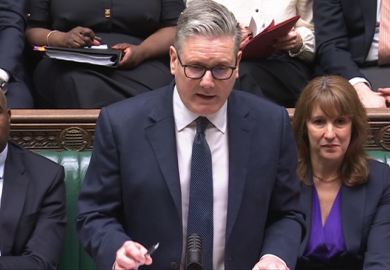
When you have chosen to fund higher education teaching almost entirely via student loans, you need a repayment system that attempts to manage the broader social, economic and political implications of millions of indebted former students. If that was ever in doubt in England, the past month has made it abundantly clear. That is a lesson that a government consistently struggling in opinion polls will need to take extremely seriously.
Graeme Atherton is associate pro vice-chancellor regional engagement at the University of West London.
Register to continue
Why register?
- Registration is free and only takes a moment
- Once registered, you can read 3 articles a month
- Sign up for our newsletter
Subscribe
Or subscribe for unlimited access to:
- Unlimited access to news, views, insights & reviews
- Digital editions
- Digital access to THE’s university and college rankings analysis
Already registered or a current subscriber?