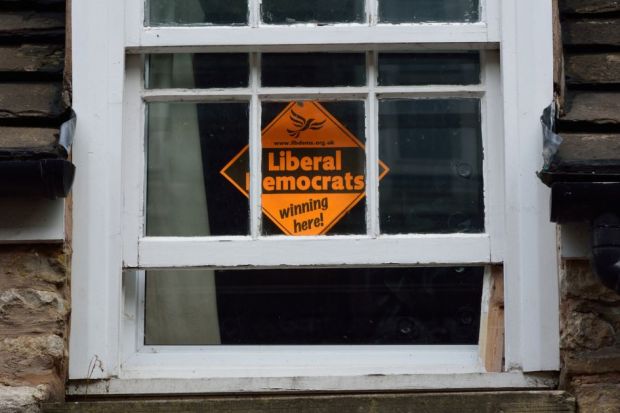
The Liberal Democrats have called on the UK government to scrap controversial plans to freeze student loan repayment thresholds as part of wider proposals for reforming student finance that the party claims could save graduates hundreds of pounds each month.
As debate continues to rage about the fairness of the student loan system, on 22 February the party announced its latest proposals that would also see public sector workers, including nurses, doctors and teachers, have their debt written off after 10 years of public service, and the introduction of an independent body to “protect graduates from retrospective changes”.
Chancellor Rachel Reeves’ decision to freeze repayment thresholds in last year’s autumn budget sparked outcry, with graduates speaking out in recent months about what they see as an unfair system.
Although the government has so far resisted calls to backtrack on the policy, ministers are reportedly in discussions about reforming the repayment system.
The Liberal Democrats have said the plans should be scrapped altogether and suggested that the threshold for repayments should increase in line with average earnings rather than the Retail Prices Index (RPI), “allowing it to rise faster and ensuring graduates keep more of what they earn than under the current system”.
The party claims that, under its proposals, a typical graduate earning £35,000 would have their loan repayments cut by half within three years, “putting an extra £280 a year back in their pocket”.
“The reforms would also give graduates an immediate boost of nearly £100 in the coming year, while the lowest earning graduates could save up to £5,000 over the lifetime of their loan,” the party said in a statement.
Speaking to Times Higher Education, Ian Sollom, MP for St Neots and Mid Cambridgeshire and the Liberal Democrats’ universities and skills spokesperson, said Reeves’ decision had triggered “even greater anger” about the student loan system.
He said the party wanted to “address the sense of injustice with something that, importantly, is…deliverable in the immediate term, then with an eye to the longer term as well”.
As well as creating an oversight body and writing off the debt of some public sector workers, the party also called for the establishment of a royal commission to examine long-term reforms to the student finance system to “help forge a cross-party consensus over how to build a fairer system for graduates while supporting the world-leading university sector”.
Although the Liberal Democrats have shouldered some of the blame from critics of the current system for backtracking on an election promise not to increase tuition fees when the party entered into a coalition government in 2010, Sollom said his party had “learned from that”.
“We paid the price in 2015 and we’ve spent a decade building back trust with the electorate,” he said.
“We’ve really spent a lot of time thinking about what’s a credible plan to make a difference. Given that history, we have to put forward something that’s actually deliverable but also makes a difference to students.”
The Liberal Democrats claim the system evolved beyond what was originally intended, with subsequent Conservative governments freezing repayment thresholds and changing the default indexation from average earnings to RPI.
The party is also advocating for the reintroduction of maintenance grants of £3,500 a year for disadvantaged students.
Asked about Labour’s plans to bring in subject-limited grants of £1,000 funded by a levy on international students, Sollom said the planned grants are “not going to make a huge difference” to students.
He continued: “The way that it’s financed through the international student levy is somewhat concerning because the structure of the levy really punishes the post-92 institutions much more than the big research institutions, but it’s the post-92 institutions that are often doing best at access for disadvantaged students.”
The party is expected to announce wider proposals for reforming the cash-strapped higher education system in the coming weeks.
Register to continue
Why register?
- Registration is free and only takes a moment
- Once registered, you can read 3 articles a month
- Sign up for our newsletter
Subscribe
Or subscribe for unlimited access to:
- Unlimited access to news, views, insights & reviews
- Digital editions
- Digital access to THE’s university and college rankings analysis
Already registered or a current subscriber?