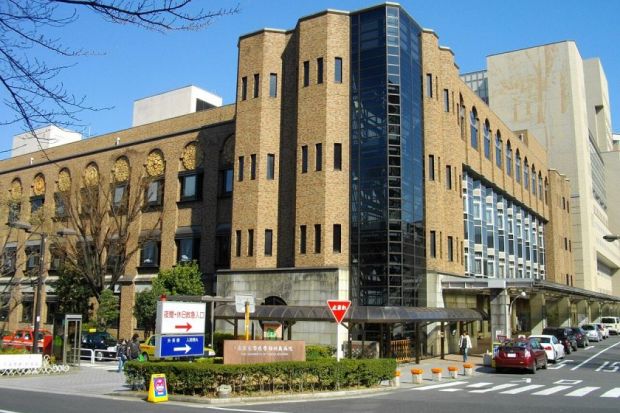
The head of The University of Tokyo Hospital has resigned after a string of bribery cases involving staff which have intensified scrutiny on the governance of one of Japan’s most prominent healthcare institutions.
Sakae Tanaka stepped down on 27 January, with the hospital saying the decision was taken to “clarify responsibility for hospital management” following “a series of scandals”, including the arrest of a serving professor.
The announcement was made in a notice posted on the hospital’s website. It said Haruki Kume, its vice-director, would assume the role of hospital director on an interim basis until a successor is appointed. It added that clinical services would not be affected.
Tanaka’s resignation follows the arrest of Shinichi Sato, a professor in the Graduate School of Medicine at The University of Tokyo who also practised at the hospital’s dermatology department.
Sato, 62, has been referred to prosecutors on suspicion of accepting entertainment worth about ¥1.8 million (£8,555) from the Japan Cosmetic Association, a body collaborating with the university on a joint research project.
Investigators allege that the entertainment, reported to amount to roughly 30 visits to upscale clubs and brothels, took place between February 2023 and September 2024.
During that period, Sato led a joint research initiative on plant cannabinoids found in cannabis plants, which began in April 2023.
In exchange for the entertainment, he is suspected of granting favours to the association in matters connected to the project.
On the same day Sato was referred to prosecutors, the Tokyo Metropolitan Police also sent papers to prosecutors on Ayumi Yoshizaki, a former specially appointed associate professor at the university, and Koichi Hikichi, a representative of the Japan Cosmetic Association, who are alleged to have been involved in the same bribery case.
In a separate statement issued on 25 January, the hospital said it would cooperate fully with the investigation and work closely with The University of Tokyo.
“Going forward, we will thoroughly instil a strong sense of compliance among all faculty and staff at our hospital and implement the necessary measures to prevent a recurrence,” the hospital said.
The case has drawn renewed attention to earlier misconduct at the hospital. In November last year, another doctor, Takehiro Matsubara, was arrested and later indicted over allegations that he accepted cash labelled as a scholarship donation from a medical supply company in return for preferential treatment, including using the company’s products during surgery.
Responding to the latest arrests, the president of The University of Tokyo, Teruo Fujii, said the repeated involvement of university staff in criminal cases was “deeply regrettable” and “a source of profound anguish”.
In a statement on 25 January, Fujii apologised to students, patients and others affected, describing the conduct as “utterly inexcusable”, and said that “faculty and staff of national universities are expected not only to comply with the law but also to maintain the highest level of ethical consciousness”.
He acknowledged shortcomings in the university’s handling of the situation, pointing to weaknesses in oversight of private-sector funding and gaps in compliance awareness.
The university has been conducting its own investigation alongside the police inquiry and will continue to cooperate fully, Fujii said.
He added that organisational reforms and preventive measures were already being developed and would be pursued “with unwavering resolve”.
Register to continue
Why register?
- Registration is free and only takes a moment
- Once registered, you can read 3 articles a month
- Sign up for our newsletter
Subscribe
Or subscribe for unlimited access to:
- Unlimited access to news, views, insights & reviews
- Digital editions
- Digital access to THE’s university and college rankings analysis
Already registered or a current subscriber?