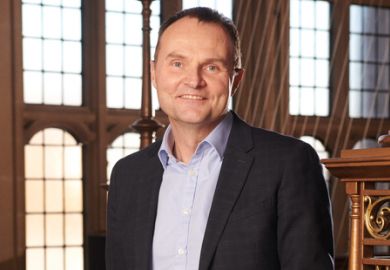
High levels of student debt in England is a “curse” that is “demoralising the nation”, according to a campaigner as pressure grows for the government to act on interest payments.
The majority of students on “Plan 2” loans are stuck in “a student debt trap” where they have “no chance of paying it off”, leaving taxpayers and the government to pick up the bill, said Paul Wiltshire, who has published a new report alleging the cost is not worth it for many graduates.
Politicians and campaigners have in recent weeks called for reforms to the student loans, which were taken out by those who started courses between 2012 and 2023 – after tuition fees were tripled to £9,000 – and pay them back as a proportion of their salary for 30 years.
Anger has been exacerbated by the Labour government‘s decision to freeze repayment threshold in last autumn‘s budget, a move labelled a “stealth tax”. Financial expert Martin Lewis warned this week that the “no win, no fee” nature of the loans system, in which those who earn more pay more, was being “rapidly diminished”.
Wiltshire believes that the issue is gaining momentum and is going to “explode this year”.
In his paper, Student Loans: How to turn despondency into hope, he argues that A-level results can be an indicator of future earnings, with students who achieved lower A-level results or BTECs unlikely to “get any uplift at all compared to if they hadn’t been graduates”.
He models earnings of someone who achieved four As at A level based on Longitudinal Education Outcomes (LEO) data. Should they earn £36,900 one year after graduation, rising to £50,700 five years later and then continuing on an average trajectory after that, they would take 27 years to pay off a “Plan 2” loan – almost the whole term – with their repayments reaching £87,000 in real terms, “far higher” than the original loan.
Graduates who achieved three As at A level will pay on average £78,300, Wiltshire predicts. While this is also significantly higher than the original loan, this would not see them pay off the full debt in the 30-year repayment period. Under this system, anyone with grades lower than this is unlikely to pay back the loan, leaving taxpayers to pay the rest, he argues.
“All others are stuck firmly in the student loan debt trap with salary profiles nowhere near enough to pay off the loan, and no way of avoiding paying nine per cent tax for 30 years unless they have access to funds to make voluntary over-payments”, the report says.
Graduates with “Plan 5” loans, introduced for students in 2023 with a longer repayment term of 40 years, a lower repayment threshold but lower interest, are more likely to pay off their loans, but still students who obtained three Cs and below at A level are unlikely to pay it back.
“There’s no point in participating in something that’s only going to get you into debt, and it’s not going to help your career,” Wiltshire told Times Higher Education.
He said that the debt becomes a “curse” to students and is creating a system which is “demoralising the nation and creating enormous fiscal drag”.
Wiltshire argues that there should be a minimum entry requirement of around three Bs to qualify for student finance, or “at around 15-25 per cent of the population”.
“Any lower level of prior academic attainment tips the balance of probabilities associated with buying a degree (given the overall cost of £90,000), and the likely ensuing poor outcomes, in the direction of being much more likely to cause harm to young adults’ finances than good.”
He further argues that student number caps should be introduced to limit university intake to around 20 per cent of young people, and he said graduate jobs should be “banned”, calling them “discrimination” against 18-year-olds without a degree.
Wiltshire says that the government should encourage a “pay it back” mentality by allowing people to switch from “Plan 2” to “Plan 5” repayment plans to secure a lower interest rate, removing some of the disincentive to making voluntary overpayments by making them refundable and providing tax incentives to individuals who make overpayments, potentially extending this to employers who might pay on behalf of employees.
Register to continue
Why register?
- Registration is free and only takes a moment
- Once registered, you can read 3 articles a month
- Sign up for our newsletter
Subscribe
Or subscribe for unlimited access to:
- Unlimited access to news, views, insights & reviews
- Digital editions
- Digital access to THE’s university and college rankings analysis
Already registered or a current subscriber?