Cover feature

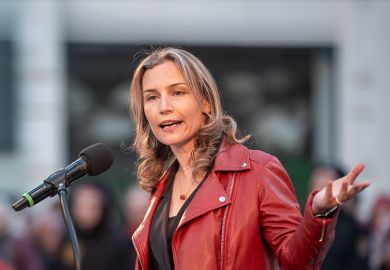
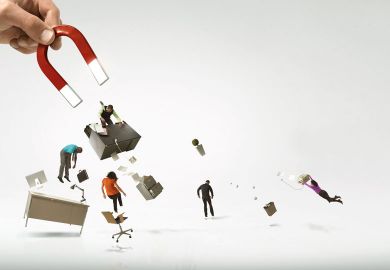
Junior scholars are urged to do all they can to build bridges with the people who can give them jobs and promotions. But how calculating should they be about who to approach? How should they do it? And isn’t it all a bit grubby? Six established academics explain their perspectives

12 September

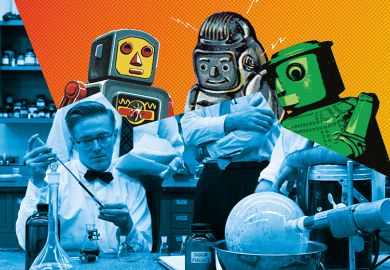
The AI chatbot may soon kill the undergraduate essay, but its transformation of research could be equally seismic. Jack Grove examines how ChatGPT is already disrupting scholarly practices and where the technology may eventually take researchers – for good or ill

16 March

With the continent’s youth population set to soar, many observers worry that its overstretched universities will be unable to cope, with consequences for the whole world. So what is the solution? More overseas or online study? More branch campuses? Pan-African partnerships? Simon Baker reports 

1 September

With university set to become a near-universal expectation for high-school graduates, the separate silos in which K12 and higher education have traditionally operated are increasingly being seen as barriers to equity. But what, realistically, can universities do to bridge the great divide? Paul Basken reports 

4 August

As precarity affects ever more academics for ever longer, many have come to see a permanent position as the gateway to professional happiness. But does it always work out that way? Or do the responsibilities and trade-offs of seniority outweigh the joys of security and salary? Seven academics have their say

21 July

Even before Covid led to so many job losses among casual and fixed-term academic staff, mass insecurity was increasingly being recognised as a blight on the sector. But is there any realistic prospect of permanent contracts all round? Ben Upton examines the cases of Germany and the Netherlands

7 July

Despite incremental reforms throughout Emmanuel Macron’s first term as president, France still has one of the most centralised higher education systems in Europe. As the election looms, Ben Upton examines attitudes towards institutional autonomy and asks whether its supposed effects on equality and academic freedom are limiting appetite for more

31 March

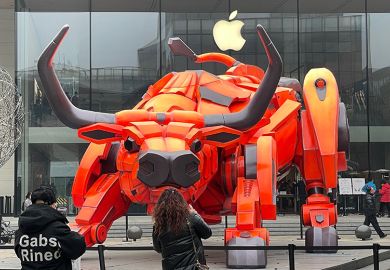
The grip of Silicon Valley on commerce and culture is huge and ever-growing. But as concerns mount about tech firms’ ethics, is there anything that universities – with vastly lower research and salary budgets – can do to put them on a more responsible trajectory? Four experts give their views

17 February

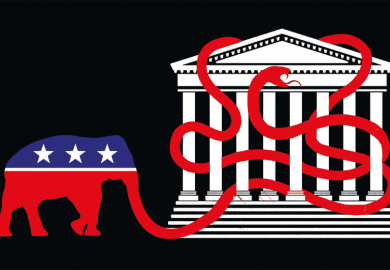
As the pandemic increases public scrutiny of science, the UK Parliament is holding another inquiry into the long-running issue of reproducibility. Five of its contributors give their views on how sloppy science can be eliminated and trust be more firmly rooted 

20 January

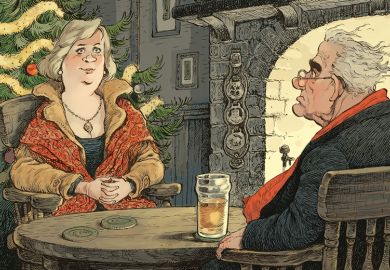
As the season of goodwill comes around again, warm words about collegiality and fellowship have been dutifully corralled into all-staff missives from university leaders. But in an era of management, metrics and industrial unrest, does the image of the academy as a commonwealth of scholars still bear scrutiny? Seven academics have their say 

23 December

On 15 October 1971, the first edition of The Times Higher Education Supplement was published. In the five decades since, the publication now known as Times Higher Education has charted the expansion and marketisation of the UK sector while taking an ever more global perspective. Three editors reflect on their time at the helm

25 November

When the current generation of university leaders applied for their posts, none of the job descriptions mentioned Covid-19. So how have they found the past 18 months? And what about the future, economic, political and environmental? We asked 180 leaders from around the globe. Paul Jump reports

28 October

The pandemic has exposed some anglophone universities’ financial over-reliance on overseas students. But if internationalisation takes a step back in the coming years, how much will be lost pedagogically? And will anything be gained? Anna McKie reports

30 September

A new term is beginning in the northern hemisphere, and many campuses are reopening. But are academics relishing a return to relative normality or fearful of unvaccinated students? And what has the Covid experience taught them about their approach to teaching? Six scholars offer their perspectives


16 September

The pandemic has accelerated numerous experiments in assessment for the digital age, moving beyond simple knowledge recall. But is the traditional exam really obsolete? As the dust settles on another marking season, seven academics give their widely differing views

Artificial intelligence will soon be able to research and write essays as well as humans can. So will genuine education be swept away by a tidal wave of cheating – or is AI just another technical aid that teaching and assessment will evolve to take account of? John Ross reports
8 July

The pandemic has prompted dire predictions about international student enrolment at anglophone universities. But will those fears come to pass? Is there an alternative to standard international education? And how much do universities really spend on recruitment agents? Ellie Bothwell reports

The country’s universities have shot up global rankings on the back of huge investment and a ruthless focus on publication. But as the country gears up for its next five-year plan, Joyce Lau asks whether stratospheric ambitions for a ‘Chinese Harvard’ can be met

7 January

The past 12 months will live long in the memory, for all the wrong reasons. But as 2020 nears its end amid fairy lights and optimism about vaccines, six academics tell us the bright spots they managed to find amid the gloom – from human connections to elasticated waistbands

22 December

Academics have long grappled with the strains that job scarcity and the mobility imperative impose on their families. But might the experience of mass remote working finally offer a viable solution, asks Jack Grove

10 December

The movement to ‘decolonise’ university curricula has leaped into the political and educational mainstream in the wake of George Floyd’s death, dividing opinion on campus and beyond. Anna McKie examines how scholars are handling difficult discussions and where the agenda goes next

26 November

Neoliberal administrators’ policing of institutional reputations and academic colleagues’ condemnation of dissenting voices on issues such as race and gender have led to claims that scholars are losing their ability to engage in free enquiry and open debate. But is academic freedom really the operative concept in the controversies that arise? John Ross probes a highly contested debate

15 October

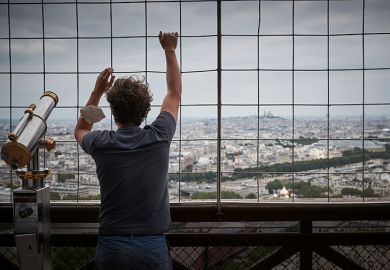
Those planning new universities might think that a good institution will attract top staff wherever it is located. But is the quality of the environment beyond the ivory tower really so insignificant – and has the pandemic changed the calculus? Paul Jump runs through our survey results

1 September

Has the online transition worked out? How far are student numbers likely to decline? Will governments still have money to invest in universities and research after the pandemic is over? And what does all that mean for staffing? These are just some of the issues explored by our survey of 200 university leaders from 53 territories. Paul Jump runs through the results

25 June

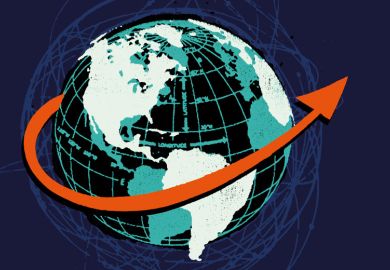
Nations are increasingly making conscious efforts to propel a subset of their universities into the global elite. But are such aspirations ever met? And, if they are, is that a blessing or a curse for those institutions denied entry to the club? Simon Baker examines the issues and the numbers

11 June

The Middle East and North Africa have large youth populations and growing university participation. But with high unemployment, low female workplace participation and universities focused on STEM and the public sector, is all this human capital being wasted? Simon Baker reports 

5 March

In an era of anti-expert populism, it is more important than ever to stand up for scientific truth. But it is also harder, coming with a high risk of personal attack. Anna McKie speaks to those who have paid a high price for their advocacy, and draws out the lessons for those who want to take up the cause

16 January

The apparent proliferation of libel challenges by scientists accused of research misconduct have led to fears that journals and others will be dissuaded from calling out wrongdoers. But is the observation accurate? And is the chilling effect reproducible? Jack Grove reports  

7 November