
Gaining a global perspective at Eötvös Loránd University
International student mobility is a key focus at Eötvös Loránd University in Budapest, where students are encouraged to gain international experience as part of their studies

Eötvös Loránd University

Sponsored content: created in partnership with Eötvös Loránd University.
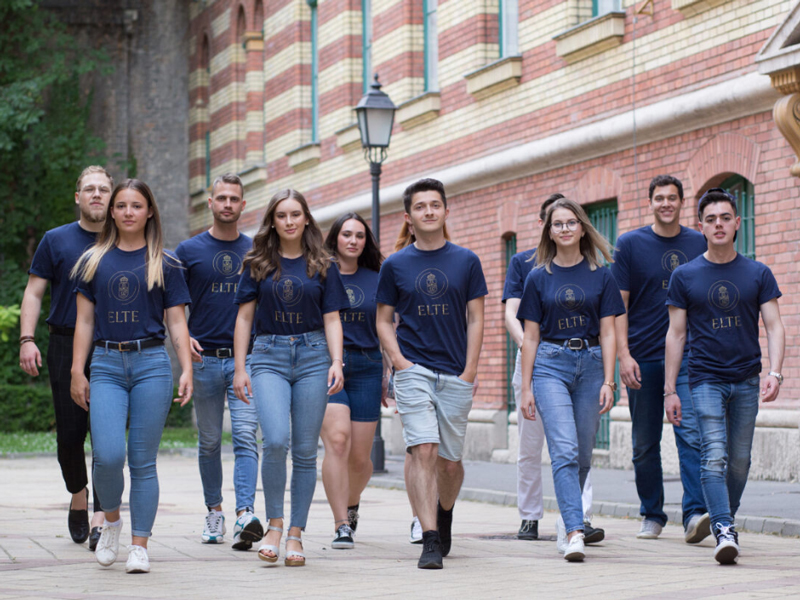
As the oldest and largest university in Hungary, Eötvös Loránd University (ELTE) has much to offer students looking to experience a different culture. Located in the historic surroundings of Budapest and with a growing international community, it ranks among the top Central European institutions offering Erasmus+ and other exchange programmes. “We have more than 5,300 international students at ELTE and around 100 programmes provided in English,” explains Péter Tordai, deputy director for mobility at ELTE.
ELTE gives its students access to one of the largest exchange networks in Central Europe. It has around 500 Erasmus+ partner universities and partnership agreements with 1,500 international institutions, giving students a wide range of choices when planning a study abroad experience.
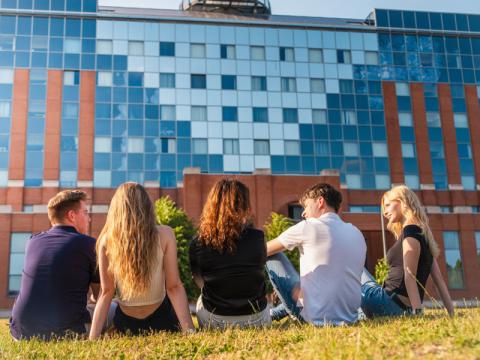
Erasmus exchange opportunities have expanded rapidly since the Covid-19 pandemic. In just a few years, the number of ELTE students going abroad has more than doubled, rising from around 600 to 1,400. The number of incoming exchange students has grown from 830 to over 1,300, creating a more international classroom experience at ELTE.
ELTE is part of the CHARM-EU alliance alongside institutions such as the University of Barcelona, Trinity College Dublin and Utrecht University. It is also a member of the Coimbra Group, an association of leading multidisciplinary universities in Europe. For students, this means easy access to innovative courses, joint programmes and seamless mobility opportunities across partner universities. These are available not only to Erasmus grant holders but also to the wider international student community.
International degree-seeking students who don’t have scholarships are also eligible for exchange mobility, allowing them to spend a term abroad at one of ELTE’s partner universities. This makes mobility possible not only for Erasmus grant holders but also for the wider international student community.
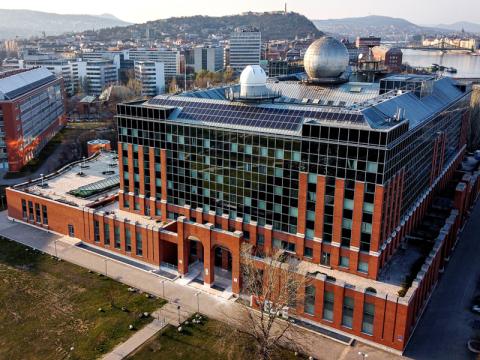
The university offers dedicated support for international students on practical issues such as securing accommodation and connecting with faculty, and ELTE has invested in language training for administrative staff so there is always someone in the university community who speaks English.
A number of financial support options are available, including the Stipendium Hungaricum, a scholarship programme for international students founded by the Hungarian government in 2013. The Erasmus+ programme provides top-up funding, in addition to the standard mobility grant, for students who face social, economic or physical disadvantages. ELTE has a flexible recognition policy on university credits, meaning outgoing students are reassured that their credits will count towards their degree.

Cultural immersion is all part of becoming a student abroad. There is a dedicated course on intercultural training for international mobility that can be taken by ELTE students preparing for a semester abroad or international students coming to ELTE. The university also offers a series of videos that help students prepare before their move.
The Erasmus Student Network at ELTE plays a crucial role in helping incoming international students settle into their new home. Through mentoring and events, the volunteer-led network is there to respond to everything from questions about travel and accommodation to how to make new friends. “We help people to integrate and feel comfortable here – to give them opportunities to meet new people and start conversations,” says Boldizsár Fekete, president of the Erasmus Student Network at ELTE.
International study isn’t only focused on undergraduates. “We recognise that mobility often starts with research collaborations between professors, who set up partnerships between departments and often further,” adds Tordai. ELTE recently hosted a meeting of the League of European Research Universities in Budapest, underlining the importance of knowledge-sharing and partnership. PhD students are also now eligible for short-term mobility under Erasmus+, an attractive option for postgraduates looking to explore international research alongside their teaching or family commitments.
Today, ELTE stands as one of the region’s most active Erasmus institutions, serving as a gateway for European cooperation and the flow of international talent across borders. As the university looks towards its strategic priorities for the coming five years, internationalisation will continue to be a key focus, benefiting international students and researchers alike.