
The Robot That Sees Where It's Going: VinUniversity's Vision for Smarter, Safer Surgery Inside the Body
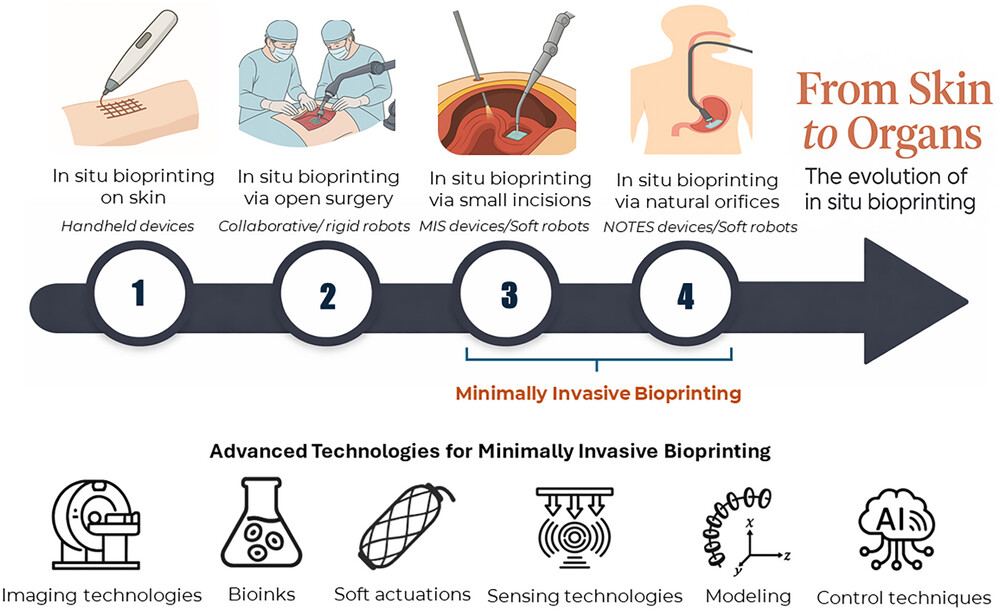
Gastrointestinal cancers are among the world's deadliest, yet the tools used to detect them — rigid, operator-dependent endoscopes — have changed little in decades. At VinUniversity, Dr. Thai Mai Thanh is building what comes next. His project develops an AI-Enhanced Soft Robotic Endoscopy System that combines soft continuum robotics, foundation model-driven design automation, and SLAM-based real-time 3D navigation to make colonoscopy safer, more precise, and less reliant on operator skill. This work sits at the frontier mapped by a 2026 review in Advanced Science, co-authored by Dr. Thai and VinUniversity colleagues, which identifies soft robotics as the primary hardware enabler for minimally invasive bioprinting and autonomous navigation, and discusses AI integration as critical for enhancing adaptability and functional outcomes in next-generation endoscopic systems. Together, the review and the project reflect VinUniversity's broader commitment to translating cutting-edge robotics research into clinical tools that directly reduce the human cost of cancer.

Sponsored by

Sponsored by
Principal Investigators & Key Members: Thai Mai Thanh, PhD
AI-Enhanced Soft Robotic Endoscopy System for Precision Colonoscopy and Real-Time 3D Navigation Gastrointestinal (GI) cancers, including colorectal and stomach cancers, remain among the leading causes of cancer-related deaths worldwide. Early detection through colonoscopy significantly improves survival, yet conventional endoscopic systems are rigid, operator-dependent, and carry a risk of patient discomfort and tissue trauma. This project addresses these limitations by developing an AI-Enhanced Soft Robotic Endoscopy System that combines AI-driven design automation and Simultaneous Localization and Mapping (SLAM)-based navigation to improve safety, flexibility, and diagnostic accuracy during colonoscopy procedures.
The innovation question guiding this research is: How can artificial intelligence and real-time 3D mapping be integrated into a soft robotic platform to enable safer, autonomous, and more precise endoscopic navigation in complex gastrointestinal environments? The project seeks to advance robotic flexibility, adaptive navigation, and intelligent control through the convergence of soft continuum robotics, foundation models for automated design, and visual–inertial SLAM algorithms. With the growing global burden of GI cancers, there is an urgent need for next-generation endoscopic tools that reduce procedural complexity while improving early-stage lesion detection.
Technologically, it will advance AI-driven medical robotics and autonomous navigation, while economically, it will open opportunities for innovation and commercialization in intelligent medical devices.
The project’s Impact Plan emphasizes translational potential through collaboration between clinicians, engineers, and industry partners, bridging research excellence with societal benefit and contributing to the digital transformation of healthcare.
Find out more about the research here: Soft Robotics and Advanced Technologies for Minimally Invasive Bioprinting: The Future of Internal Organ Repair - Vu - 2026 - Advanced Science - Wiley Online Library