
When Economic Growth Becomes a Barrier to Sustainable Development: The US Paradox
High GDP does not guarantee sustainable development. Discover the factors holding back sustainability in the US. Read more.

Sponsored by

Sponsored by
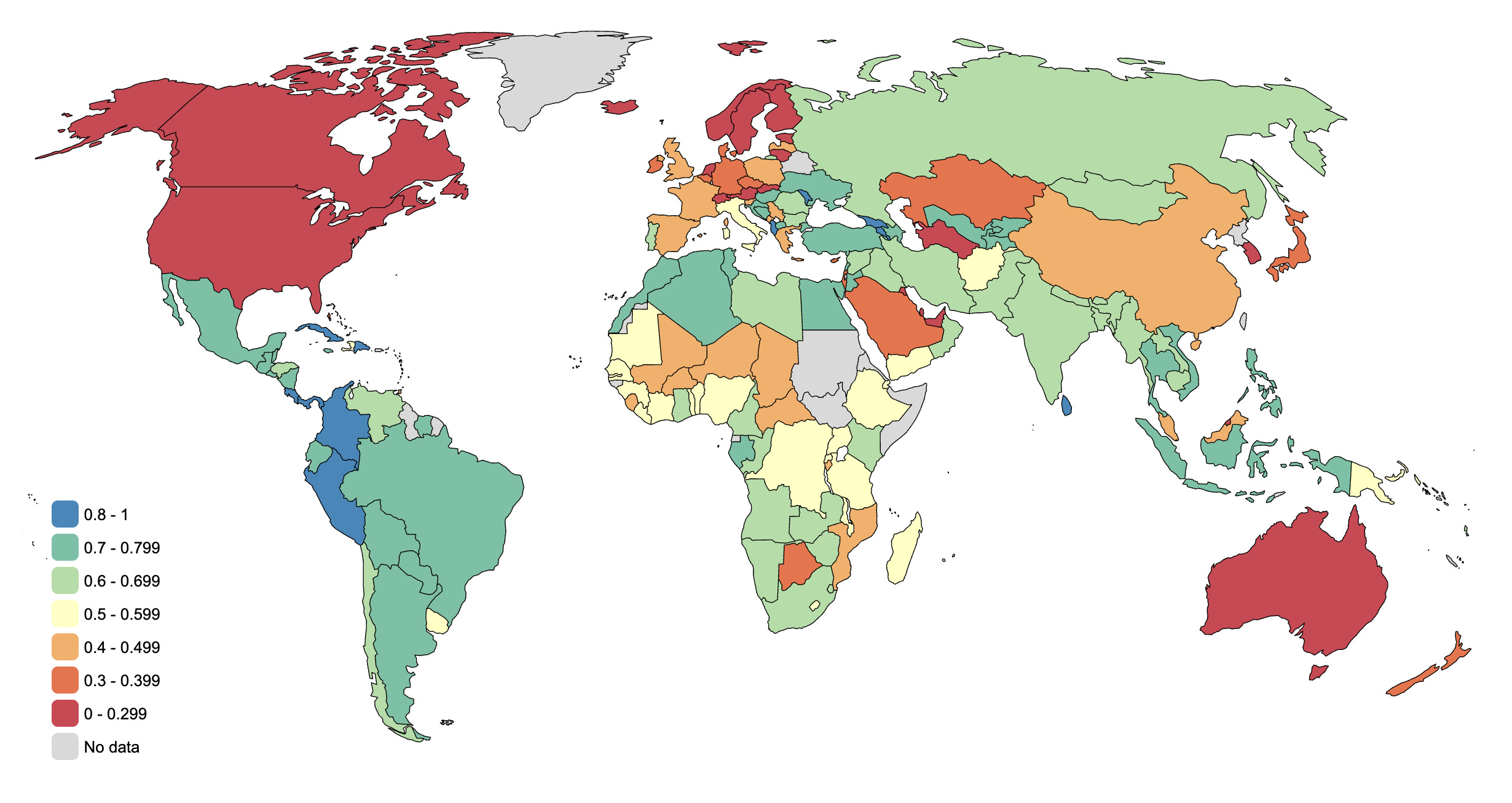
Following the Paris Agreement in 2016, countries around the world have tried to fulfill their collective commitment to addressing global warming and climate change—two major consequences of the industrial era. Yet amid this global push toward sustainability, the United States presents a paradoxical case: several factors traditionally associated with economic growth appear to hinder sustainable development. Gross Domestic Product (GDP), long regarded as a key measure of development, has increasingly been criticized for failing to account for environmental sustainability and ecological balance. As the world’s largest economy in terms of GDP, the US presents a striking paradox: despite its economic dominance, it consistently ranks among the lowest performers in the Sustainable Development Index (SDI).
This contradiction raises an important question: what factors actually support—or impede—sustainable development? The Sustainable Development Index differs from the United Nations’ Sustainable Development Goals (SDGs) framework. Developed by researcher Jason Hickel, the SDI adjusts conventional measures of human development by incorporating ecological impacts. These impacts are assessed through indicators such as carbon emissions and material footprint. Although the US scores highly in terms of GDP and human development, its exceptionally high per-capita carbon emissions and material consumption significantly reduce its ecological efficiency, resulting in a low SDI score.
An evaluation of the index suggests that several factors are limiting sustainable development in the US, including globalization, ecological footprint, and energy uncertainty. Globalization, often viewed as a catalyst for economic growth, promotes international economic integration through shifts in consumption patterns, lifestyle changes, and technology transfer. While these dynamics contribute to GDP growth, economic expansion is largely driven by aggregate consumption. This same consumption, however, is a major source of environmental pressure, as reflected in a country's ecological footprint. In other words, the consumption patterns that fuel US economic growth simultaneously contribute to environmental degradation.
Energy uncertainty further complicates the picture. The US remains heavily dependent on extractive and fossil fuel-based energy systems, making fluctuations in conventional energy markets a significant source of ecological and economic vulnerability. As a result, energy uncertainty has emerged as another factor constraining sustainable development.
Interestingly, uncertainty related to Environmental, Social, and Governance (ESG) factors appears to have a positive association with sustainable development in the US. One possible explanation is that companies operating within ESG-oriented markets respond to such uncertainty by strengthening their ESG performance and disclosures in an effort to maintain public trust and legitimacy.
These findings suggest that globalization is not environmentally friendly. Excessive consumption intensifies ecological pressures and ultimately undermines sustainable development. Likewise, continued dependence on non-renewable energy sources poses substantial risks to long-term environmental sustainability. At the same time, ESG frameworks, when implemented effectively, have the potential to become powerful instruments for advancing sustainable development.
To address these challenges, US policymakers should pursue a more sustainable approach to globalization. Efforts to reduce ecological footprints through resource efficiency and cleaner technologies can help improve sustainability outcomes. Expanding renewable energy adoption and diversifying energy sources are also essential steps. Finally, ESG commitments must be translated into meaningful action rather than treated as a mere reporting exercise.
Without careful management, the very drivers of economic growth can become barriers to sustainable development.